
9th Grade Vocabulary Worksheets
These worksheets help students build stronger word understanding and use language with confidence. These free, ready-to-print PDF worksheets are designed for immediate classroom use or easy at-home learning. Students develop skills like using context clues, analyzing word parts, and choosing precise vocabulary.
About This Collection of Worksheets
This collection focuses on helping students truly understand vocabulary, not just memorize definitions. Each worksheet gives students a chance to explore how words work in real sentences, stories, and informational texts. By practicing with context, students learn how meaning changes depending on how a word is used.
Students also build important connections between reading and writing. Many activities ask them to paraphrase, revise, or use vocabulary in their own responses. This helps them move from recognizing words to actually using them correctly and confidently. Over time, students become more precise and thoughtful with their language.
The worksheets are designed to support skill growth step-by-step, starting with basic context clues and moving toward deeper analysis of tone, meaning, and word relationships. They align with Grade 9 standards and prepare students for more advanced reading and writing tasks. These resources work well for both classroom instruction and independent practice.
Paul’s Teacher Tip
When teaching vocabulary, focus less on memorizing definitions and more on how words function in context. Encourage students to explain words in their own words rather than relying on dictionary language. It also helps to revisit words across different activities so students see how meaning can shift. Modeling how to use clues from surrounding sentences can make a big difference in comprehension. Over time, students will become more confident and independent when working with unfamiliar words.
Worksheet Collection Skill Spotlights
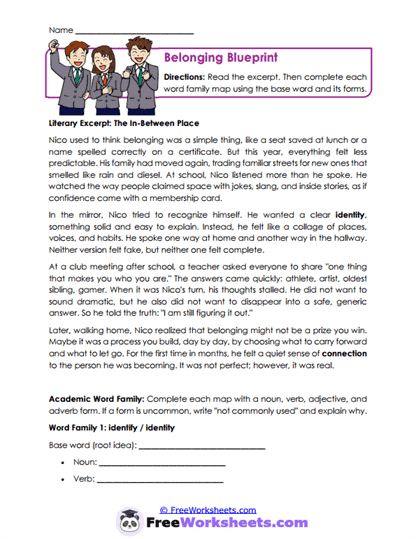
Belonging Blueprint
- What Kids Do:
Students read a story about identity and belonging while exploring how a single base word can change into different forms. They identify noun and verb variations and think about how meaning shifts slightly in each form. This helps them see how words function differently depending on context. - Target Skill:
Students develop an understanding of word families and how base words can change form to fit different grammatical roles. They learn to recognize patterns in word structure and apply that knowledge to reading and writing. This supports deeper vocabulary development and language use.
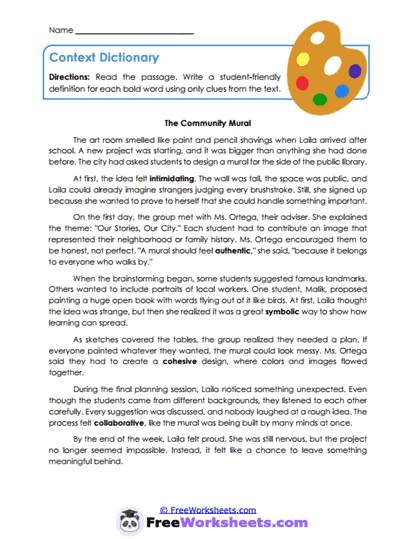
Context Dictionary
- What Kids Do:
Students read a passage about a mural project and focus on bold vocabulary words. They use clues in the text to write simple, student-friendly definitions in their own words. This encourages them to think carefully about meaning instead of copying definitions. - Target Skill:
Students strengthen their ability to define vocabulary using context clues. They practice explaining word meanings clearly and simply, which supports both comprehension and communication. This builds independence when encountering unfamiliar words.
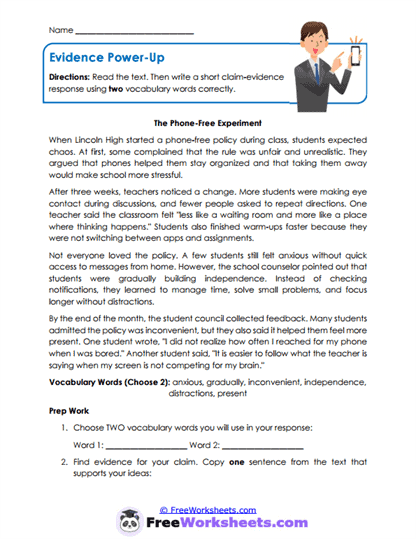
Evidence Power-Up
- What Kids Do:
Students read a passage about a school experiment and write a short response using both vocabulary words and text evidence. They must choose appropriate words and support their ideas with details from the text. This connects reading directly to writing. - Target Skill:
Students build skills in using academic vocabulary within written responses. They learn to combine word knowledge with evidence-based reasoning. This supports stronger writing and deeper comprehension.
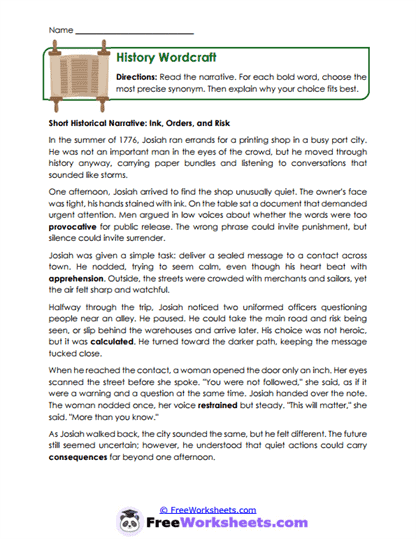
History Wordcraft
- What Kids Do:
Students read a historical narrative and choose the most precise words to complete sentences. They think carefully about which word best fits the context and explain their reasoning. This helps them understand how small word changes affect meaning. - Target Skill:
Students improve their ability to select precise vocabulary based on context. They learn how word choice impacts tone and clarity. This supports advanced reading comprehension and writing skills.
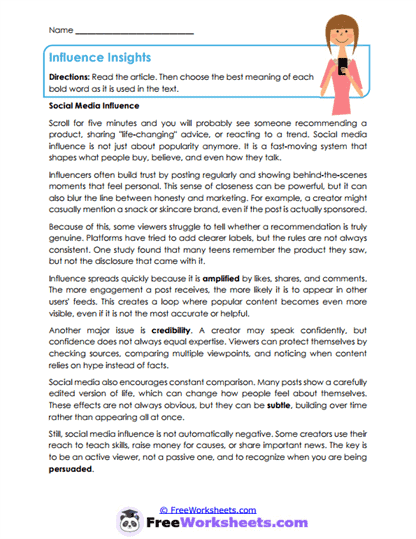
Influence Insights
- What Kids Do:
Students read a passage about social media influence and determine the meaning of bold words using context. They consider how each word connects to the overall idea of the passage. This makes vocabulary learning feel relevant to real life. - Target Skill:
Students strengthen context clue strategies by analyzing how vocabulary functions within informational texts. They learn to rely on surrounding details for meaning. This supports comprehension of modern and complex topics.
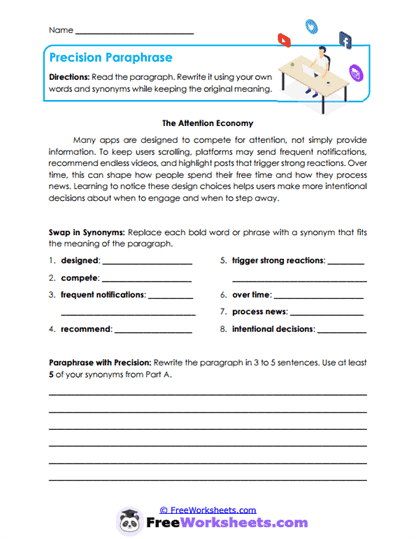
Precision Paraphrase
- What Kids Do:
Students replace bold words with appropriate synonyms and then rewrite an entire paragraph in their own words. They focus on keeping the same meaning while changing the wording. This builds both vocabulary and writing skills. - Target Skill:
Students develop paraphrasing skills by using synonyms and rewording ideas accurately. They learn to maintain meaning while improving clarity. This supports writing development and comprehension.
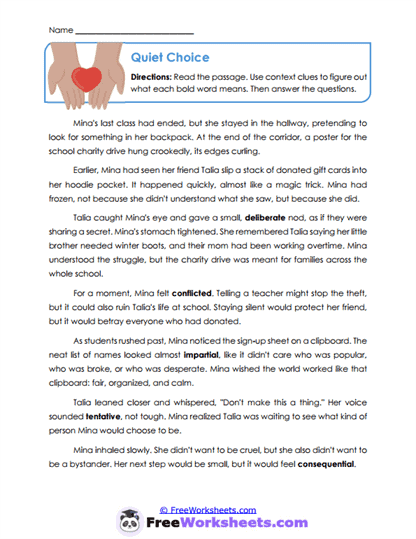
Quiet Choice
- What Kids Do:
Students read a short story and use context clues to figure out the meaning of bold vocabulary words. They also answer questions about the character’s decisions. This connects word meaning to understanding the story as a whole. - Target Skill:
Students build vocabulary skills alongside comprehension by analyzing how words relate to character actions and emotions. They practice using evidence to support meaning. This strengthens both reading and reasoning skills.
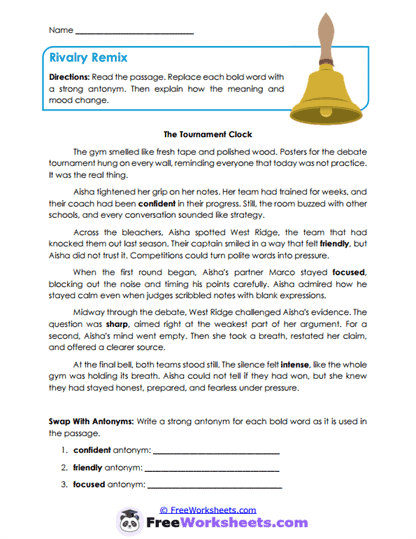
Rivalry Remix
- What Kids Do:
Students read a story about a competition and replace key words with their antonyms. They then reflect on how the meaning and tone of the passage change. This helps them see how powerful word choice can be. - Target Skill:
Students explore antonyms and how opposite words affect tone and meaning. They learn to evaluate whether a word fits the context. This supports deeper understanding of language and expression.
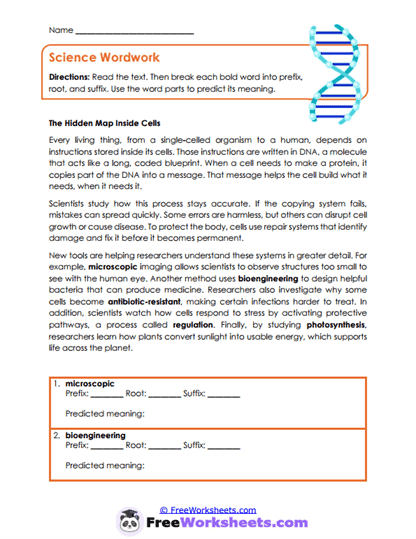
Science Wordwork
- What Kids Do:
Students read a science passage and break down complex words into prefixes, roots, and suffixes. They use these parts to predict meanings. This helps them handle more challenging academic vocabulary. - Target Skill:
Students develop word analysis skills by studying how words are constructed. They learn to use word parts to determine meaning. This supports comprehension of technical and academic texts.
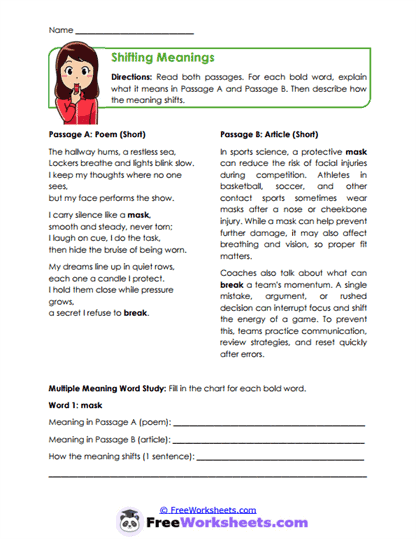
Shifting Meanings
- What Kids Do:
Students read two passages and compare how the same word is used differently in each one. They explain how the meaning changes based on context. This helps them understand that words can have multiple meanings. - Target Skill:
Students strengthen their understanding of multiple-meaning words and context-dependent definitions. They learn to analyze how meaning shifts across texts. This supports flexible and accurate comprehension.
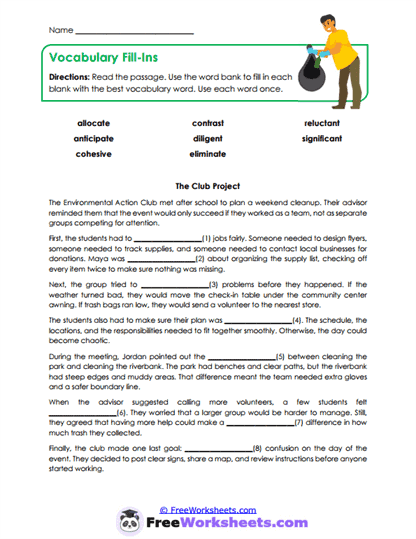
Vocabulary Fill-Ins
- What Kids Do:
Students read a short story and use a word bank to fill in missing words. They must choose the best word based on how it fits in the sentence. This helps them think carefully about meaning and usage. - Target Skill:
Students practice using context clues to select appropriate vocabulary. They learn how word choice affects sentence meaning. This supports both comprehension and language accuracy.
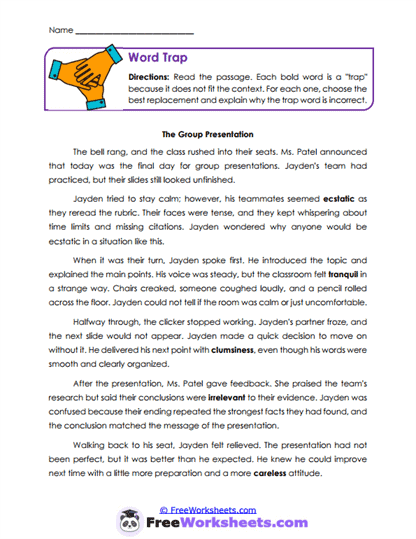
Word Trap
- What Kids Do:
Students read a passage with incorrect vocabulary choices and identify words that do not fit. They replace each with a better option and explain why. This encourages careful reading and attention to detail. - Target Skill:
Students develop editing and vocabulary skills by recognizing incorrect word usage. They learn to evaluate meaning within context and make corrections. This strengthens both comprehension and writing accuracy.