
Analyzing Informational Texts Worksheets
These Worksheets help students break down nonfiction texts and understand how ideas develop across passages. These free, ready-to-print worksheets come in PDF format for immediate classroom use or independent practice. Students build skills like identifying central ideas, analyzing structure, and evaluating arguments aligned to curriculum standards.
About This Collection of Worksheets
This collection is designed to guide students through deeper analysis of informational texts across a variety of high-interest topics. From technology and science to history and environmental issues, each worksheet challenges students to think critically about how authors present and develop ideas. Learners move beyond basic comprehension as they explore structure, purpose, and evidence in real-world texts.
The worksheets are carefully structured to support skill progression. Students begin by identifying central ideas and summarizing key points, then move into analyzing text structure, author’s purpose, and argument development. This gradual increase in complexity helps students gain confidence while building strong analytical reading habits that transfer across subjects.
Teachers and parents will find these worksheets flexible and easy to use in different learning settings. Whether used for guided instruction, independent practice, or discussion-based activities, each resource promotes meaningful engagement with informational texts. The printable format makes it simple to integrate into daily lessons or assign as homework.
Paul’s Teacher Tip
When working with informational texts, encourage students to slow down and interact with the passage as they read. Have them underline key ideas, circle unfamiliar words, and jot quick notes in the margins about what each paragraph is doing. This helps students see how ideas build rather than viewing the text as a collection of separate parts. It’s also helpful to ask guiding questions like, “Why did the author include this detail?” or “How does this paragraph connect to the main idea?” Over time, students will begin to ask these questions on their own and develop stronger independence in analysis.
Worksheet Collection Skill Spotlights
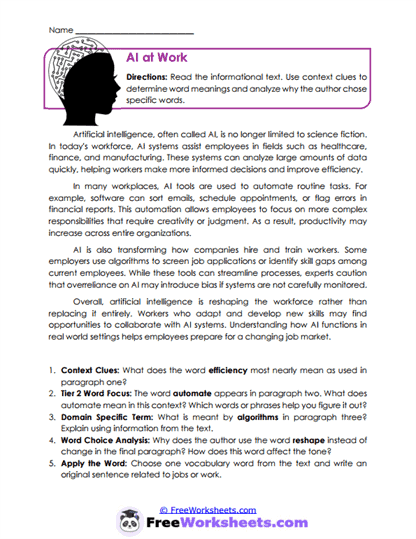
AI at Work
- What Kids Do:
Students read an engaging passage about how artificial intelligence is changing modern workplaces, then use context clues to figure out the meaning of unfamiliar words. As they work, they look closely at how specific terms are used in sentences and how those choices shape meaning. They also apply new vocabulary by writing their own sentences, helping them connect understanding to real use. - Target Skill:
Students build vocabulary strategies by determining word meanings through context and analyzing how word choice affects tone and clarity. This aligns with CCSS.ELA-LITERACY.RI.9-10.4 and supports deeper comprehension by helping learners understand domain-specific language often found in informational texts.
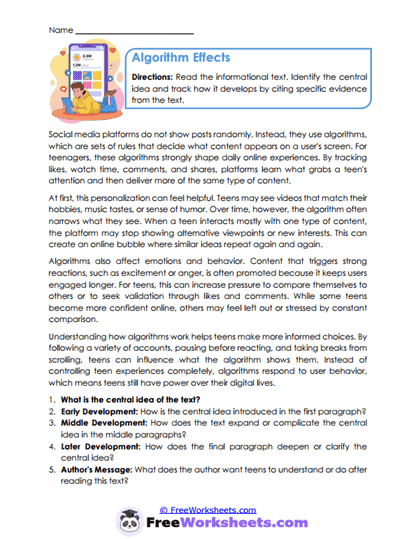
Algorithm Effects
- What Kids Do:
Students explore a passage about algorithms and digital behavior, identifying the central idea and tracking how it develops from beginning to end. They examine how each paragraph adds new layers of meaning and strengthens the overall message. Along the way, they explain how examples and details expand the reader’s understanding of the topic. - Target Skill:
Students strengthen their ability to determine central ideas and analyze how they develop across a text, supporting CCSS.ELA-LITERACY.RI.9-10.2. They learn to connect supporting details to broader concepts and explain how ideas evolve, which builds stronger comprehension and analytical thinking.
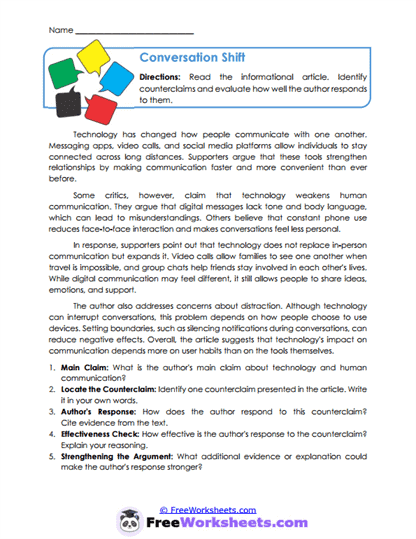
Conversation Shift
- What Kids Do:
Students read a balanced passage about technology and communication, identifying both the main claim and an opposing counterclaim. They carefully examine how the author responds to that counterclaim and decide whether the response strengthens the argument. Students also suggest improvements, encouraging deeper engagement and critical thinking. - Target Skill:
Students develop argument analysis skills by identifying claims, counterclaims, and responses within a text. This aligns with CCSS.ELA-LITERACY.RI.9-10.8 and helps learners evaluate how effectively authors address opposing viewpoints using evidence and reasoning.
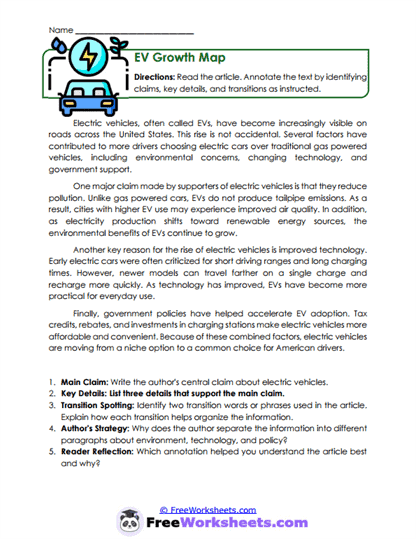
EV Growth Map
- What Kids Do:
Students read about the rise of electric vehicles and identify the main claim along with key supporting details. They analyze how the author organizes information into categories and how each section contributes to the overall argument. Students also examine transitions to understand how ideas are connected across the passage. - Target Skill:
Students build skills in identifying claims and supporting evidence while analyzing how organization strengthens an argument. This connects to CCSS.ELA-LITERACY.RI.9-10.8 and helps students understand how structured information improves clarity and persuasion.
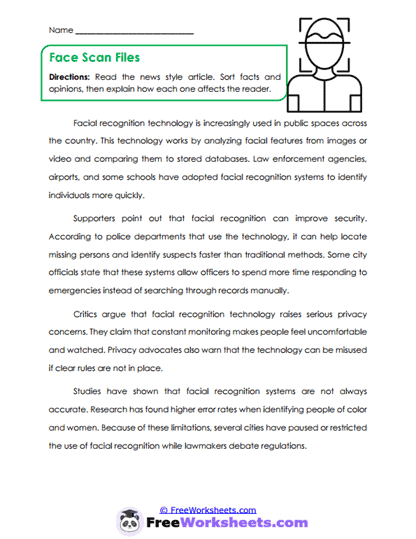
Face Scan Files
- What Kids Do:
Students read a passage about facial recognition technology and decide whether specific statements are facts or opinions. They explain how each type of statement influences understanding and shapes the message of the text. Students also explore how both sides of an issue are presented to the reader. - Target Skill:
Students learn to distinguish between factual information and subjective opinions while evaluating how each contributes to meaning. This supports CCSS.ELA-LITERACY.RI.9-10.8 and strengthens critical thinking by helping students recognize bias and assess information carefully.
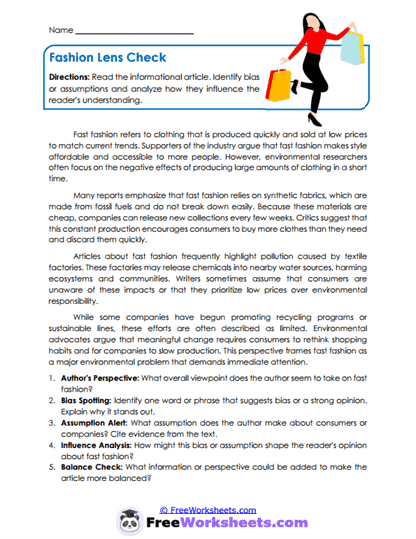
Fashion Lens Check
- What Kids Do:
Students analyze a passage about fast fashion and identify the author’s perspective by looking for bias and persuasive language. They highlight words and phrases that reveal assumptions and explain how these choices influence the reader. Students also consider how the author’s viewpoint shapes the overall message. - Target Skill:
Students develop the ability to analyze point of view and bias, aligning with CCSS.ELA-LITERACY.RI.9-10.6. They learn to recognize how language and assumptions affect meaning, which supports stronger interpretation of informational texts and media.
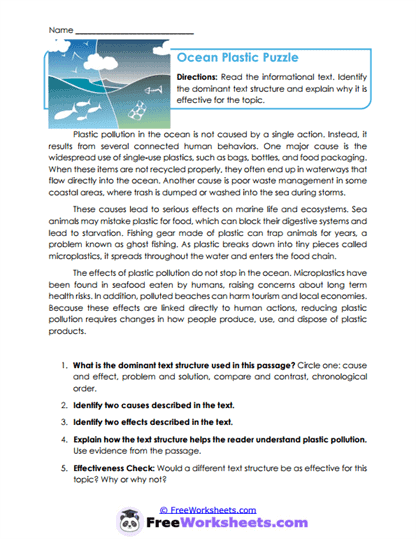
Ocean Plastic Puzzle
- What Kids Do:
Students read a passage about ocean pollution and identify the text structure used, focusing on cause-and-effect relationships. They locate specific examples of causes and resulting effects and explain how this structure helps clarify the topic. Students also evaluate whether another structure would work as effectively. - Target Skill:
Students strengthen their understanding of text structure by analyzing how authors organize information, supporting CCSS.ELA-LITERACY.RI.9-10.5. They learn how structure influences comprehension and how to justify their reasoning using evidence from the text.
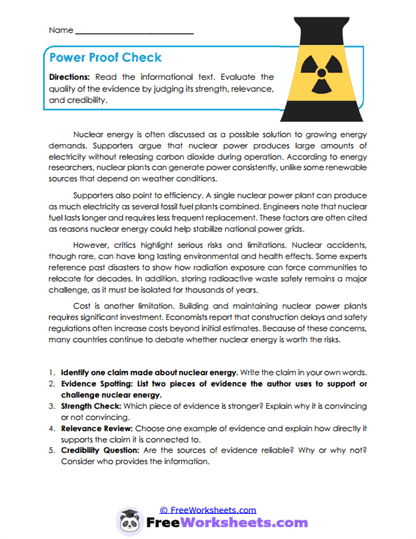
Power Proof Check
- What Kids Do:
Students read a passage about nuclear energy and evaluate the strength of different pieces of evidence presented. They identify the main claim, analyze supporting and opposing evidence, and explain which details are most convincing. Students also consider the credibility of sources used in the text. - Target Skill:
Students build critical evaluation skills by assessing the relevance and credibility of evidence, aligning with CCSS.ELA-LITERACY.RI.9-10.8. This helps learners move beyond identifying evidence to judging its effectiveness in supporting an argument.
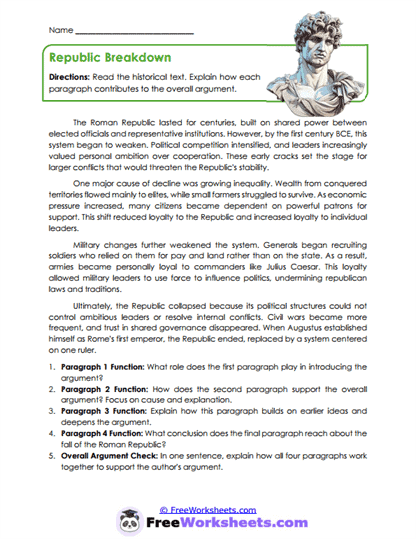
Republic Breakdown
- What Kids Do:
Students read a historical passage about the fall of the Roman Republic and analyze how each paragraph contributes to the overall argument. They identify the role of each section and explain how ideas build from one paragraph to the next. Students also summarize how the full text works together. - Target Skill:
Students strengthen their ability to analyze how ideas and events develop across a text, supporting CCSS.ELA-LITERACY.RI.9-10.3. They learn to track progression and understand how different parts of a text connect to form a complete argument.
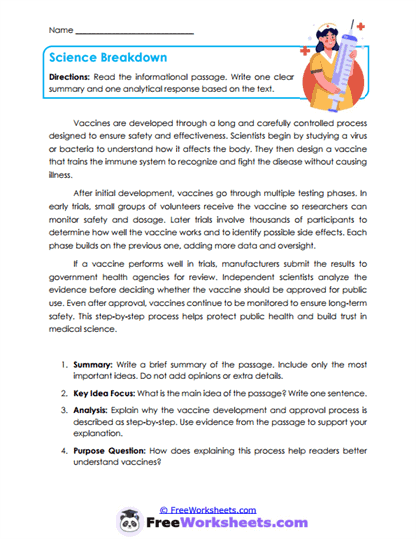
Science Breakdown
- What Kids Do:
Students read a passage about vaccine development and focus on identifying key ideas while leaving out less important details. They write a clear summary and explain the main idea in their own words. Students also analyze why the information is presented in a step-by-step format. - Target Skill:
Students improve summarizing skills by determining central ideas and explaining them clearly, aligning with CCSS.ELA-LITERACY.RI.9-10.2. They learn to separate essential information from supporting details, strengthening both comprehension and writing abilities.
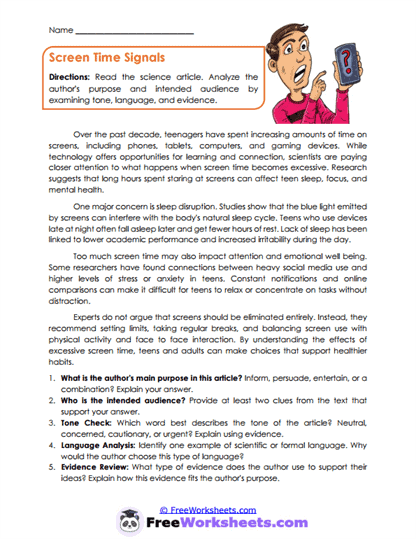
Screen Time Signals
- What Kids Do:
Students read a passage about the effects of screen time and determine the author’s purpose and intended audience. They analyze tone by examining word choice and evidence, and explain how these elements shape meaning. Students also evaluate how effectively the author supports their ideas. - Target Skill:
Students build skills in analyzing author’s purpose, tone, and audience, supporting CCSS.ELA-LITERACY.RI.9-10.6. This helps learners understand how communication choices influence readers and strengthens their ability to interpret informational texts.
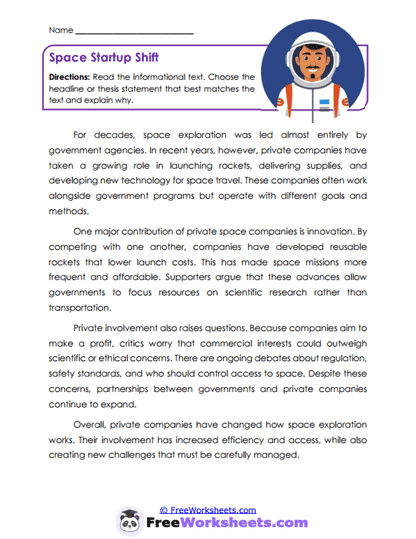
Space Startup Shift
- What Kids Do:
Students read about private space companies and select the best main idea or heading for the passage. They justify their choices using evidence and explain why other options are less accurate. This process encourages careful reading and comparison of ideas. - Target Skill:
Students strengthen their ability to determine central ideas and evaluate summaries, aligning with CCSS.ELA-LITERACY.RI.9-10.2. They learn to connect details to broader meanings and defend their reasoning with clear evidence.