
About This Worksheet
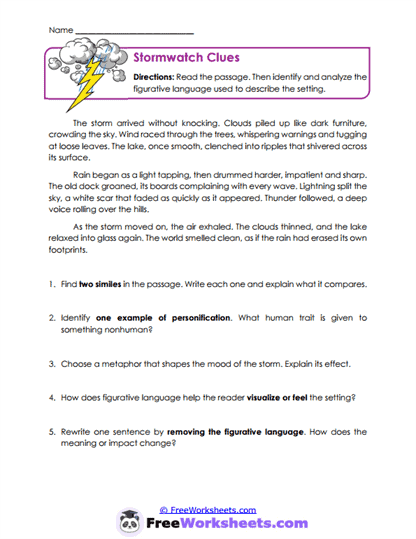
This worksheet helps students understand figurative language, which is when authors use creative words to paint a picture in the reader’s mind. In Grade 9, students move beyond just finding these examples and start thinking about why the author used them. The storm in the story is described in a vivid, almost human way, making it feel alive. For example, saying the storm “whispers” gives it human qualities and builds mood. This helps students see how language creates feeling and atmosphere.
Curriculum and Grade Alignment
This worksheet aligns with CCSS.ELA-LITERACY.RL.9-10.4, which focuses on word meaning and figurative language. Students should already recognize basic examples like similes and metaphors. The next step is explaining how those choices affect tone and mood. It also supports TEKS §110.36(b)(8), which includes analyzing literary devices. These skills are important for understanding more complex texts.
Student Tasks
On this worksheet, students will find examples of similes and personification in the passage. They will explain what each example means and why the author used it. Students are also asked to think about how these descriptions affect the mood of the story. One task even asks them to rewrite a sentence without figurative language. This helps them see the difference in impact.
Common Challenges and Misconceptions
Students often confuse similes and metaphors, especially when both are used close together. Some may find the examples but struggle to explain their purpose. Others might think figurative language is just decoration instead of meaningful. These are very common challenges at this level. Teachers can help by modeling how to connect language choices to feelings or mood.
Implementation Guidance
Teachers can use this worksheet during lessons on descriptive writing or literary devices. It works well after reading a passage aloud and discussing imagery. At home, parents can ask simple questions like, “What picture does this create?” This keeps the focus clear and manageable. It’s a great way to help students appreciate how authors use language.
Details and Features
The worksheet includes a descriptive passage filled with strong imagery. The questions are organized to move from identifying to explaining. It is clearly formatted and easy to read. There is space for written responses, making it suitable for class or homework. It prints well and is ready for immediate use.