
About This Worksheet
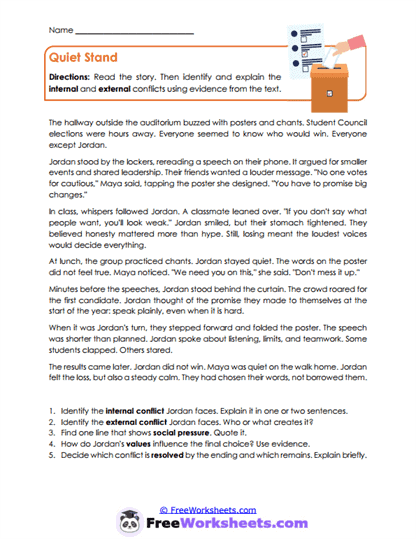
This worksheet focuses on helping students understand internal and external conflict in a story. In Grade 9, students begin to look closely at what a character is feeling inside and what pressures they face outside. The story shows a student dealing with peer pressure and personal values. For example, Jordan deciding whether to speak up shows an internal struggle turning into action. This kind of thinking helps students better understand real-life decisions too.
Curriculum and Grade Alignment
This activity aligns with CCSS.ELA-LITERACY.RL.9-10.3, which focuses on analyzing how characters respond to challenges. Students should already know what a conflict is before working on this. The next step is understanding how conflict connects to theme and character growth. It also supports TEKS §110.36(b)(6), which includes analyzing plot and character development. These are key skills for high school reading.
Student Tasks
On this worksheet, students will identify both internal and external conflicts in the story. They will use evidence from the text to explain their answers. Students also look at how peer pressure influences the character’s decisions. Some questions ask them to quote directly from the story, which builds strong reading habits. By the end, they reflect on how the conflict is resolved.
Common Challenges and Misconceptions
Students often mix up internal and external conflict, especially when both are happening at once. Some may give answers without clear evidence from the text. Others might miss the emotional side of the story and focus only on actions. This is a normal part of learning deeper reading skills. Teachers can help by clearly showing examples of each type of conflict.
Implementation Guidance
This worksheet works well during lessons about character and decision-making. A teacher might first discuss what conflict means, then guide students through the story. At home, parents can talk with their child about what the character was feeling and why. Keeping the conversation simple but focused helps a lot. This kind of practice builds both reading and thinking skills.
Details and Features
The worksheet includes a relatable story that students can connect to easily. The questions are written in a clear and supportive way. There is enough space for students to explain their thinking. It is designed to be printed and used without extra preparation. The layout makes it easy for both teachers and students to follow.