
About This Worksheet
This worksheet is about understanding author’s tone and purpose, especially in persuasive writing. It teaches students how companies use language and strategies to influence what people think and do. The focus is on recognizing how ads are designed to persuade, even when they seem harmless. For example, a message that “just informs” can actually become one that pushes someone to buy something. This helps students become more aware and thoughtful about what they see online.
Curriculum and Grade Alignment
This worksheet is intended for Grade 9 students learning to analyze persuasive texts. The main goal is to help students identify how tone and structure influence meaning. Students should already understand basic reading comprehension and main ideas before starting. Next, they will move into evaluating arguments and spotting bias. This aligns with CCSS.ELA-LITERACY.RI.9-10.6 and RI.9-10.8, along with TEKS 9.6, focusing on author’s purpose and persuasive techniques.
Student Tasks
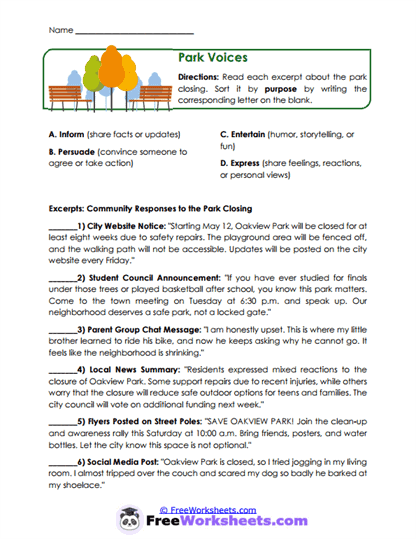
On this worksheet, students will read a passage about teen-targeted advertising and think about how it is written. They will analyze word choice and sentence structure to determine tone and purpose. Students must explain how the author’s choices influence the reader. They will also connect ideas in the passage to real-world situations. This encourages deeper thinking about media and influence.
Common Challenges and Misconceptions
Students may think ads are always obvious and miss the subtle ways they persuade. Some may struggle to separate tone from purpose. Others might summarize the text instead of analyzing it. A common mistake is not explaining how specific words affect the reader. Teachers can support students by modeling how to break down sentences and look for hidden meaning.
Implementation Guidance
Teachers can use this worksheet during lessons on media literacy or persuasive writing. It works well as part of a discussion about social media and advertising. Parents can use it at home by talking about ads their child sees online. This activity helps students become more aware of how they are influenced every day. It also builds critical thinking skills that go beyond the classroom.
Details and Features
The worksheet includes a relevant, real-world topic that students can connect to easily. It focuses on both reading and analytical thinking skills. The layout is clear and supports written responses. It is printable and easy to use in different learning settings. The content encourages thoughtful reflection rather than simple answers.