
About This Worksheet
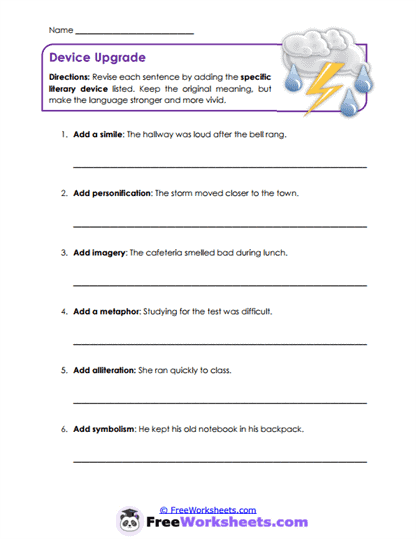
This worksheet helps students practice using literary devices in their own writing. Instead of just identifying devices, students will take simple sentences and make them more vivid and engaging. This is an important step because it moves students from understanding to applying what they know. Your child will learn how adding details can make writing stronger and more interesting. For example, “The hallway was loud” can become a simile like “The hallway was loud like a buzzing beehive.”
Curriculum and Grade Alignment
This worksheet is designed for Grade 9 students who are learning to apply literary devices in writing. The main goal is to strengthen students’ ability to use figurative language effectively. Students should already understand basic devices before attempting to create their own. This aligns with Common Core Standard CCSS.ELA-LITERACY.W.9-10.3, which focuses on using descriptive techniques in writing. It also supports TEKS 9.7, where students develop and improve their writing skills.
Student Tasks
On this worksheet, students will be given simple sentences and asked to revise them using specific literary devices. They will create similes, metaphors, imagery, personification, alliteration, and symbolism. Each task asks them to keep the original meaning while making the sentence more descriptive. Students must think creatively while still following the directions carefully. This builds both writing skills and understanding of literary techniques.
Common Challenges and Misconceptions
Students may struggle to come up with ideas and feel unsure where to start. Some may change the meaning of the sentence instead of just improving it. Others may confuse which device they are supposed to use. It can also be difficult to balance creativity with accuracy. A helpful strategy is to model one example together before students begin.
Implementation Guidance
Teachers can use this worksheet as a writing warm-up or as part of a larger lesson on descriptive writing. It works well in small groups where students can share ideas and learn from each other. At home, parents can support by encouraging their child to read their sentences out loud. This helps students hear how their writing sounds. It’s also a fun way to build creativity.
Details and Features
This worksheet includes clear directions for each type of literary device. The sentences are simple, making them easy to build from. There is space for students to write their revised versions. The layout is organized and easy to follow. It prints cleanly and is ready for classroom or home use.