
Grade 3 Listening & Speaking Worksheets
Listening carefully means recognizing important information, while effective speaking requires organizing ideas so others can understand them. These grade 3 listening and speaking worksheets have children draw scenes from oral directions, summarize information presented aloud, and practice expressing opinions with supporting reasons. Other activities involve asking clarifying questions and comparing messages from different speakers. The free printable PDFs support guided conversations and structured responses. Before an activity, explain what children should listen for, then allow them to discuss or record their understanding afterward.
About This Collection of Worksheets
Strong listening and speaking skills play an important role in how children learn, communicate, and participate in everyday classroom activities. At the 3rd grade level, students are expected to listen attentively, remember important information, ask meaningful questions, and express their thoughts in ways that others can understand. This collection provides focused opportunities to practice those abilities through structured activities that connect listening comprehension with oral expression. Children learn to identify main ideas, recall supporting details, follow multi-step directions, and recognize when they need additional clarification. They also develop conversational skills by listening respectfully, taking turns, sharing opinions, and responding thoughtfully to other speakers.
The worksheets introduce a variety of listening and speaking experiences that move beyond simple question-and-answer exercises. Some activities involve listening to teacher-read passages and recording important details, while others ask students to draw pictures from oral directions or organize stories using beginning, middle, and end notes. Several pages emphasize communication between classmates through partner conversations, opinion sharing, respectful disagreement, and comparing information presented by different speakers. Students also practice paraphrasing messages, developing relevant questions, and using the Somebody-Wanted-But-So-Then strategy to organize oral retellings. By combining written responses with verbal participation, the collection helps children strengthen both their understanding of spoken language and their ability to communicate that understanding effectively.
Teachers can incorporate these printable resources into morning meetings, literacy rotations, whole-class read-alouds, collaborative learning activities, or focused speaking and listening lessons. Many exercises work especially well with partners or small groups, allowing students to practice conversation skills in supportive settings before contributing to larger classroom discussions. Parents and homeschool educators can adapt the same activities for one-on-one instruction by reading passages aloud, practicing everyday directions, or discussing familiar topics together. Tutors can use individual pages to address difficulties with recalling spoken information, organizing verbal responses, or understanding conversational expectations. The collection ultimately encourages active listening, confident expression, and respectful communication across academic and social situations.
Paul’s Teacher Tip
I recommend teaching listening and speaking skills with a clear distinction between what students should do while someone is talking and how they should respond afterward. Before reading a passage aloud, give children a specific listening goal, such as identifying the main idea, remembering three important facts, or noticing how two speakers express different viewpoints. When introducing partner discussions, model both roles by showing students how to speak clearly, avoid interruptions, and accurately restate another person’s idea before offering their own response. For students who struggle with oral language, provide sentence frames such as “The speaker means…” or “I agree because…” and gradually remove those supports as confidence improves. After each activity, invite students to reflect on which listening strategy helped them most, because recognizing effective strategies encourages more independent communication during future lessons.
Worksheet Collection Skill Spotlights
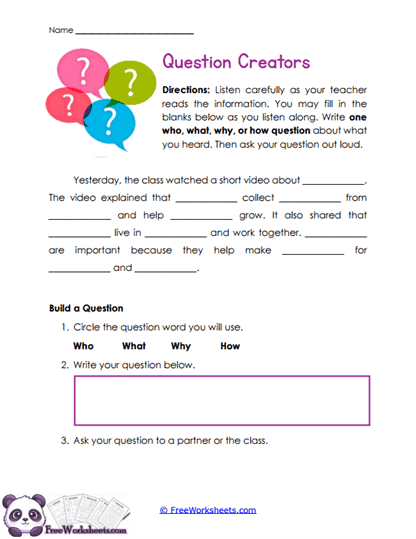
Build a Question
What Kids Do:
Students listen while the teacher reads a short informational passage aloud, then complete a brief summary by filling in missing words or ideas. The information includes details about a video the class watched, what was explained, and why certain concepts matter. After recording the missing information, children select a question starter such as who, what, why, or how and compose an original question connected to what they heard. They finish by asking their question aloud to a partner or the class, giving them an opportunity to connect careful listening with meaningful classroom conversation.
Target Skill:
This activity develops active listening, information recall, and the ability to formulate relevant questions from spoken material. Students practice identifying important details, recognizing gaps in their understanding, and selecting question words that match the information they want to explore. Writing and presenting their questions also strengthens sentence formation, proper punctuation, and oral communication. These abilities support 3rd grade language arts expectations involving asking appropriate questions, seeking clarification, and participating thoughtfully in discussions about information presented aloud.
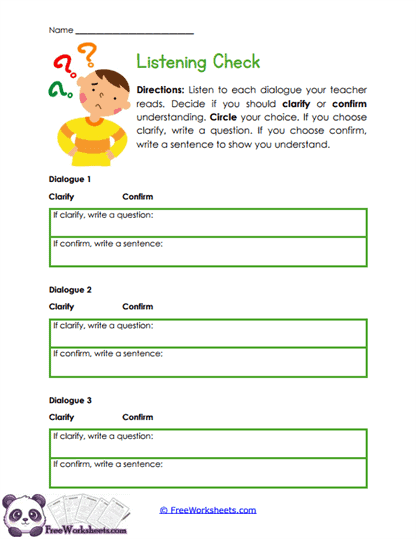
Clarify or Confirm
What Kids Do:
Children listen to three short dialogues read aloud by the teacher and decide whether each situation calls for clarification or confirmation. After considering what the speaker communicated, students circle either Clarify or Confirm on the page. If the message is unclear, they write a question that would help them understand the missing information. If the meaning is already clear, they compose a sentence demonstrating what they understood. Students repeat this decision-making process across all three scenarios, practicing how to respond appropriately instead of guessing or automatically asking questions after every spoken statement.
Target Skill:
The central skill is monitoring listening comprehension and choosing effective communication strategies when responding to spoken information. Students learn to recognize when they need additional explanation and when they can demonstrate understanding through an accurate confirming statement. Formulating polite clarification questions also strengthens conversational confidence and purposeful language use. This supports 3rd grade speaking and listening expectations by encouraging children to seek understanding, respond directly to speakers, and communicate effectively during classroom instructions, partner exchanges, and collaborative activities.
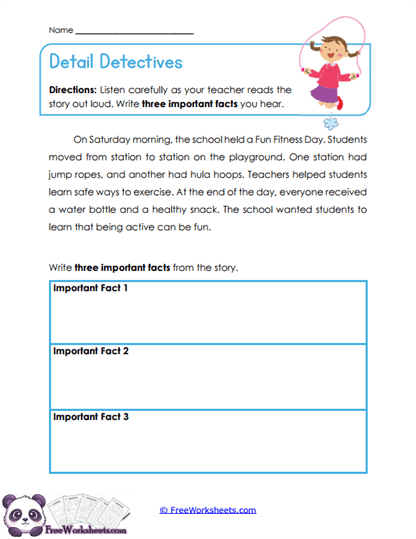
Important Detail Hunt
What Kids Do:
Students listen to a teacher-read passage about a school Fun Fitness Day featuring activities such as jumping rope and using hula hoops. The passage also describes teachers helping students exercise safely and children receiving water and healthy snacks after participating. Once the reading is complete, students identify three important facts they remember and record each one in a separate response box. Rather than listing everything mentioned, children must choose information that best explains the event. Their written responses can then be discussed with classmates to compare which details different listeners considered most important.
Target Skill:
This exercise strengthens auditory comprehension, selective attention, and the ability to distinguish essential information from less significant background details. Students practice remembering spoken facts, determining their importance, and expressing them accurately in their own words. Choosing three distinct details encourages thoughtful organization and prepares children for more advanced note-taking activities. These skills reinforce 3rd grade listening expectations involving identifying key information from oral presentations, recalling relevant details, and demonstrating understanding of material communicated without relying on a written passage.
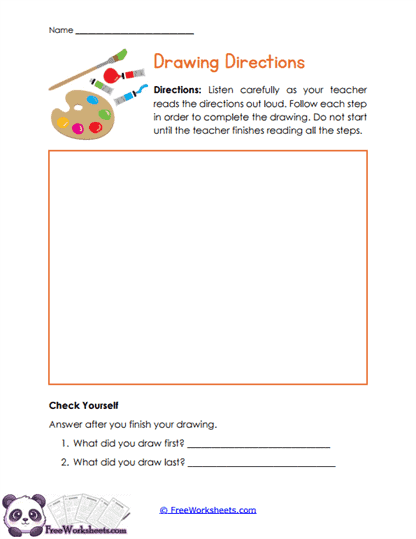
Listen Then Draw
What Kids Do:
Children follow a series of drawing instructions delivered entirely through spoken language. The teacher reads all directions before students begin, requiring them to listen patiently, remember the sequence, and visualize the requested picture. Once the instructions are finished, students use a large blank drawing space to recreate the described objects, locations, colors, or details from memory. After completing their illustrations, they answer two reflection questions identifying what they drew first and what they drew last. The activity combines creative expression with a structured listening challenge that requires attention to multiple connected steps.
Target Skill:
The activity develops the ability to follow multi-step oral directions while strengthening auditory memory, sequencing, attention, and self-regulation. Students must process instructions in the order presented, retain important information, and translate spoken descriptions into accurate actions. Waiting until the directions are complete also reinforces impulse control and purposeful listening habits. These skills support 3rd grade classroom communication expectations and help children manage increasingly complex verbal instructions during academic assignments, group projects, hands-on learning experiences, and everyday classroom routines.
Main Idea Listening
What Kids Do:
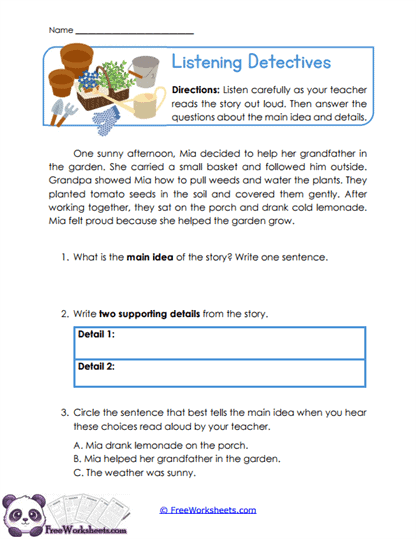
Students listen as the teacher reads a short story about Mia helping her grandfather with gardening activities. Throughout the passage, Mia carries a basket, pulls weeds, waters plants, and helps plant tomato seeds. After hearing the complete story, children write one sentence explaining its main idea and record two supporting details that demonstrate why their interpretation makes sense. The final task presents three possible main-idea statements, and students circle the one that best represents the entire passage. This combination of written explanations and a multiple-choice response checks whether students understood the overall message rather than remembering only isolated events.
Target Skill:
This listening comprehension exercise strengthens the ability to identify a central idea and connect it with relevant supporting evidence from spoken text. Students learn to distinguish a story’s overall meaning from individual actions or memorable details, a foundational skill for understanding longer oral presentations. Recalling two pieces of support also reinforces auditory memory, information organization, and evidence-based reasoning. These abilities align with 3rd grade language arts curriculum expectations involving comprehension of read-aloud passages, recognition of main ideas, and accurate explanation of important details.
Opinion With Reasons
What Kids Do:
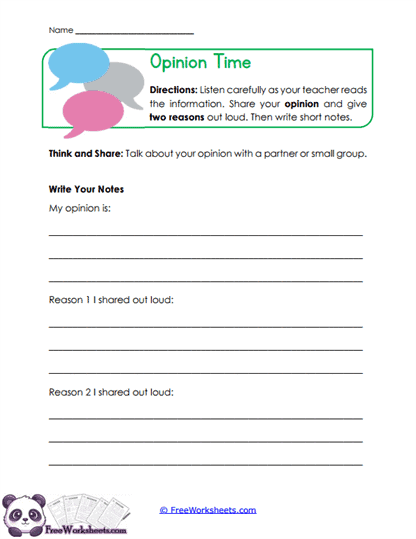
Children listen to information presented by the teacher and develop a personal opinion about the topic. They then participate in a partner or small-group conversation, explaining what they think and providing two different reasons to support their position. Following the discussion, students record their opinion in the designated writing space and complete separate sections for Reason 1 and Reason 2. The structured format encourages children to move beyond short statements of preference and explain their thinking clearly. Speaking before writing also allows students to organize their ideas through conversation.
Target Skill:
The focus is developing clear oral opinions supported by logical, relevant reasons. Students practice organizing personal viewpoints, explaining their thinking, and distinguishing meaningful justification from simply repeating an opinion. Participating in a discussion also strengthens listening, turn-taking, and confidence when communicating with classmates. These skills reinforce 3rd grade speaking and listening expectations involving expressing ideas clearly, contributing to collaborative conversations, and supporting statements with appropriate explanations. The activity also provides preparation for opinion writing by connecting spoken reasoning with organized written responses.
Partner Listening Share
What Kids Do:
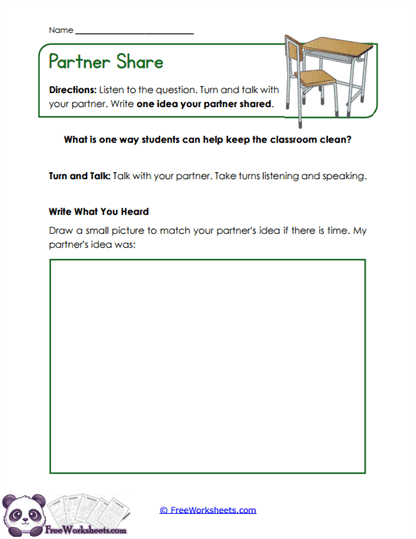
Students respond to the discussion question, “What is one way students can help keep the classroom clean?” After considering their own answers, children pair up and take turns sharing ideas while their partners listen carefully. Once both students have spoken, each child writes down one specific idea expressed by the other person rather than repeating their own response. An optional drawing space allows students to illustrate the suggestion they heard. The activity requires children to pay attention throughout the conversation because their final response depends on remembering and accurately representing someone else’s contribution.
Target Skill:
This partner activity builds conversational listening, turn-taking, accurate recall, and respectful communication. Students learn that meaningful participation requires understanding another speaker’s ideas instead of focusing exclusively on what they want to say next. Recording a partner’s response reinforces comprehension and introduces the important skill of reporting information from another person accurately. These abilities support 3rd grade speaking and listening curriculum goals involving collaborative discussions, attentive listening, appropriate responses, and the ability to communicate ideas shared by classmates.
Respectful Talk Practice
What Kids Do:
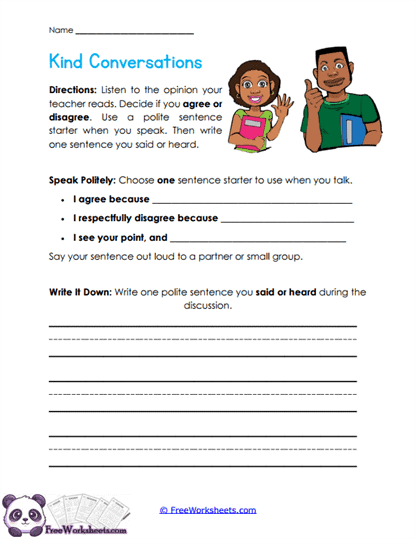
Children listen to an opinion read aloud by the teacher and decide whether they agree or disagree with the statement. They select a polite sentence starter, such as “I agree because…,” “I respectfully disagree because…,” or “I see your point, and…,” and complete it with their own explanation. Students then practice saying their responses aloud during a partner or small-group discussion. Afterward, they write one respectful sentence that they either contributed themselves or heard another participant use. The exercise emphasizes responding to ideas thoughtfully while maintaining a positive and constructive conversational tone.
Target Skill:
This activity strengthens respectful disagreement, opinion expression, active listening, and appropriate conversational language. Students practice acknowledging another person’s perspective while communicating their own thoughts and supporting them with reasons. Learning polite response structures helps children distinguish constructive discussion from personal criticism or unproductive arguments. These skills support 3rd grade classroom discussion expectations involving taking turns, responding respectfully, building on others’ comments, and expressing different viewpoints clearly. The practice also encourages positive peer interactions during collaborative learning experiences.
Restate the Message
What Kids Do:
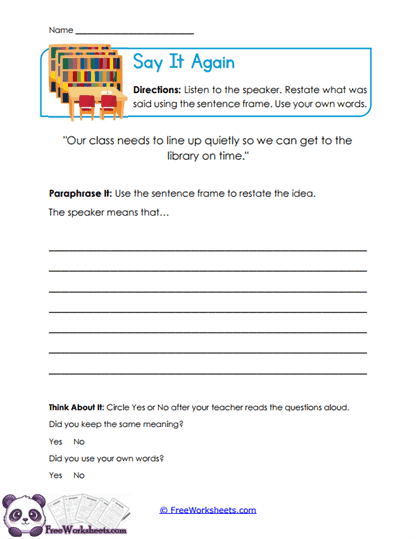
Students listen as the teacher reads a brief statement explaining that the class needs to line up quietly to reach the library on time. After considering the message, children use the sentence starter “The speaker means that…” to rewrite the information in their own words. Their response must communicate the same essential idea without simply copying the original wording. Once finished, students complete a self-check to determine whether they preserved the intended meaning and used different language. This reflective step encourages children to evaluate both the accuracy and originality of their paraphrased statements.
Target Skill:
The exercise develops paraphrasing, auditory comprehension, vocabulary flexibility, and clear expression of spoken information. Students learn to identify the central meaning of a message and communicate that meaning using alternative wording without introducing inaccuracies or omitting essential details. The self-assessment component strengthens awareness of what makes a paraphrase successful. These abilities reinforce 3rd grade language arts expectations involving listening carefully, explaining information in one’s own words, demonstrating understanding of oral directions, and communicating ideas accurately during classroom discussions.
Speaker Comparison
What Kids Do:
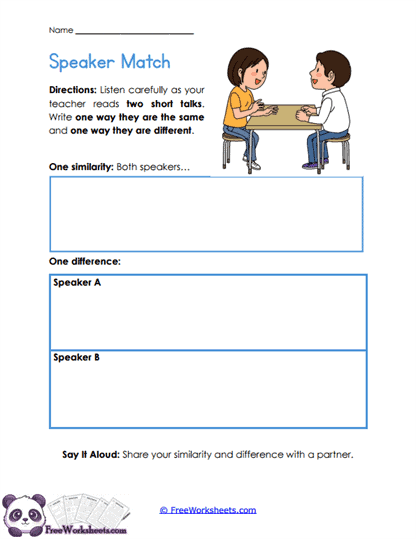
Children listen to two short talks presented aloud by the teacher, identified as Speaker A and Speaker B. Their task is to identify one important similarity shared by both speakers and one meaningful difference between their messages. Students record the common idea in a large similarity box, then use separate sections to explain what each speaker said or thought differently. After organizing their comparisons in writing, they share the similarity and difference aloud with a partner. The format encourages children to consider both presentations together instead of responding to each speaker independently.
Target Skill:
This activity develops comparison and contrast skills using information received through listening rather than reading. Students practice holding ideas from multiple speakers in memory, identifying shared information, and explaining differences in content or viewpoint. Organizing those observations prepares children to discuss contrasting perspectives clearly and accurately. These skills support 3rd grade speaking and listening goals involving comprehension of oral presentations, meaningful comparisons, attentive consideration of multiple speakers, and clear verbal explanations of similarities and differences.
Story Order Notes
What Kids Do:
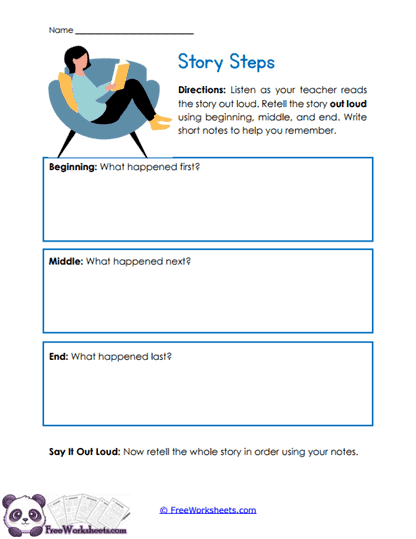
Students listen to a story read aloud by the teacher, concentrating on the order in which important events occur. After hearing the full passage, they complete three labeled boxes representing the Beginning, Middle, and End of the narrative. Each box contains a brief note about an event that belongs in that part of the story. Once their notes are finished, children use the organizer to retell the entire story aloud from start to finish. The simple three-part structure helps students focus on the most important events without attempting to write down every detail from the reading.
Target Skill:
The primary focus is narrative sequencing, auditory recall, and organized oral retelling. Students learn to identify essential events, arrange them chronologically, and use brief notes as memory aids when speaking. Distinguishing beginning, middle, and end also strengthens understanding of story organization and the relationships between events. These abilities support 3rd grade language arts expectations involving recounting stories, presenting information in a logical order, identifying important narrative details, and speaking clearly enough for listeners to follow a complete sequence of events.
Story Structure Builder
What Kids Do:
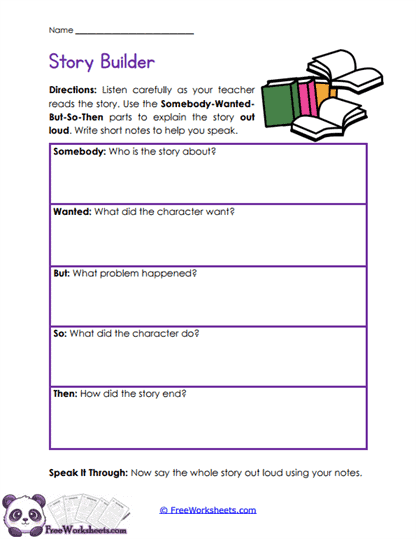
Children listen to a teacher-read story and organize the narrative using the Somebody-Wanted-But-So-Then strategy. They complete five sections by identifying the main character, explaining what that character wanted, describing the problem, recording what the character did in response, and stating how the story ended. Each part of the organizer guides students toward a different component of the narrative. After filling in their responses, students use the completed sections to deliver an oral retelling that connects the character’s goal, challenge, actions, and outcome into one understandable explanation.
Target Skill:
This activity strengthens understanding of narrative structure, character motivation, conflict, resolution, and cause-and-effect relationships. Students learn that a meaningful retelling should explain more than a disconnected series of events; it should show how a character’s goal leads to a problem, how the character responds, and what happens afterward. The five-part organizer also supports clear oral summaries and organized thinking. These skills reinforce 3rd grade listening and speaking expectations involving story comprehension, identification of important narrative elements, and the ability to recount events in a coherent sequence.