
Literary Texts Worksheets
3rd Grade reading literary texts worksheets help students explore characters, plot, theme, and other important elements found in engaging stories. Free, ready-to-print worksheets are available in PDF format for immediate classroom use and independent practice. Students develop skills such as analyzing character traits, summarizing narratives, and identifying themes using evidence from literary texts.
About This Collection of Worksheets
Literary texts give students opportunities to explore stories, characters, settings, and meaningful life lessons while strengthening reading comprehension. This collection focuses on helping learners understand how stories are structured and how characters, events, and themes work together to create engaging narratives. Through a variety of fictional passages, students practice thinking deeply about what they read and how authors develop stories.
The activities cover a wide range of essential comprehension skills, including identifying story elements, sequencing events, analyzing character traits and motivations, tracking emotions, understanding cause-and-effect relationships, and determining themes. Students also learn how dialogue, descriptive language, and figurative language contribute to meaning and character development. These experiences encourage readers to move beyond recalling facts and toward thoughtful literary analysis.
Teachers, parents, and homeschool educators can use these worksheets to support reading instruction in many different settings. The focused format of each activity allows learners to concentrate on one skill at a time while building confidence and independence. Together, these resources provide meaningful practice that helps students become stronger readers and more thoughtful interpreters of literature.

Paul’s Teacher Tip
When working with literary texts, encourage students to support every answer with details from the story. Asking questions such as “What makes you think that?” helps readers develop evidence-based thinking habits. It can also be helpful to have students discuss character decisions and emotions before writing their responses. Graphic organizers are especially useful for tracking story elements, character changes, and plot development. As students gain confidence, challenge them to compare characters, themes, and story structures across multiple texts. These conversations help deepen comprehension and strengthen critical-thinking skills.
Worksheet Collection Skill Spotlights
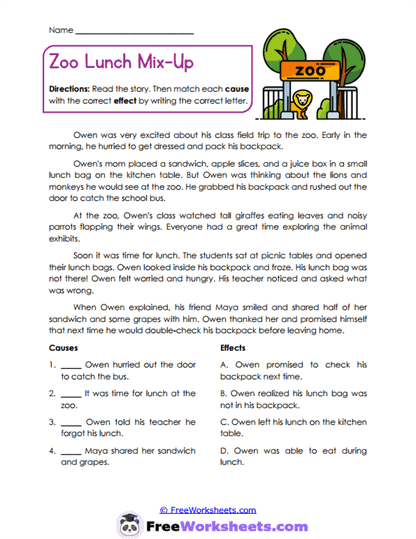
Cause Connections
- What Kids Do:
Students read a story about a class trip to the zoo and identify how actions and events are connected throughout the narrative. They match causes with corresponding effects, examine how one event leads to another, and use details from the passage to explain relationships between important plot points. - Target Skill:
Students strengthen their understanding of cause-and-effect relationships within literary texts. This skill supports stronger comprehension by helping readers recognize how character actions and story events influence outcomes, motivations, and overall plot development.
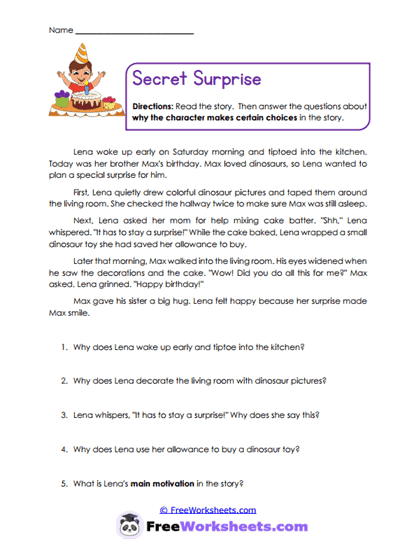
Character Motives
- What Kids Do:
Students read a story about planning a birthday surprise and examine the reasons behind a character’s decisions. They analyze actions, dialogue, and events to determine motivations and explain what goals drive the character throughout the story. The activity encourages thoughtful interpretation and evidence-based responses. - Target Skill:
Students develop the ability to identify character motivations and understand how those motivations influence behavior and plot development. This supports deeper literary comprehension and helps readers analyze why characters make important decisions.
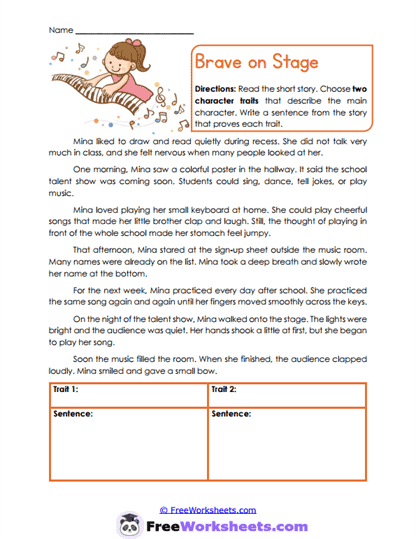
Character Traits
- What Kids Do:
Students read a story about preparing for a talent show and identify traits that describe the main character. They locate evidence from the text to support each trait and explain how actions and decisions reveal aspects of the character’s personality. - Target Skill:
Students strengthen character analysis skills by connecting textual evidence to personality traits. This encourages close reading and helps learners understand how authors reveal character qualities through actions, choices, and interactions.
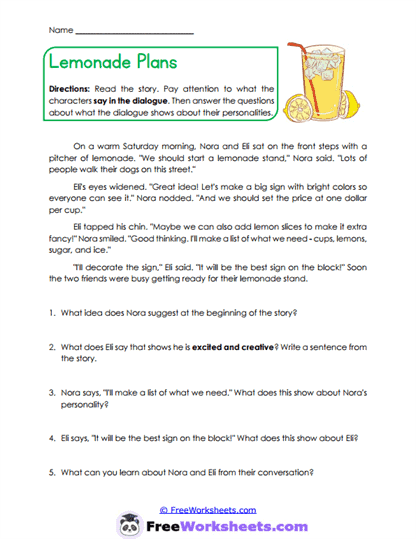
Dialogue Detectives
- What Kids Do:
Students read a story about friends planning a lemonade stand and analyze the dialogue between characters. They examine conversations for clues about personality, attitudes, and behavior while supporting conclusions with evidence from the text. - Target Skill:
Students learn how dialogue reveals character traits and relationships. This skill improves comprehension by helping readers use character conversations as evidence when analyzing personality and motivations within literary texts.
Event Order
- What Kids Do:
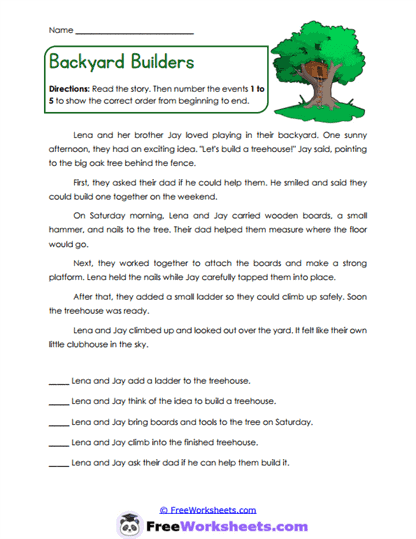
Students read a story about building a treehouse and place important events in chronological order. They identify what happens first, next, and last while examining how each event contributes to the progression of the narrative. - Target Skill:
Students build sequencing skills by organizing story events accurately. Understanding event order supports comprehension, summarization, and recognition of how plots develop from beginning to end.
Feelings Journey
- What Kids Do:
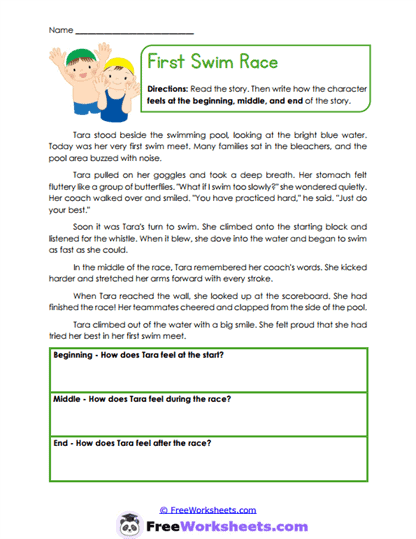
Students read a story about participating in a first swim race and track how the main character’s emotions change throughout the experience. They identify feelings at different points in the story and support their observations with evidence from the text. - Target Skill:
Students strengthen their understanding of character development by analyzing emotional changes. This helps readers recognize how experiences influence feelings and contribute to growth throughout a narrative.
Kindness Connections
- What Kids Do:
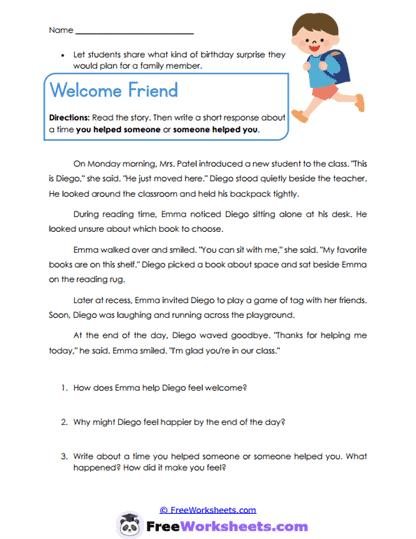
Students read a story about welcoming a new student and analyze how characters influence one another through their actions. They answer questions about relationships, emotions, and kindness before making personal connections to the story’s message. - Target Skill:
Students develop skills in analyzing character relationships and understanding emotional impact. This supports comprehension while encouraging empathy, reflection, and meaningful connections between literature and real-life experiences.
Picture Words
- What Kids Do:
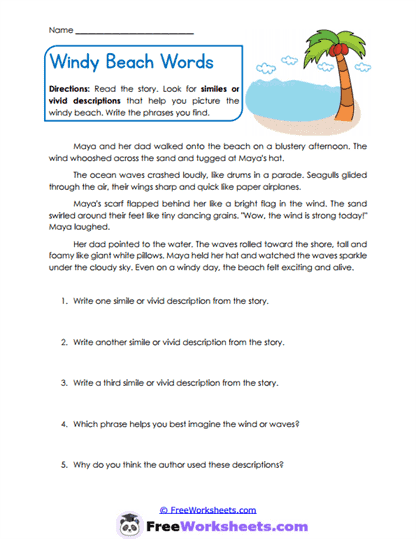
Students read a beach-themed narrative and identify vivid descriptions and similes that help create strong mental images. They examine figurative language, discuss how it enhances the setting, and explain which descriptions are most effective. - Target Skill:
Students strengthen their understanding of imagery and figurative language by analyzing descriptive details. This helps readers visualize settings and events while recognizing how authors use language to create engaging experiences.
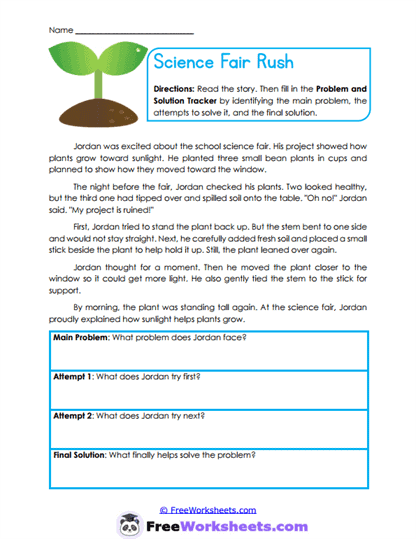
Problem Solver
- What Kids Do:
Students read a story about preparing a science fair project and identify the main problem, attempted solutions, and final resolution. They organize information into a structured format and analyze how the character’s actions contribute to solving the challenge. - Target Skill:
Students build plot-analysis skills by examining how problems develop and are resolved. This supports comprehension by helping readers understand narrative structure and the role of decision-making within stories.
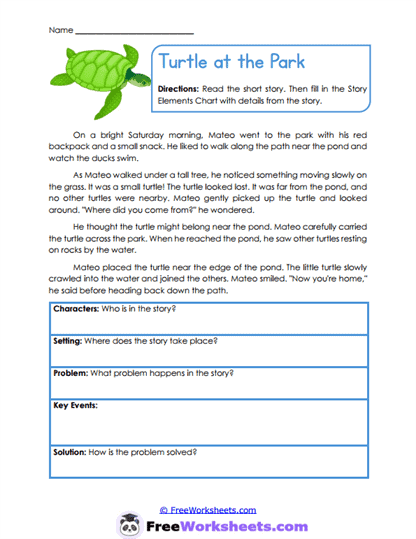
Story Mapping
- What Kids Do:
Students read a story about a boy who finds a turtle and complete a story map that includes characters, setting, problem, events, and solution. They organize information from the narrative into clearly defined categories and summarize key details. - Target Skill:
Students strengthen their understanding of story structure by identifying essential narrative elements. This foundational skill supports comprehension, retelling, summarization, and analysis of literary texts.
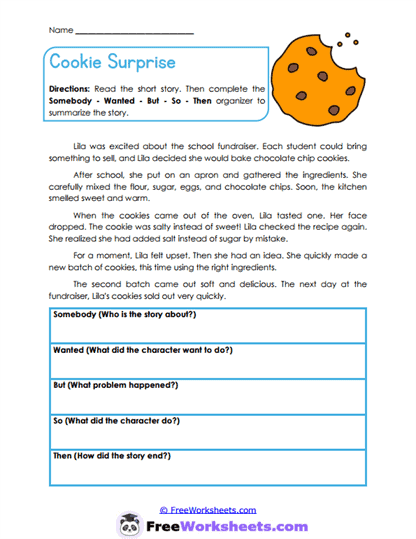
Summary Steps
- What Kids Do:
Students read a story about preparing cookies for a fundraiser and use the Somebody-Wanted-But-So-Then framework to summarize important events. They focus on the most essential details and organize information into a concise retelling. - Target Skill:
Students develop summarization skills by identifying key story components and separating major events from minor details. This helps improve comprehension and supports clear communication of story meaning.
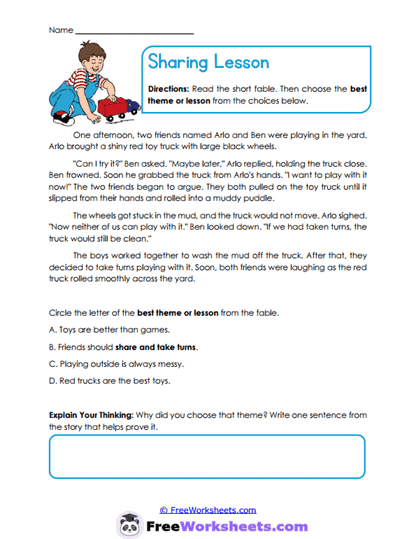
Theme Finder
- What Kids Do:
Students read a short fable and evaluate possible lessons or messages conveyed by the story. They select the theme that best fits the narrative and support their choice with evidence from character actions and outcomes. - Target Skill:
Students strengthen their ability to determine themes and identify lessons conveyed through literary texts. This encourages deeper comprehension and helps readers connect story events to broader ideas and messages.