
Informational Texts Worksheets
3rd Grade Reading Informational Texts worksheets help students build stronger comprehension skills while exploring engaging nonfiction topics and ideas. Free, ready-to-print worksheets are available in PDF format for immediate classroom use and independent practice. Students strengthen skills such as identifying main ideas, finding text evidence, summarizing information, and analyzing informational texts.
About This Collection of Worksheets
Informational texts help students learn about the world while developing essential reading comprehension skills. This collection provides engaging nonfiction passages and activities that encourage learners to identify key ideas, locate supporting details, determine vocabulary meanings, and organize information from a variety of topics. Students encounter science, nature, engineering, environmental, and space-related subjects that make reading both educational and enjoyable.
The worksheets gradually build important comprehension strategies that support success across all academic subjects. Learners practice determining main ideas, distinguishing facts from opinions, answering evidence-based questions, analyzing text structure, and summarizing information. These activities encourage close reading habits that help students become more thoughtful and independent readers.
Teachers, parents, and homeschool educators can use these printable resources for whole-class instruction, small-group practice, intervention support, homework assignments, and independent learning. Each worksheet focuses on a specific informational reading skill, making it easy to target individual learning goals while providing meaningful opportunities for students to engage with nonfiction text.
Paul’s Teacher Tip
When teaching informational texts, encourage students to return to the passage frequently rather than relying on memory. Modeling how to highlight keywords, identify text features, and locate evidence helps students develop stronger comprehension habits. Consider having students discuss their thinking with partners before completing written responses to reinforce understanding. Graphic organizers can also help learners organize main ideas, supporting details, and text evidence more effectively. As students gain confidence, encourage them to explain not only what an answer is but how the text supports that answer. This extra step promotes deeper comprehension and stronger critical-thinking skills.
Worksheet Collection Skill Spotlights
Builder Facts
- What Kids Do:
Students read an informational passage about bridge construction and answer who, what, where, when, why, and how questions based on details from the text. They practice locating specific information, identifying important facts, and returning to the passage to verify answers. The activity encourages close reading while helping learners focus on how nonfiction information is organized. - Target Skill:
Students strengthen their ability to gather and interpret details from informational texts while supporting answers with evidence. This practice reinforces comprehension strategies connected to understanding key ideas, recognizing relevant information, and using textual support to answer questions accurately and confidently.
Evidence Search
- What Kids Do:
Students read an engaging nonfiction article about life aboard the International Space Station and answer comprehension questions using information from the text. After selecting answers, they locate and identify the exact sentences that provide proof. This process encourages careful rereading and helps students connect answers directly to supporting evidence. - Target Skill:
Students develop evidence-based reading habits by learning how to support responses with information found in the text. The activity strengthens comprehension, analytical thinking, and the ability to identify relevant details that justify conclusions drawn from nonfiction reading passages.
Fact Finder
- What Kids Do:
Students read an informational passage about national parks and evaluate a series of statements to determine whether each one is a fact or an opinion. They examine language carefully, consider whether claims can be proven, and explain their reasoning in writing. The activity promotes thoughtful reading and critical analysis. - Target Skill:
Students build the ability to distinguish objective information from personal viewpoints while evaluating nonfiction content. This skill supports stronger critical-thinking abilities and prepares learners to assess information, identify evidence, and recognize author perspectives within informational texts.
Honey Sequence
- What Kids Do:
Students read a nonfiction explanation of how bees make honey and identify the order in which events occur. They arrange important steps into the correct sequence and analyze transition words that signal time and process. The activity helps learners understand how informational texts describe procedures and systems. - Target Skill:
Students strengthen their understanding of chronological organization and procedural text structure. By recognizing sequence relationships and transition signals, learners improve their ability to follow processes, summarize steps, and explain how events connect within informational reading.
Information Sort
- What Kids Do:
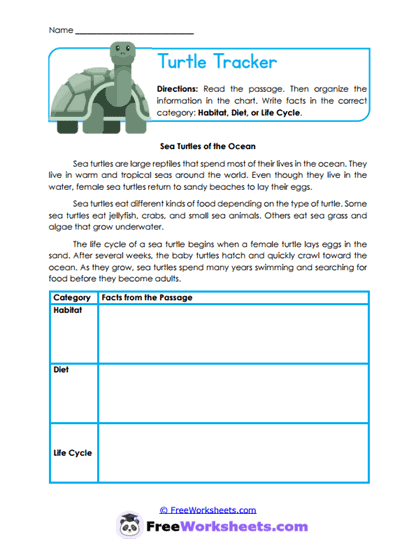
Students read an informational article about sea turtles and sort facts into categories such as habitat, diet, and life cycle. They analyze details from the passage, determine where information belongs, and organize ideas within a structured chart. This activity combines reading comprehension with organizational thinking. - Target Skill:
Students develop skills in categorizing information, identifying important details, and organizing nonfiction content logically. The activity supports comprehension by helping learners recognize relationships among ideas and structure information in meaningful ways.
Ocean Insights
- What Kids Do:
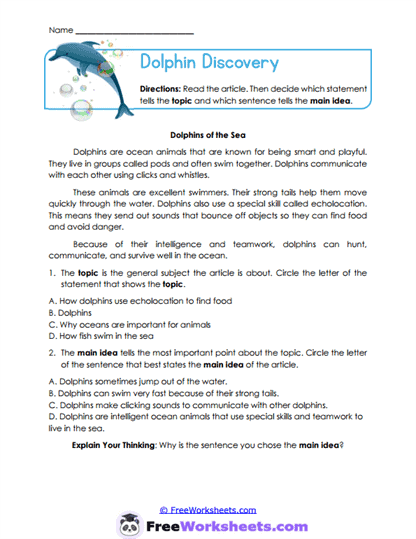
Students read a nonfiction article about dolphins and examine answer choices to determine both the topic and the main idea of the text. They compare statements, evaluate supporting details, and explain their reasoning. The activity encourages careful consideration of the author’s overall message. - Target Skill:
Students strengthen their understanding of the difference between a text’s subject and its central message. This practice supports comprehension growth by helping readers identify overarching ideas and connect details to broader concepts within informational reading.
Pollination Partners
- What Kids Do:
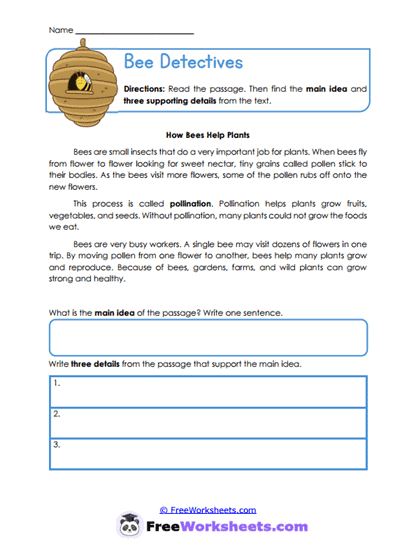
Students read a nonfiction passage about bees and pollination, identify the main idea, and select details that support it. They distinguish between major concepts and smaller facts while organizing evidence that explains the author’s message. The activity encourages purposeful reading and thoughtful analysis. - Target Skill:
Students develop the ability to determine central ideas and recognize supporting evidence within informational texts. This foundational comprehension skill helps readers understand how authors organize information and communicate important concepts in nonfiction writing.
Question Craft
- What Kids Do:
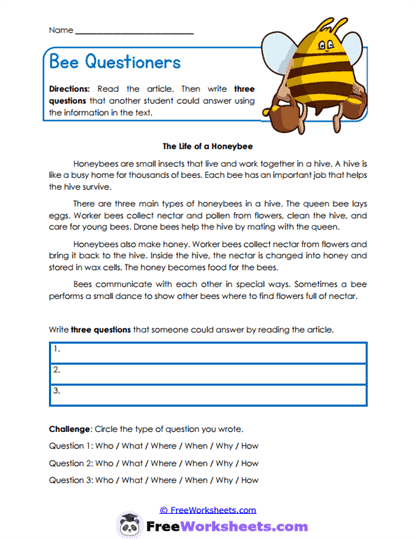
Students read an informational passage about honeybees and create their own comprehension questions based on important details from the text. They classify each question by type and focus on generating questions that can be answered directly from the passage. The activity promotes active engagement with reading. - Target Skill:
Students strengthen questioning strategies that support deeper comprehension and thoughtful reading. Creating meaningful questions encourages learners to identify important information, recognize key ideas, and engage more actively with informational texts.
Recycling Reflection
- What Kids Do:
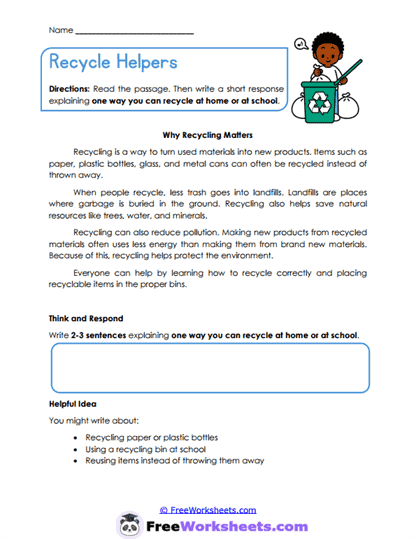
Students read a nonfiction passage about recycling and respond with a short written reflection that connects information from the text to real-world experiences. They explain how recycling can be practiced in daily life and support ideas using knowledge gained from the reading. - Target Skill:
Students build comprehension and informational writing skills by connecting text-based learning to personal experiences. The activity encourages reflection, clear communication, and the ability to apply information from nonfiction reading to practical situations.
Section Signals
- What Kids Do:
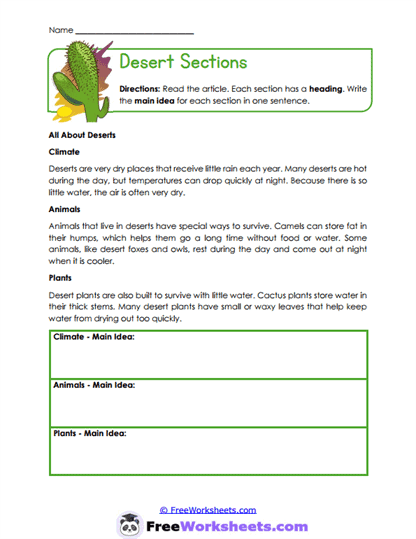
Students read an informational article divided into sections with headings and determine the main idea of each section. They analyze details, write summary statements, and compare ideas across different parts of the article. The activity helps readers manage longer informational texts. - Target Skill:
Students strengthen their ability to identify central ideas within individual sections of nonfiction texts. This skill supports effective summarizing, understanding text organization, and recognizing how multiple ideas work together within larger informational passages.
Summary Spotlight
- What Kids Do:
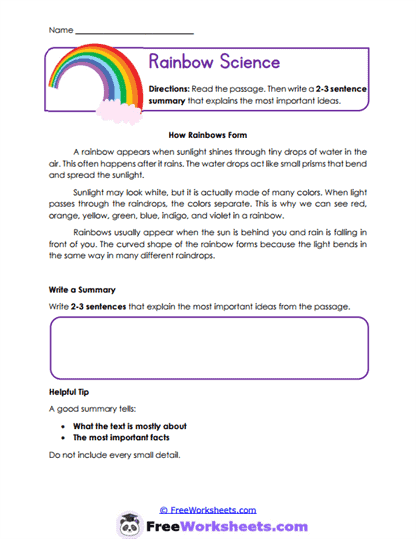
Students read an informational passage explaining how rainbows form and write a brief summary that includes only the most important ideas. They identify key information, avoid unnecessary details, and express understanding using their own words. The activity promotes concise communication. - Target Skill:
Students develop summarization skills by selecting essential information and combining ideas into a clear, organized response. This practice supports stronger comprehension and helps learners communicate important concepts from informational texts effectively.
Vocabulary Clues
- What Kids Do:
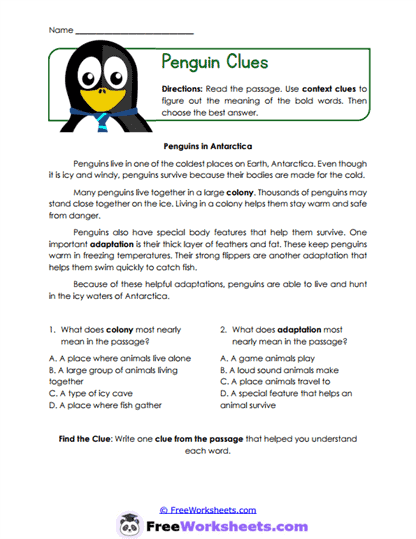
Students read an informational passage about penguins and use surrounding sentences to determine the meanings of unfamiliar words. They examine context clues, select accurate definitions, and explain which details helped them reach their conclusions. The activity encourages strategic reading. - Target Skill:
Students strengthen vocabulary development and comprehension by using context to infer word meanings. This skill promotes reading independence and helps learners understand unfamiliar academic language encountered in nonfiction texts.