
Story Elements Worksheets
3rd Grade reading story elements worksheets help students understand how characters, setting, plot, conflict, and theme work together in stories. Free, ready-to-print worksheets are available in PDF format for immediate classroom use and independent practice. Students strengthen skills such as analyzing character development, identifying plot structure, and supporting ideas with textual evidence.

About This Collection of Worksheets
Understanding story elements is one of the most important steps in becoming a confident reader. This collection helps students explore the building blocks of fiction by examining how characters, settings, conflicts, themes, and plot events connect to create meaningful narratives. Through engaging stories and structured activities, learners develop a stronger understanding of how authors organize and develop literary texts.
The worksheets cover a wide variety of essential comprehension skills, including character analysis, conflict and resolution, theme identification, sequencing, cause and effect, point of view, plot structure, and setting analysis. Students learn to move beyond simply recalling events by examining why events happen, how characters change, and what lessons readers can learn from stories. These activities encourage deeper thinking while strengthening evidence-based reading habits.
Teachers, parents, and homeschool educators can use these resources to support reading instruction throughout the year. The focused format of each worksheet allows students to practice one story element at a time while gradually building more advanced literary analysis skills. Whether used for guided instruction, independent work, review, or assessment, these worksheets provide meaningful opportunities to strengthen narrative comprehension.

Paul’s Teacher Tip
Story elements are easier for students to understand when they see how each one connects to the others. Encourage readers to ask questions such as “What problem is the character facing?” and “How does the setting affect what happens next?” while reading. Graphic organizers can be especially helpful for tracking characters, plot events, and themes. When discussing stories, ask students to support their answers with evidence from the text whenever possible. As learners become more confident, challenge them to explain how multiple story elements work together to shape the overall meaning of a narrative. These conversations help develop stronger comprehension and critical-thinking skills.
Worksheet Collection Skill Spotlights
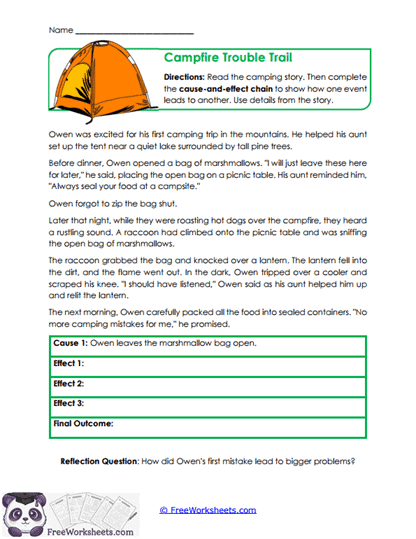
Cause Chain
- What Kids Do:
Students read a camping story and trace a chain of connected events from an initial mistake through a series of consequences. They identify causes, determine resulting effects, and complete a visual organizer that shows how one event leads to the next. The activity promotes logical thinking and careful reading. - Target Skill:
Students strengthen their understanding of cause-and-effect relationships within narrative texts. This skill helps readers recognize how character choices influence outcomes and supports deeper comprehension of plot development and story structure.
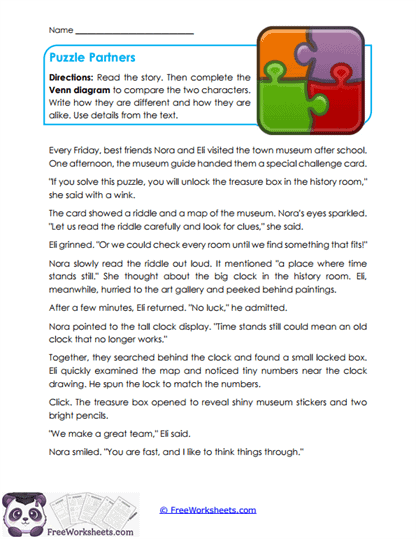
Character Compare
- What Kids Do:
Students read a mystery-style story about two friends solving a challenge and compare the characters using a Venn diagram. They identify similarities, differences, strengths, and personality traits while supporting their observations with details from the text. - Target Skill:
Students develop character-analysis skills by comparing and contrasting literary characters using textual evidence. This helps readers better understand character development, relationships, and the role different personalities play within a story.
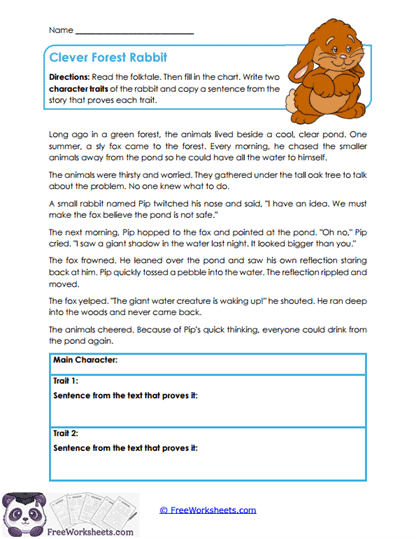
Character Evidence
- What Kids Do:
Students read a folktale about a clever rabbit and identify character traits that describe the main character. They locate evidence from the story to support each trait and explain how actions and decisions reveal important personality qualities. - Target Skill:
Students strengthen evidence-based reading skills by connecting character actions to personality traits. This supports deeper comprehension and helps learners understand how authors reveal character qualities through behavior and choices.
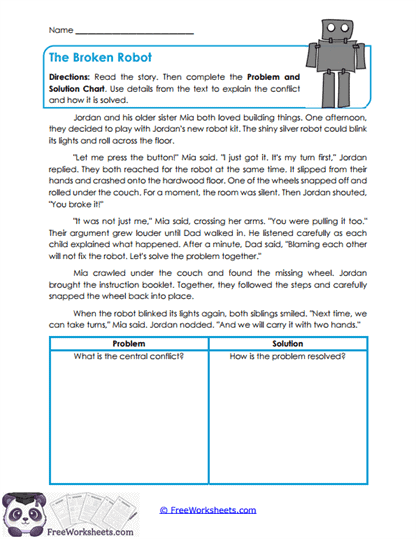
Conflict Solutions
- What Kids Do:
Students read a story about siblings working together to repair a damaged robot and identify the main conflict and its resolution. They organize information in a problem-and-solution chart and explain how the challenge is eventually solved. - Target Skill:
Students build understanding of conflict and resolution by examining how problems drive narrative action. This supports comprehension by helping readers recognize the structure of stories and the importance of character decision-making.
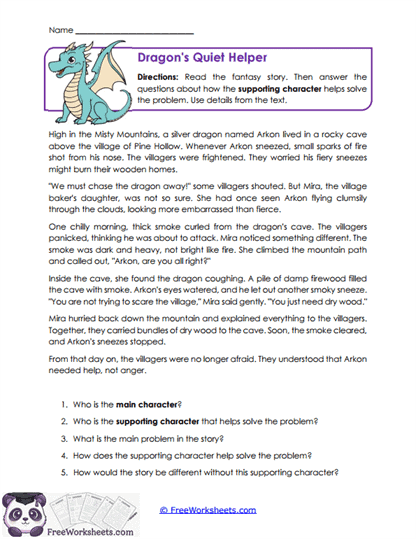
Helper Heroes
- What Kids Do:
Students read a fantasy story and identify both the main character and an important supporting character. They analyze how the supporting character contributes to solving the central problem and consider how the story would change without that character. - Target Skill:
Students develop an understanding of character roles and their impact on plot development. This skill helps readers recognize that supporting characters often play essential roles in moving a story toward its resolution.
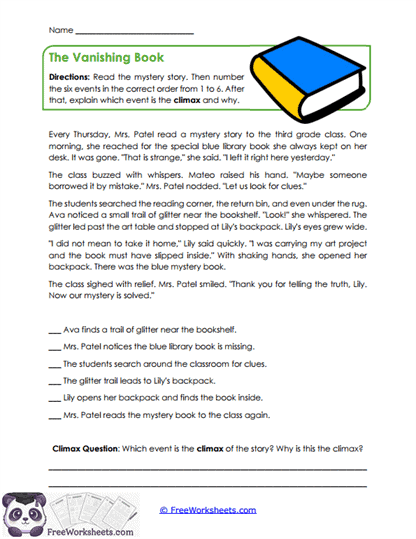
Mystery Sequence
- What Kids Do:
Students read a mystery about a missing library book and place important events in chronological order. They also identify the climax of the story and explain why it represents the most important turning point in the narrative. - Target Skill:
Students strengthen sequencing and plot-analysis skills by organizing events and recognizing the climax. Understanding how stories build toward a turning point supports stronger narrative comprehension.
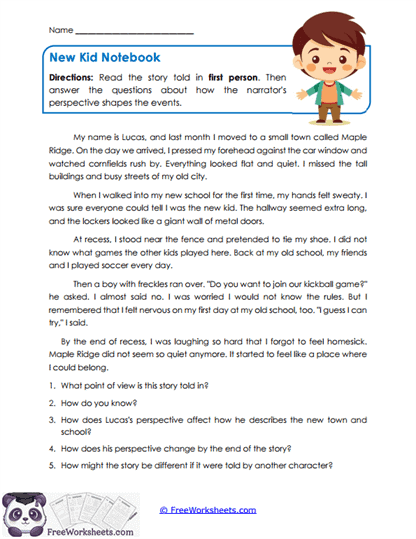
Perspective Matters
- What Kids Do:
Students read a first-person story about adjusting to a new town and analyze how the narrator’s perspective shapes the information shared. They identify clues that reveal point of view and consider how the story might change if told by another character. - Target Skill:
Students build an understanding of first-person narration and point of view. This helps readers recognize how perspective influences descriptions, emotions, and the information available within a story.
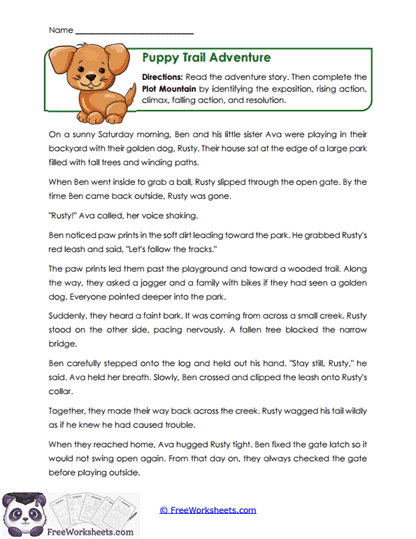
Plot Journey
- What Kids Do:
Students read an adventure story and organize events into a plot mountain that includes exposition, rising action, climax, falling action, and resolution. They identify major plot stages and support their choices with evidence from the text. - Target Skill:
Students strengthen their understanding of narrative structure by analyzing how stories develop from beginning to end. This skill supports comprehension and helps readers recognize patterns found in literary texts.
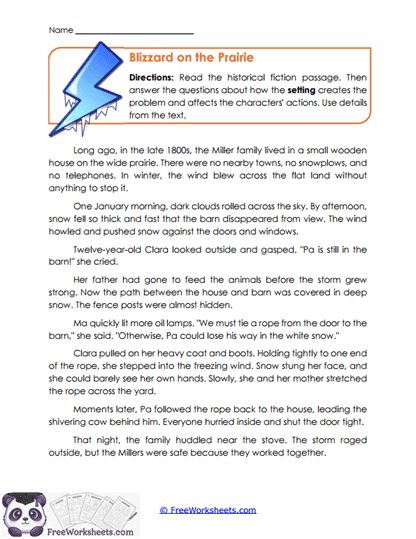
Setting Impact
- What Kids Do:
Students read a historical fiction story set during a prairie winter storm and examine how the setting influences character decisions and story events. They identify evidence showing how environmental conditions create challenges throughout the narrative. - Target Skill:
Students develop an understanding of how setting shapes plot, conflict, and character actions. This supports deeper literary analysis by helping readers see setting as an active element rather than simple background information.
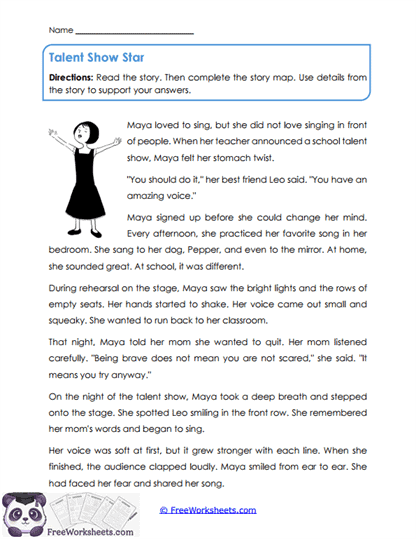
Story Mapping
- What Kids Do:
Students read a story about overcoming stage fright and complete a story map that organizes characters, setting, problem, events, and resolution. They use evidence from the text to identify each key element and explain its role in the story. - Target Skill:
Students strengthen comprehension by identifying and organizing essential story elements. This foundational skill supports summarization, retelling, and deeper understanding of narrative structure.
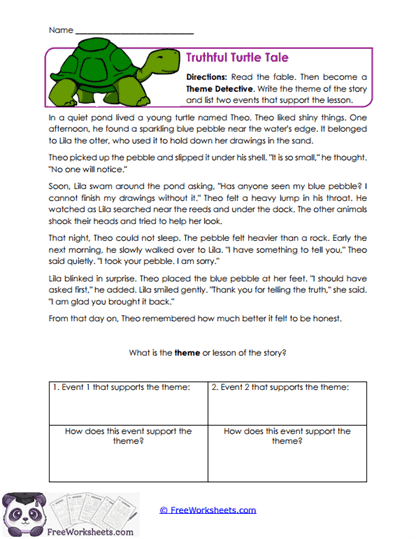
Theme Detectives
- What Kids Do:
Students read a fable and determine the lesson or message the story teaches. They identify important events that support the theme and explain how those events contribute to the overall meaning of the narrative. - Target Skill:
Students build theme-analysis skills by connecting story events to larger life lessons. This encourages readers to move beyond plot details and think critically about deeper meanings within literature.
Theme Proof
- What Kids Do:
Students read a story about growing a sunflower and select the theme that best matches the narrative. They gather evidence from the text, explain how it supports the theme, and justify their conclusions with thoughtful reasoning. - Target Skill:
Students strengthen evidence-based literary analysis by identifying themes and supporting interpretations with textual details. This skill promotes critical thinking and deeper comprehension of story messages.