
Poetry Elements Worksheets
3rd Grade reading poetry elements worksheets help students discover how poets use structure, sound, imagery, and language to communicate ideas. Free, ready-to-print worksheets are available in PDF format for immediate classroom use and independent practice. Students strengthen skills such as analyzing rhyme schemes, identifying themes, and interpreting figurative language in poetry.

About This Collection of Worksheets
Poetry introduces students to a unique form of reading that combines creativity, structure, sound, and meaning. This collection helps learners explore the building blocks of poetry while developing a stronger understanding of how poets communicate ideas, emotions, and experiences. Through engaging poems and targeted activities, students learn to recognize the features that make poetry different from other types of writing.
The worksheets provide practice with a wide range of important poetry concepts, including rhyme schemes, rhythm, repetition, imagery, theme, speaker perspective, author’s purpose, figurative language, and poetry vocabulary. Students move beyond simply reading poems by examining how specific elements contribute to meaning and reader understanding. These activities encourage close reading, thoughtful interpretation, and evidence-based analysis.
Teachers, parents, and homeschool educators can use these resources to support poetry instruction throughout the year. The focused structure of each worksheet allows students to build confidence one skill at a time while gradually developing a deeper appreciation for poetry. Whether used for introduction, practice, review, or assessment, these activities provide meaningful opportunities to strengthen reading comprehension through poetry.
Paul’s Teacher Tip
Poetry becomes much more accessible when students hear it aloud, so encourage frequent oral reading during lessons. Reading poems multiple times often helps learners notice rhyme, rhythm, repetition, and imagery that may be missed on a first reading. When discussing a poem, ask students what they see, hear, or feel as they read to strengthen visualization and comprehension. It can also be helpful to focus on one poetry element at a time before asking students to analyze multiple features together. As confidence grows, encourage students to explain how different poetry elements work together to support meaning and mood. These conversations help transform poetry from a decoding exercise into an enjoyable reading experience.
Worksheet Collection Skill Spotlights
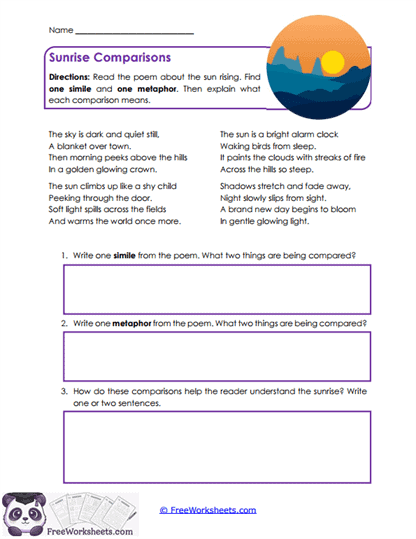
Comparison Clues
- What Kids Do:
Students read a poem about sunrise and identify both similes and metaphors within the text. They determine what is being compared, explain the meaning behind each comparison, and discuss how figurative language helps readers visualize the scene more clearly. The activity promotes close reading and thoughtful interpretation. - Target Skill:
Students strengthen their understanding of figurative language by distinguishing between similes and metaphors and analyzing their purpose. This supports deeper comprehension by helping readers recognize how poets use comparisons to create vivid imagery and communicate ideas effectively.
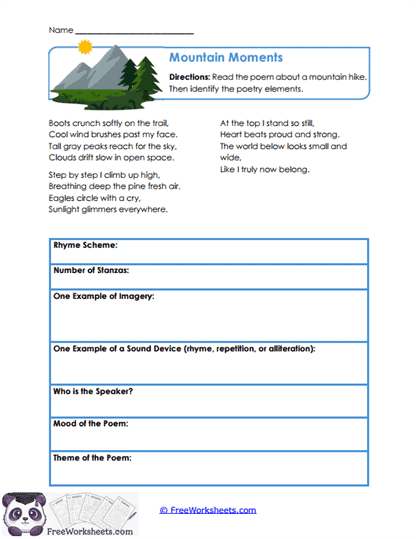
Poetry Review
- What Kids Do:
Students read a poem about an outdoor adventure and analyze several poetry elements within a single text. They identify rhyme scheme, stanzas, imagery, sound devices, speaker, mood, and theme while organizing their observations in a structured format. The activity serves as a comprehensive poetry review. - Target Skill:
Students develop the ability to apply multiple poetry-analysis skills simultaneously. This strengthens overall comprehension by encouraging readers to recognize how different poetic elements work together to create meaning, structure, and emotional impact.
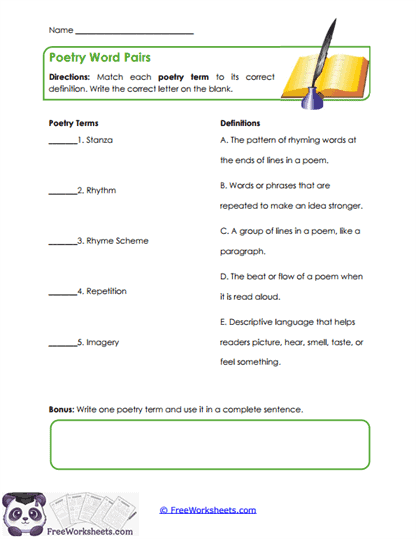
Poetry Terms
- What Kids Do:
Students match important poetry vocabulary words with their correct definitions and apply one of the terms in an original sentence. They explore concepts such as stanza, rhythm, imagery, repetition, and rhyme scheme while building familiarity with poetry terminology. - Target Skill:
Students build academic vocabulary related to poetry and literary analysis. Understanding key terms provides a foundation for discussing, interpreting, and analyzing poems with greater confidence and accuracy.
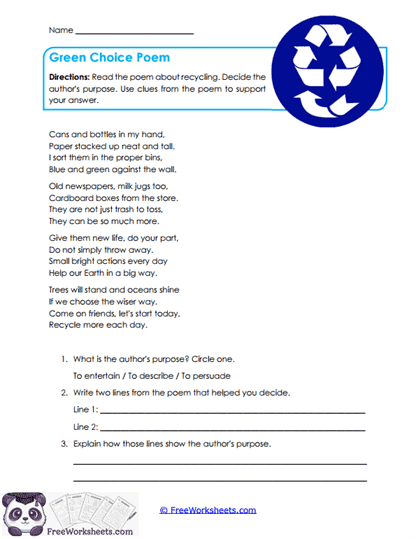
Purpose Clues
- What Kids Do:
Students read a poem about recycling and determine whether the poet’s purpose is to entertain, describe, inform, or persuade. They identify supporting evidence from the text and explain how specific lines reveal the poet’s intended message. - Target Skill:
Students strengthen their ability to identify author’s purpose and support conclusions with textual evidence. This skill promotes critical thinking and helps readers better understand why a poem was written and how language supports that purpose.
Rhyme Builder
- What Kids Do:
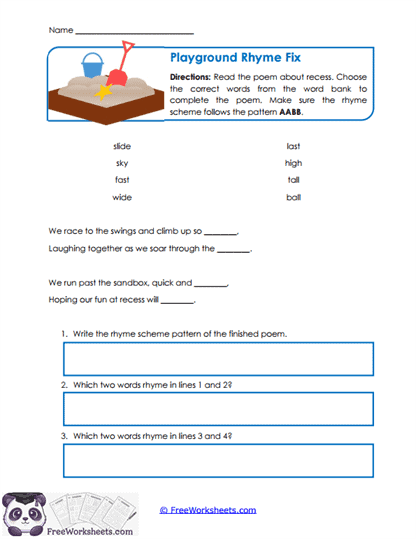
Students complete a poem by selecting rhyming words from a word bank and then identify the rhyme scheme created by the finished poem. They examine sound patterns, compare word endings, and analyze how rhyme contributes to poetic structure. - Target Skill:
Students develop rhyme recognition and pattern-analysis skills while exploring how rhyme schemes organize poems. This strengthens both poetry comprehension and understanding of sound-based literary structures.
Rhyme Patterns
- What Kids Do:
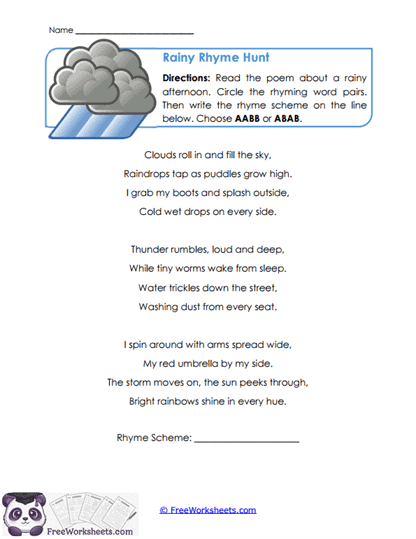
Students read a poem about a rainy afternoon and identify rhyming words at the ends of lines. They use those rhymes to determine the poem’s rhyme scheme and record the pattern using standard letter notation. The activity encourages careful listening and observation. - Target Skill:
Students strengthen their understanding of poetic structure by recognizing rhyme relationships and identifying rhyme schemes. This foundational skill helps readers analyze how poets organize language to create rhythm and flow.
Rhythm Riders
- What Kids Do:
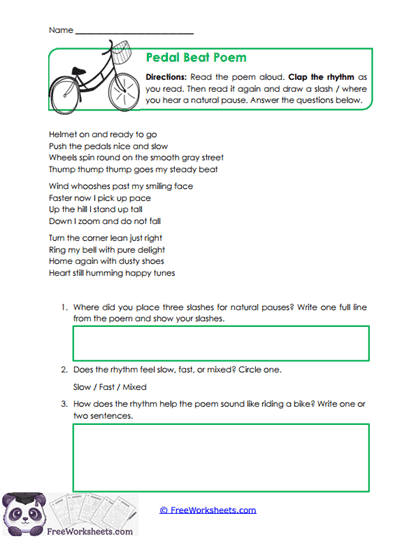
Students read a bicycle-themed poem aloud while clapping or tapping along with its rhythm. They identify natural pauses, mark breaks within lines, and reflect on how pacing affects the reading experience and overall meaning. - Target Skill:
Students build fluency and rhythm awareness by exploring how sound and pacing contribute to poetry. Understanding rhythm helps readers appreciate how poets use structure to support movement, mood, and expression.
Sensory Sorting
- What Kids Do:
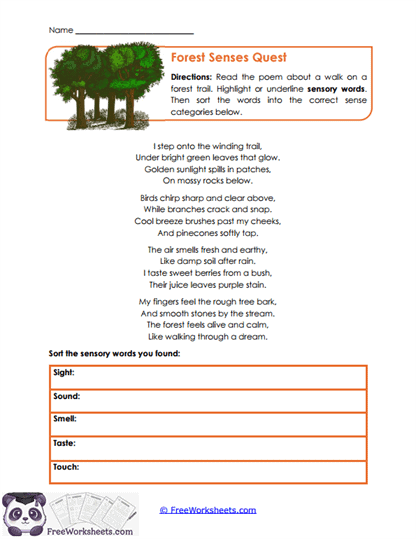
Students read a forest-themed poem and locate descriptive language connected to sight, sound, smell, taste, and touch. They sort sensory details into categories and analyze how imagery helps readers imagine the setting more vividly. - Target Skill:
Students strengthen visualization and imagery skills by identifying sensory details and connecting them to specific senses. This supports deeper comprehension and helps readers engage more fully with descriptive language.
Sound Repeats
- What Kids Do:
Students read a poem about a busy city morning and identify examples of alliteration throughout the text. They examine repeated beginning sounds, discuss their effect, and explain how sound patterns contribute to the poem’s energy and mood. - Target Skill:
Students develop an understanding of alliteration and its role in poetry. This supports literary analysis by helping readers recognize how repeated sounds create emphasis, rhythm, and memorable language.
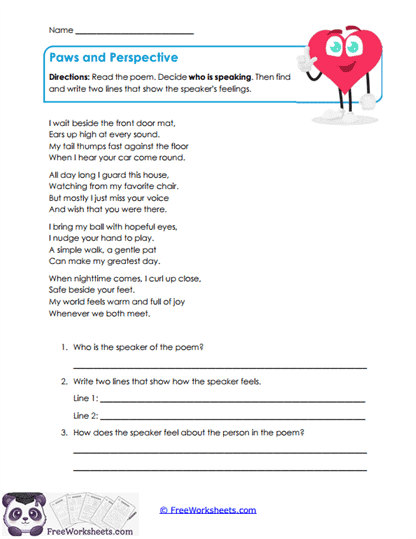
Speaker Clues
- What Kids Do:
Students read a poem told from a unique point of view and use clues from the text to determine who is speaking. They identify evidence that reveals the speaker’s identity, emotions, and perspective while supporting conclusions with details from the poem. - Target Skill:
Students strengthen inference and point-of-view skills by analyzing a poem’s speaker. This helps readers understand perspective, interpret emotions, and recognize how voice contributes to meaning.
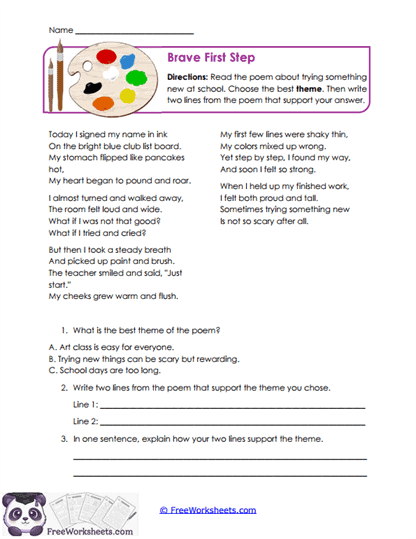
Theme Evidence
- What Kids Do:
Students read a poem about trying something new and determine the lesson or message it communicates. They identify supporting lines from the poem and explain how those details reinforce the theme. The activity encourages evidence-based reasoning. - Target Skill:
Students build theme-analysis skills by identifying messages and supporting interpretations with textual evidence. This helps readers move beyond surface details to understand deeper meanings within poetry.
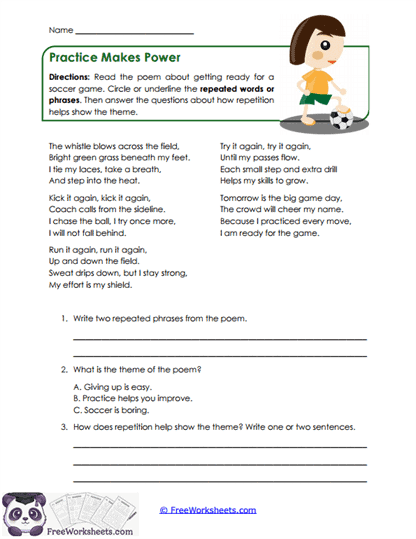
Theme Through Repetition
- What Kids Do:
Students read a poem about sports and perseverance, identify repeated words and ideas, and connect those patterns to the poem’s overall message. They explain how repetition helps emphasize important concepts and reinforces meaning. - Target Skill:
Students learn how repetition contributes to theme and author purpose within poetry. This supports analytical thinking by helping readers recognize how poets use recurring language to highlight central ideas.