
3rd Grade Reading Passages Worksheets
3rd Grade reading Reading Passages worksheets help students build comprehension through fiction and nonfiction texts with targeted skill-based questions. These free, ready-to-print resources are provided in PDF format for immediate classroom use. Students develop main idea identification, inference, and text analysis skills aligned to curriculum standards.
About This Collection of Worksheets
Reading comprehension becomes increasingly important in Grade 3 as students transition from learning to read toward reading to learn. These worksheets are carefully designed to align with Common Core standards such as RL.3.1, RL.3.2, and RI.3.2, helping students analyze texts, identify key ideas, and support answers with evidence. Through a balance of narrative and informational passages, students gain exposure to a variety of text structures and purposes.
This collection is ideal for use in morning work, homework assignments, RTI interventions, literacy centers, and small group instruction. Teachers can also use these worksheets for formative assessments to monitor student understanding of comprehension strategies. The range of question types ensures students engage with texts in meaningful and varied ways.
Each worksheet features clean, print-friendly layouts that are easy to read and efficient to copy. The straightforward design supports accessibility for all learners while keeping the focus on comprehension tasks. With minimal preparation required, teachers can quickly integrate these passages into daily reading instruction.
Paul’s Teacher Tip
When working with reading passages, always guide students to go back into the text to find evidence rather than relying on memory or guessing. In Grade 3, many students struggle to distinguish between main ideas and interesting details, so modeling how to highlight or annotate key information can be very helpful. Use graphic organizers for skills like summarizing, comparing, and identifying themes to support structured thinking. For differentiation, provide sentence starters for struggling readers and challenge advanced students to justify answers with multiple pieces of evidence. Consistent practice with purposeful questioning will strengthen both comprehension and confidence.
Worksheet Collection Skill Spotlights
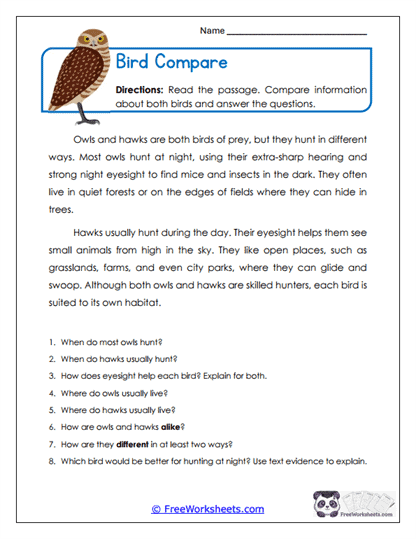
Bird Compare
- What Kids Do:
Students read an informational passage about two birds and analyze similarities and differences using details from the text. - Target Skill:
Develops comparative analysis by organizing information and evaluating relationships between ideas within informational text.
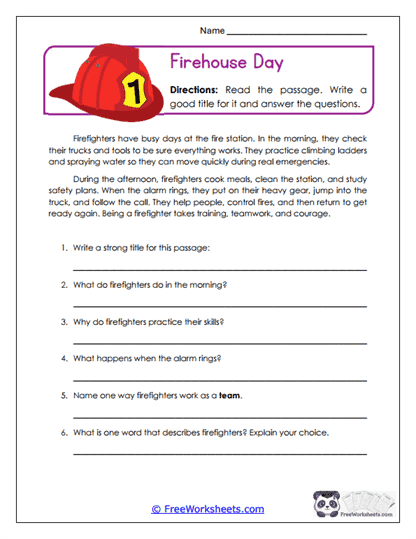
Firehouse Day
- What Kids Do:
Learners explore a nonfiction passage about firefighters’ daily routines and answer questions about responsibilities and tasks. - Target Skill:
Builds understanding of central ideas and supporting details through structured informational reading.
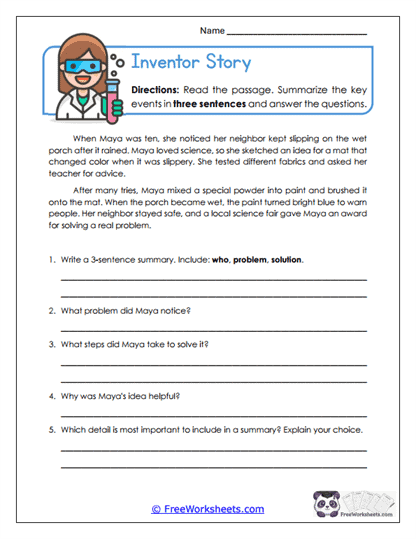
Inventor Story
- What Kids Do:
Students read a narrative and write a concise three-sentence summary focusing on key events, problem, and resolution. - Target Skill:
Strengthens summarization skills by identifying essential elements and condensing text into clear, focused ideas.
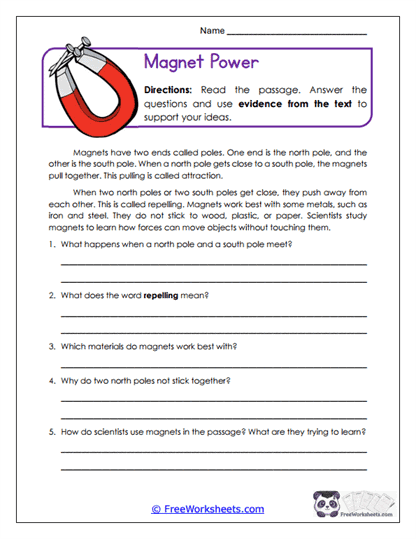
Magnet Power
- What Kids Do:
Students read a science-based passage and respond to questions that require explaining concepts using specific text evidence. - Target Skill:
Enhances informational text comprehension by connecting vocabulary, concepts, and evidence-based explanations.
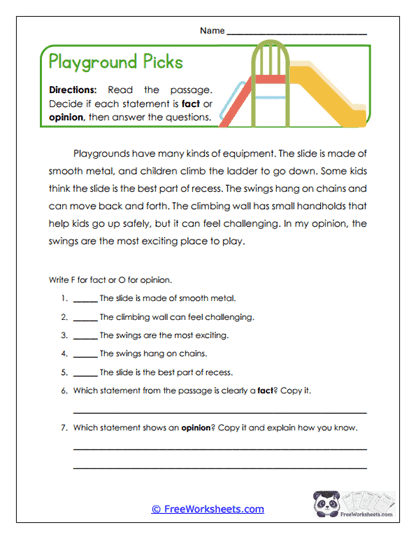
Playground Picks
- What Kids Do:
Learners evaluate statements within a passage and classify them as factual or opinion-based, explaining their reasoning. - Target Skill:
Develops critical reading by distinguishing objective information from subjective viewpoints using textual clues.
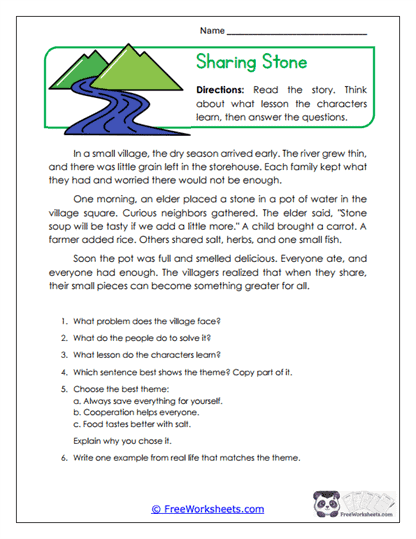
Sharing Stone
- What Kids Do:
Students read a narrative about a community lesson and identify the problem, solution, and overall message of the story. - Target Skill:
Builds theme recognition by connecting story events to underlying lessons and moral understanding.
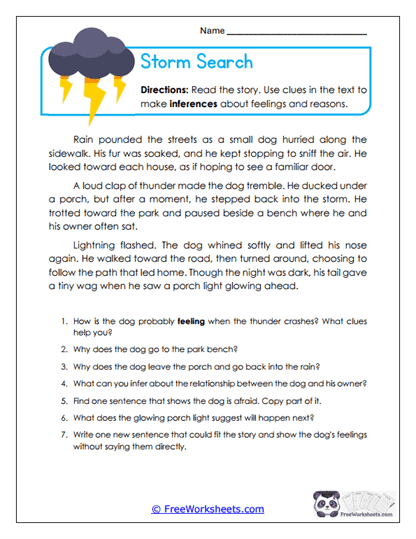
Storm Search
- What Kids Do:
Students examine a story and use contextual clues to answer questions that require reading between the lines. - Target Skill:
Strengthens inferential reasoning by combining textual evidence with logical thinking to draw conclusions.