
Main Idea Worksheets
These worksheets help students master finding the central message in both nonfiction and stories. These free, ready-to-print PDF worksheets are built for immediate classroom use with clear directions and student-friendly layouts. Students practice identifying main idea, selecting supporting details, eliminating unrelated sentences, and summarizing across short passages.
About This Collection of Worksheets
In Grade 3, students are expected to move beyond naming a topic and begin stating a clear main idea that captures what the text is mostly about. They also need to explain how key details support that central idea and learn to recognize information that does not fit, which strengthens comprehension and supports standards-aligned informational reading. This collection develops those skills through short, focused texts that require students to summarize, justify choices, and connect evidence to a central claim.
These worksheets are easy to use across many settings, including guided reading groups, literacy centers, RTI, morning work, and quick assessments. The variety of formats-matching, multiple choice, graphic organizers, sentence frames, and “does not belong” elimination-keeps practice engaging while targeting the same essential strategy. Several pages also build transferable skills like explaining reasoning and linking details to a broader message.
All printables are black-and-white, ink-friendly, and designed for low-prep instruction. Clear response spaces help students organize main ideas and details without getting overwhelmed by writing demands. Teachers can also use the consistent routines to build independence and improve the quality of evidence-based answers over time.
Paul’s Teacher Tip
A simple way to strengthen main idea skills is to ask students, “What is this mostly about-and what is it teaching me about that?” Have them practice grouping details before writing the main idea so they see what connects. For extra support, cover answer choices and let students explain the idea in their own words first. You can also compare a weak main idea (“about water”) with a strong one (“saving water helps the environment”) to build clarity. Over time, students learn that the main idea is not just the topic-it’s the message that ties everything together.
Worksheet Collection Skill Spotlights
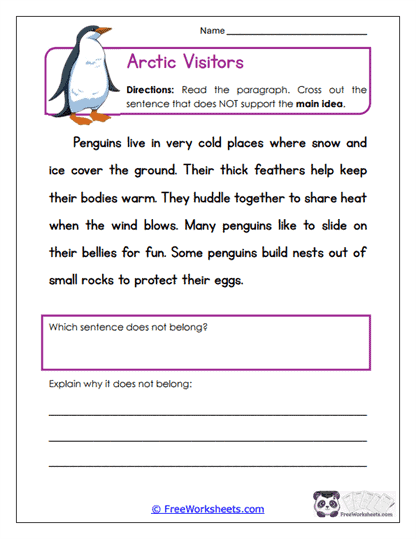
Arctic Visitors
• What Kids Do – Students read a paragraph and choose which sentence does not belong, then explain why.
• Target Skill – Builds identification of irrelevant details and main idea focus.
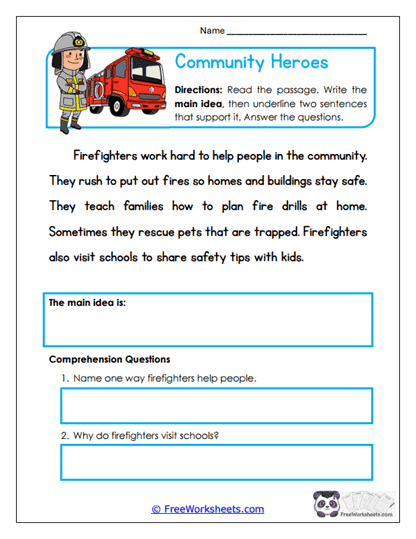
Community Heroes
• What Kids Do – Students read about helpers, state the main idea, and explain how each detail supports it.
• Target Skill – Develops main idea identification and supporting detail connection.
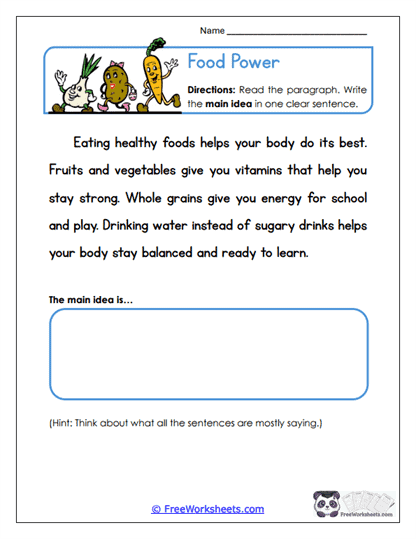
Food Power
• What Kids Do – Students read a paragraph and write one sentence that explains the main idea.
• Target Skill – Builds writing clear main idea statements.
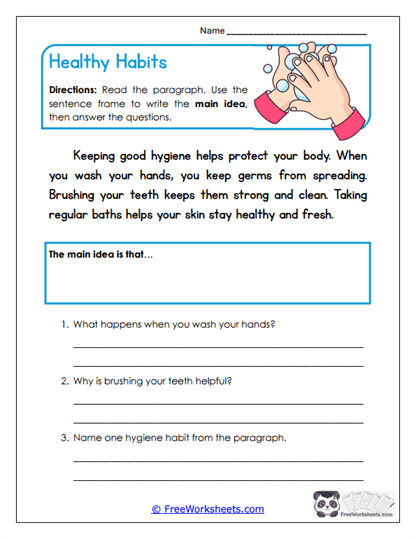
Healthy Habits
• What Kids Do – Students read a passage, write the main idea using a frame, and answer detail questions.
• Target Skill – Develops main idea comprehension and evidence-based responses.
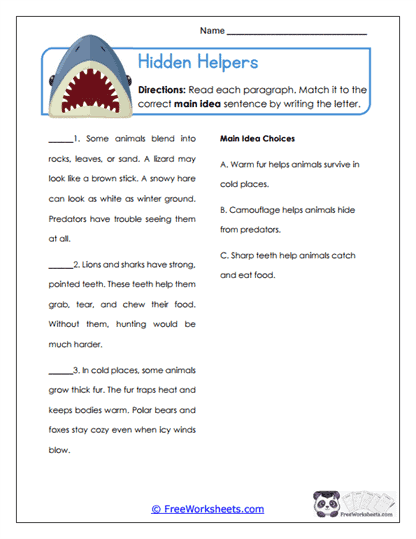
Hidden Helpers
• What Kids Do – Students read short paragraphs and match each one to the correct main idea.
• Target Skill – Builds main idea matching and paragraph understanding.
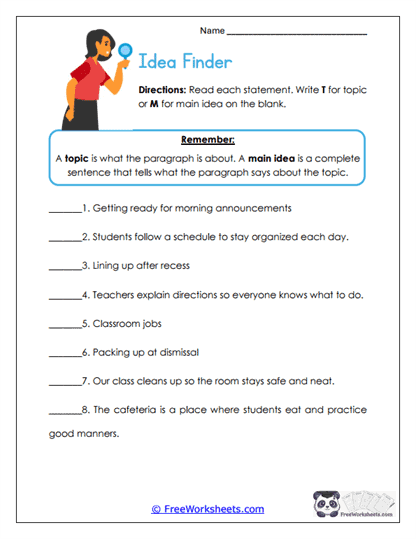
Idea Finder
• What Kids Do – Students decide if statements are topics or main ideas.
• Target Skill – Develops understanding of topic vs. main idea.
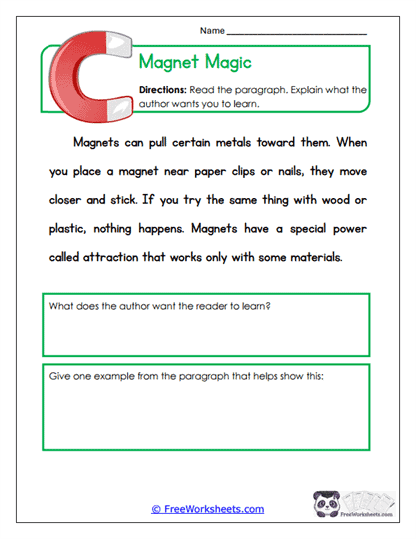
Magnet Magic
• What Kids Do – Students read a paragraph and explain what the author is teaching using supporting details.
• Target Skill – Builds main idea as author’s message with evidence.
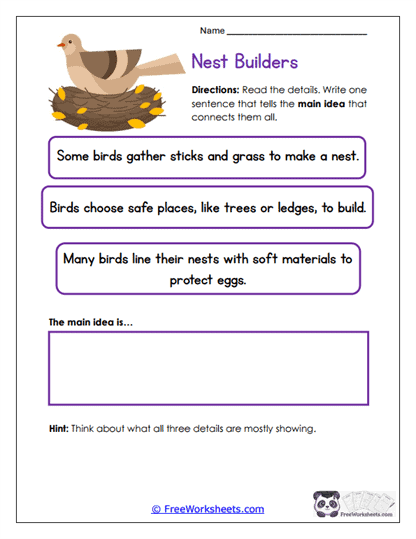
Nest Builders
• What Kids Do – Students combine several details to write one main idea sentence.
• Target Skill – Develops synthesis of supporting details into a central idea.
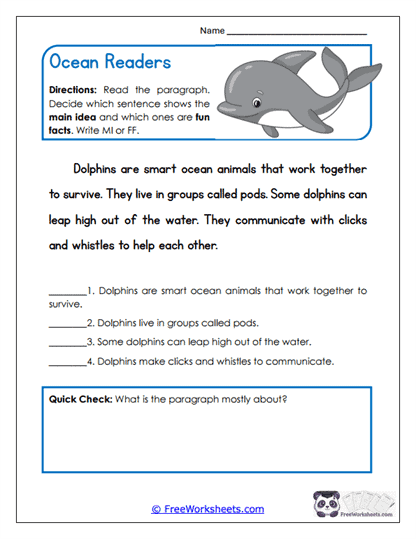
Ocean Readers
• What Kids Do – Students read a paragraph, find the sentence that does not fit, and explain their reasoning.
• Target Skill – Builds identification of irrelevant details using main idea.
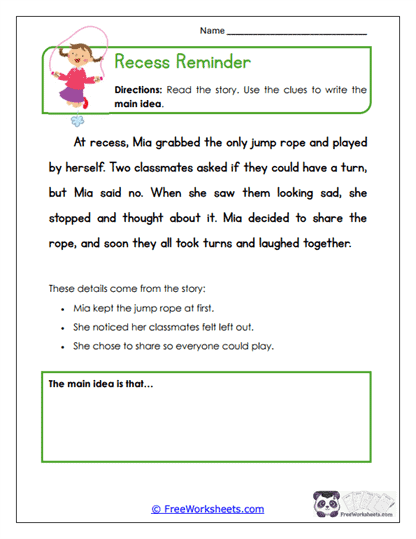
Recess Reminder
• What Kids Do – Students read a story and write the central message using key events as support.
• Target Skill – Develops main idea and message in narrative texts.
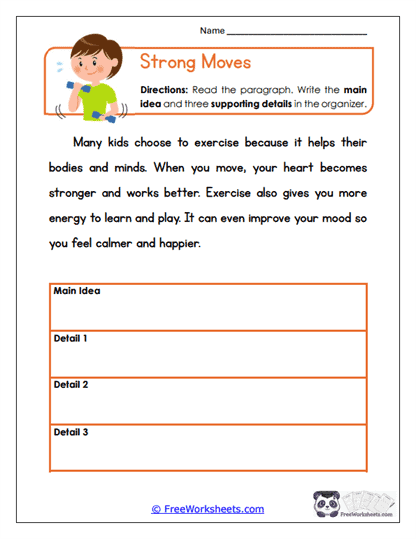
Strong Moves
• What Kids Do – Students record a main idea and three supporting details in a graphic organizer.
• Target Skill – Builds organization of main idea and supporting evidence.
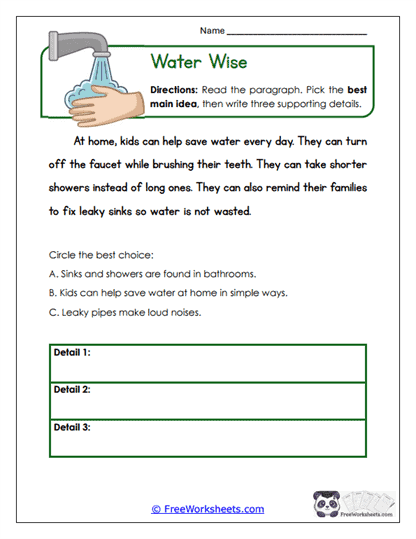
Water Wise
• What Kids Do – Students choose the best main idea and list details that support it.
• Target Skill – Develops main idea selection and evidence matching.