
3rd Grade Reading Comprehension Worksheets
These 3rd Grade worksheets build stronger Grade Reading Comprehension skills through focused passages and evidence-based questions. These free, ready-to-print PDF worksheets are made for immediate classroom use in centers, small groups, or independent practice. Students practice main idea, summarizing, inference, theme, point of view, and citing text evidence.
About This Collection of Worksheets
In Grade 3, students move from basic retelling toward deeper comprehension and analysis across stories and informational texts. They are expected to determine main ideas and themes, describe relationships between events and ideas, explain character actions and motivations, and support answers with details from the text. This collection aligns to that progression by repeatedly reinforcing close reading routines and standards-based responses.
These worksheets work well for guided reading, literacy centers, morning work, homework, RTI, and quick assessment checks. Many activities require written explanations, story mapping, or proof-finding (like underlining the sentence that supports an answer), which strengthens accountability and prepares students for constructed-response tasks. The mix of narrative and nonfiction passages also supports balanced comprehension practice.
Each printable is designed in a clean, black-and-white format for easy copying and low-prep instruction. Student-friendly layouts provide clear spaces for main idea statements, supporting details, story structure sorting, and evidence-based answers. Teachers can use the consistent structures to build routine, independence, and stronger written reading responses.
Paul’s Teacher Tip
At this level, it’s important to build the habit of “show me where you found it.” After students answer, have them point to or underline the exact part of the text that helped them. You can also model thinking out loud-how you use clues to figure something out-so students see the process, not just the answer. For extra support, let students discuss answers with a partner before writing. Over time, this builds stronger, more confident readers who can explain their thinking clearly.
Worksheet Collection Skill Spotlights
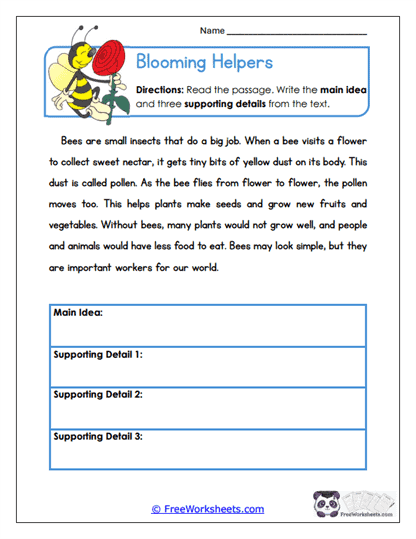
Blooming Helpers
• What Kids Do – Students read a passage, write the main idea, and list three supporting details.
• Target Skill – Builds main idea identification and supporting detail selection.
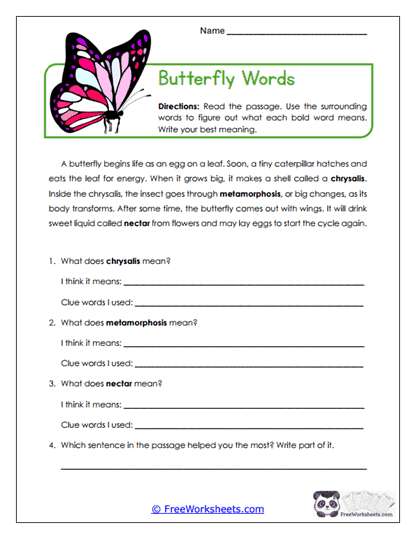
Butterfly Words
• What Kids Do – Students use context clues to define vocabulary and point to the words that helped them.
• Target Skill – Develops context-based vocabulary and evidence use.
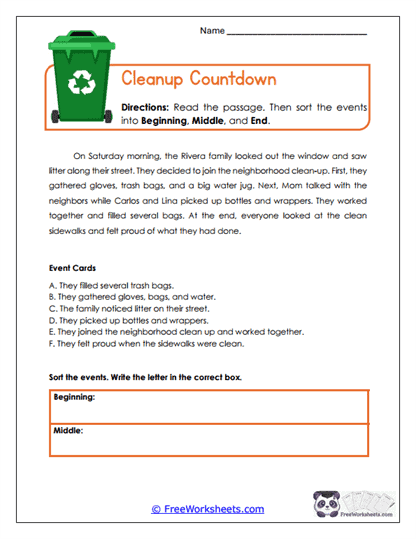
Cleanup Countdown
• What Kids Do – Students read a story and sort events into beginning, middle, and end.
• Target Skill – Builds understanding of narrative structure and sequencing.
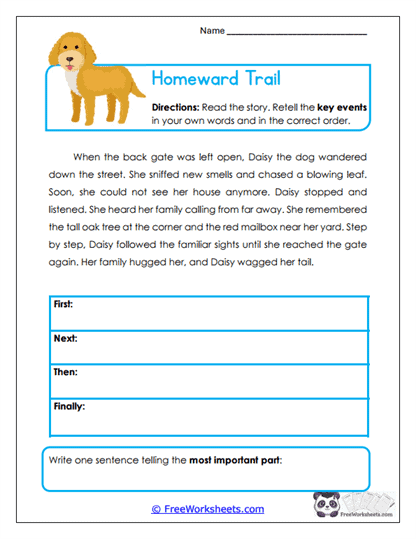
Homeward Trail
• What Kids Do – Students identify the narrator and explain how their thoughts and feelings shape the story.
• Target Skill – Develops point of view analysis using text evidence.
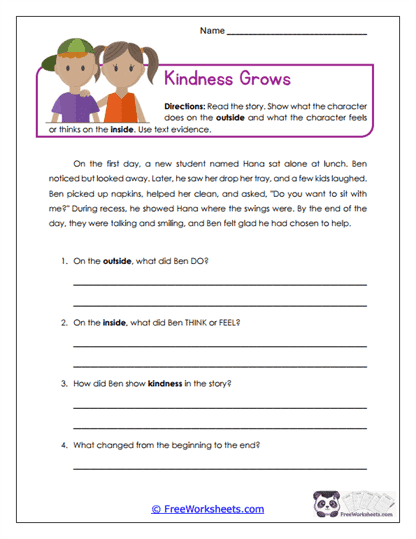
Kindness Grows
• What Kids Do – Students analyze a character’s actions and feelings and connect them to the story’s message.
• Target Skill – Builds character analysis and theme connection.
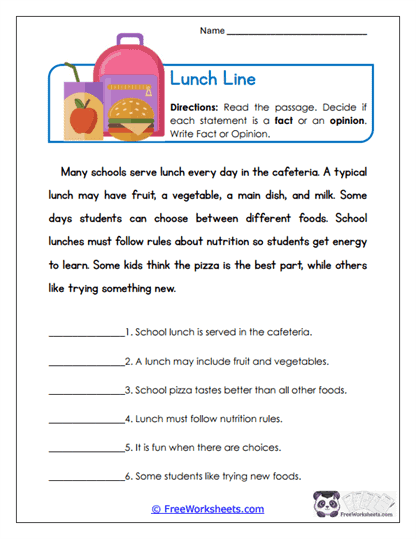
Lunch Line
• What Kids Do – Students identify the theme of a story and support it with character actions.
• Target Skill – Develops theme identification and evidence use.
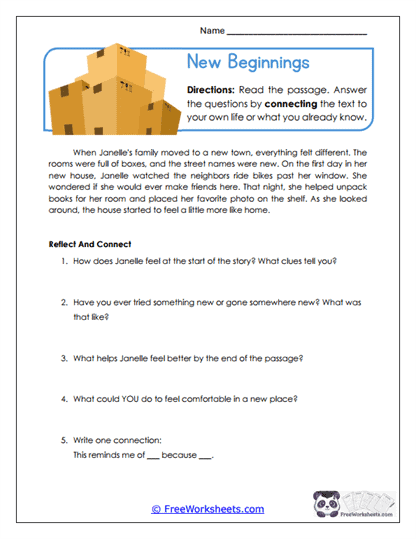
New Beginnings
• What Kids Do – Students describe a character’s feelings using story details and make a text-to-self connection.
• Target Skill – Builds evidence-based understanding of character emotions and connections.
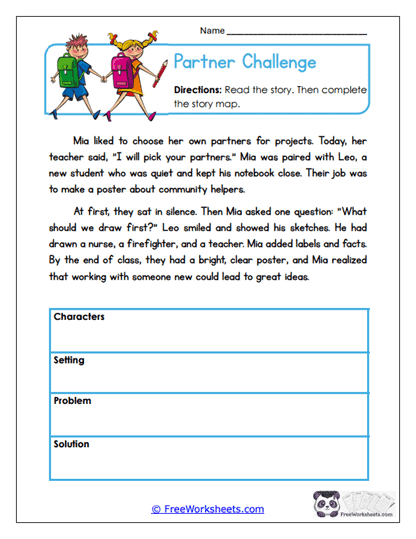
Partner Challenge
• What Kids Do – Students complete a story map with characters, setting, problem, and solution.
• Target Skill – Develops understanding of story elements and character change.
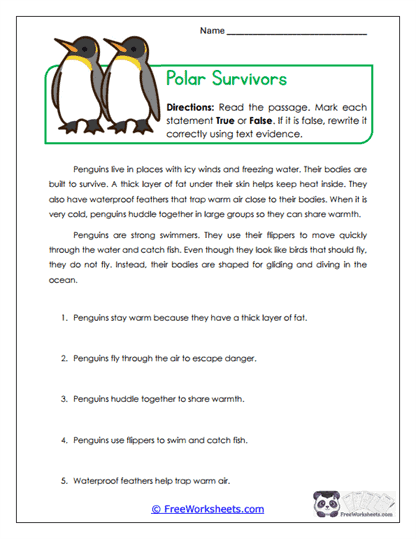
Polar Survivors
• What Kids Do – Students read a passage, mark statements true or false, and correct false ones using evidence.
• Target Skill – Builds close reading and verification of information.
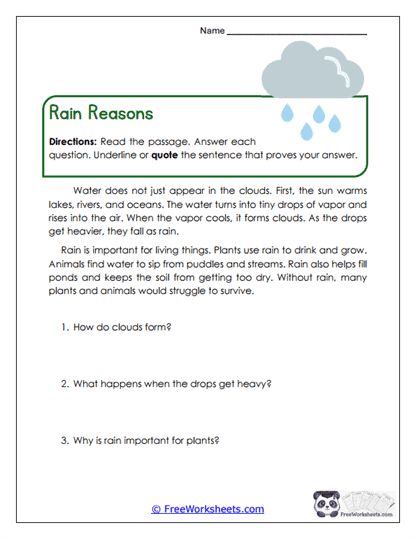
Rain Reasons
• What Kids Do – Students answer questions about cause and effect and underline the sentence that proves each answer.
• Target Skill – Develops understanding of relationships between ideas and citing evidence.
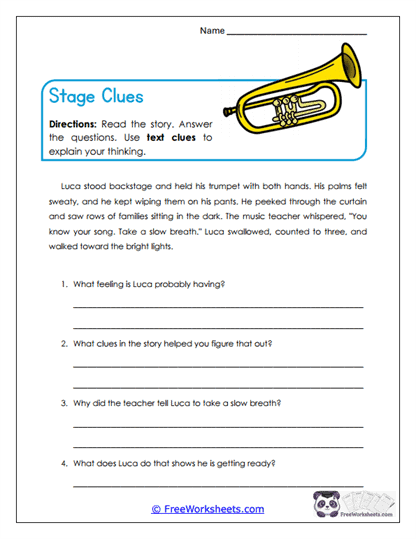
Stage Clues
• What Kids Do – Students infer a character’s feelings using clues from actions and explain their reasoning.
• Target Skill – Builds inference skills and use of multiple text clues.
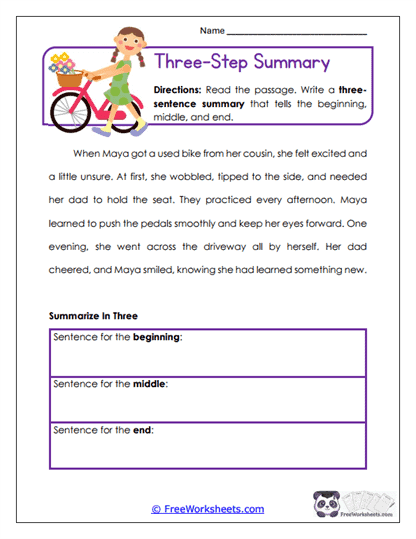
Three-Step Summary
• What Kids Do – Students write a three-part summary covering beginning, middle, and end of a story.
• Target Skill – Develops summarizing and sequencing key events.