
Literary Devices Worksheets
3rd Grade reading literary devices worksheets help students discover how authors use creative language to make stories more vivid and engaging. Free, ready-to-print worksheets are available in PDF format for immediate classroom use and independent practice. Students build important skills such as interpreting figurative language, analyzing imagery, and explaining how literary techniques affect meaning and mood.
About This Collection of Worksheets
Literary devices help authors create memorable stories, poems, and descriptions that capture a reader’s imagination. This collection introduces students to a wide variety of language techniques, including similes, metaphors, personification, hyperbole, alliteration, onomatopoeia, imagery, and sensory details. Through engaging passages and poems, learners explore how authors use words creatively to communicate ideas and emotions.
Each worksheet focuses on a specific literary concept while encouraging students to think critically about an author’s choices. Learners move beyond simple identification by explaining meanings, analyzing effects, comparing examples, and supporting responses with evidence from the text. These activities help students develop a deeper appreciation for language while strengthening overall reading comprehension.
The worksheets are suitable for classroom instruction, small-group practice, literacy centers, homework assignments, intervention support, and homeschool learning. The variety of formats keeps students engaged while providing meaningful opportunities to practice literary analysis. By working through these activities, learners gain confidence recognizing and interpreting figurative and descriptive language in a wide range of texts.
Paul’s Teacher Tip
When introducing literary devices, encourage students to visualize what the author is describing rather than focusing only on definitions. Reading passages aloud can help learners hear sound devices like alliteration and onomatopoeia more clearly. Ask students to explain why an author might choose a particular comparison or description instead of simply identifying the device. Graphic organizers can also help students compare different literary techniques and their effects. As students become more comfortable, challenge them to create their own examples and incorporate them into short writing pieces. This combination of reading and writing helps literary concepts become more meaningful and memorable.
Worksheet Collection Skill Spotlights
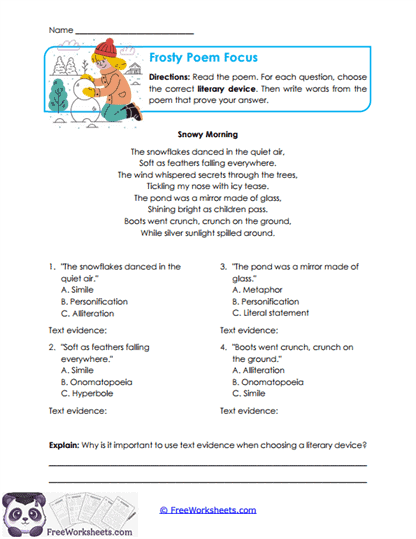
Device Detectives
- What Kids Do:
Students read a winter-themed poem and search for multiple literary devices hidden throughout the text. They identify examples of similes, personification, onomatopoeia, and other techniques while supporting their answers with evidence. The activity encourages careful reading, close attention to language, and thoughtful analysis of poetic writing. - Target Skill:
Students strengthen their ability to recognize multiple literary devices within a single text and justify their conclusions using textual evidence. This supports deeper comprehension, analytical thinking, and the ability to explain how authors use figurative language to enhance meaning and reader engagement.
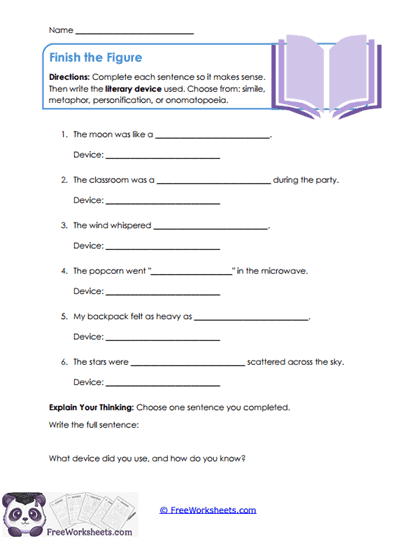
Figure Finishers
- What Kids Do:
Students complete sentence starters by creating their own examples of similes, metaphors, personification, and onomatopoeia. After writing original responses, they identify the literary device used and explain their thinking. The activity combines creative writing with literary analysis and encourages students to apply concepts independently. - Target Skill:
Students develop mastery of literary devices by moving from recognition to application. Creating original examples reinforces understanding of figurative language structures while strengthening writing skills, vocabulary development, and the ability to communicate ideas using expressive language.
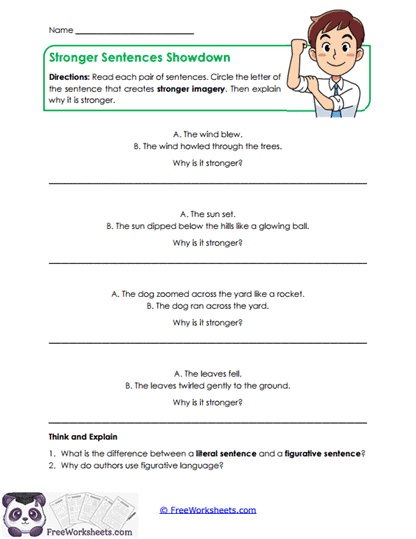
Imagery Challenge
- What Kids Do:
Students compare pairs of sentences that describe the same event and determine which one creates a stronger mental image. They analyze word choice, evaluate descriptive language, and explain why certain sentences are more effective. The activity encourages thoughtful comparison and discussion about author decisions. - Target Skill:
Students build an understanding of imagery and descriptive writing by evaluating how language influences visualization. This supports comprehension, critical thinking, and the ability to recognize effective literary techniques that enhance reader engagement and understanding.
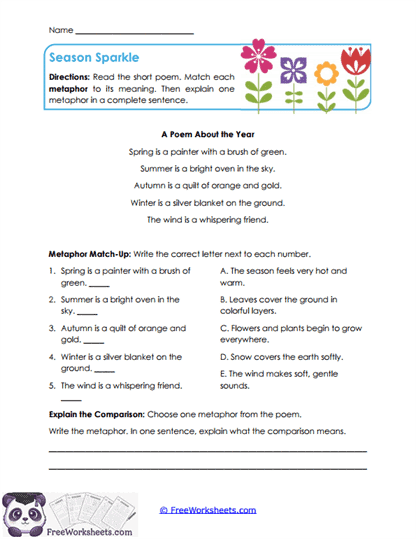
Metaphor Match
- What Kids Do:
Students read a seasonal poem containing metaphors and match each figurative comparison with its intended meaning. They interpret abstract language, connect comparisons to real-world ideas, and explain one metaphor in their own words. The activity promotes deeper understanding of poetic language. - Target Skill:
Students strengthen their ability to interpret metaphors and understand how direct comparisons create imagery and meaning. This skill supports literary analysis by helping readers move beyond literal interpretations and recognize deeper layers of communication within texts.
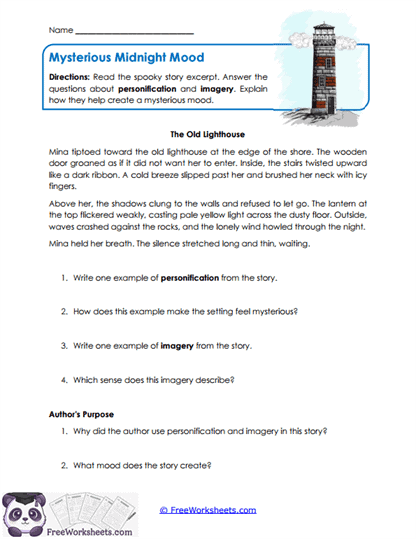
Mood Makers
- What Kids Do:
Students read a mystery-themed passage and identify examples of personification and imagery. They explain how specific words and descriptions contribute to the story’s atmosphere and determine which sensory details influence the reader’s emotions. The activity encourages close reading and reflection. - Target Skill:
Students learn how literary devices contribute to mood by examining the relationship between language choices and reader feelings. This strengthens analytical reading skills and helps learners understand how authors intentionally shape emotional responses.
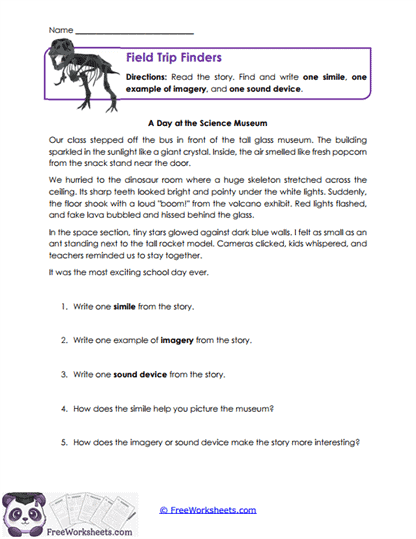
Museum Clues
- What Kids Do:
Students read a narrative about a science museum visit and identify examples of similes, imagery, and sound devices. They explain how each example helps readers better understand or visualize the setting and events. The activity combines literary device identification with meaningful analysis. - Target Skill:
Students practice distinguishing among multiple literary devices and evaluating their purposes within a text. This supports stronger comprehension, literary awareness, and the ability to explain how language techniques improve storytelling.
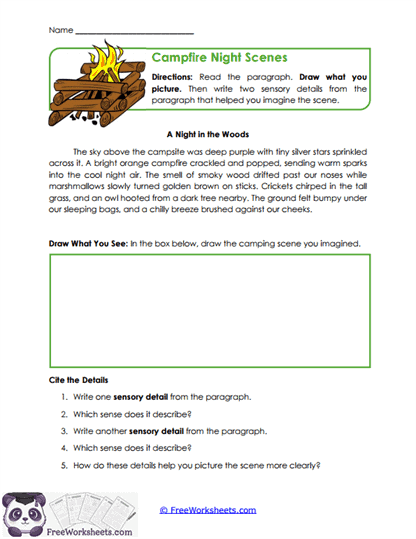
Sensory Sketch
- What Kids Do:
Students read a descriptive camping passage, identify sensory details connected to the five senses, and create a drawing based on the imagery they visualize. They explain which words helped form mental pictures and connect details to specific senses. The activity blends reading and creativity. - Target Skill:
Students strengthen visualization and imagery skills by analyzing sensory language and connecting descriptions to personal mental images. This supports comprehension by helping readers engage more deeply with descriptive texts and author-crafted settings.
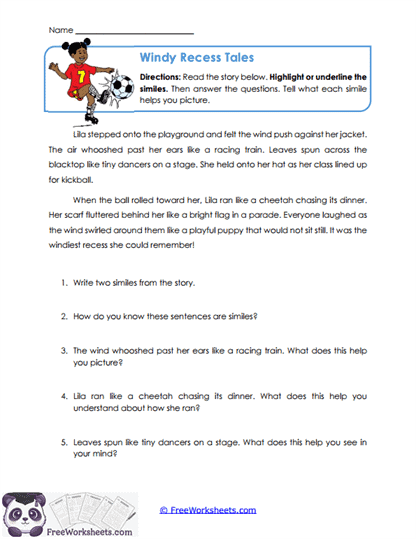
Simile Stories
- What Kids Do:
Students read a story about a windy day and identify similes woven throughout the narrative. They explain the comparisons being made, discuss the images created by the language, and answer questions about how the similes improve the story. The activity promotes close reading and interpretation. - Target Skill:
Students develop the ability to recognize similes and analyze how comparisons create vivid imagery. Understanding figurative comparisons strengthens comprehension and helps readers appreciate how authors make descriptions more engaging and memorable.
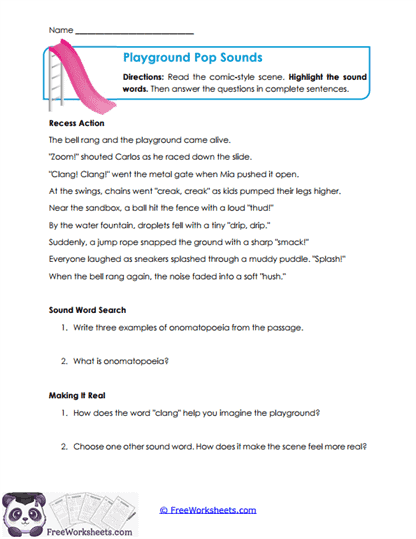
Sound Hunt
- What Kids Do:
Students read a playground-themed narrative and locate examples of onomatopoeia that imitate real-life sounds. They identify sound words, explain their meanings, and describe how they contribute to the realism of the scene. The activity encourages active engagement with language. - Target Skill:
Students build understanding of sound devices by recognizing how onomatopoeia creates sensory experiences within text. This skill supports literary analysis and helps readers understand how authors use language to make scenes feel more vivid and realistic.
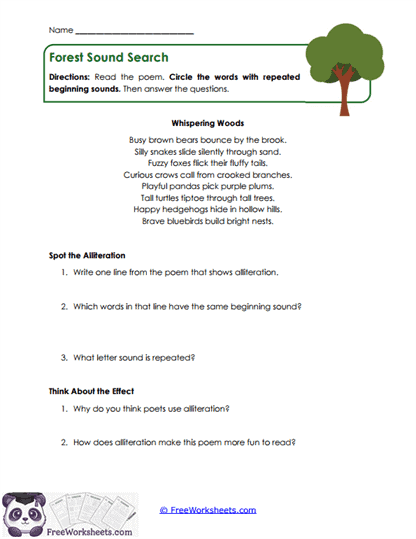
Sound Patterns
- What Kids Do:
Students read a nature poem and search for examples of alliteration. They identify repeated beginning sounds, record examples from the text, and explain how these sound patterns affect the reading experience. The activity combines poetry analysis with phonological awareness. - Target Skill:
Students strengthen their understanding of alliteration and how repeated sounds contribute to rhythm, emphasis, and enjoyment. This supports literary interpretation while helping learners appreciate the musical qualities of language.
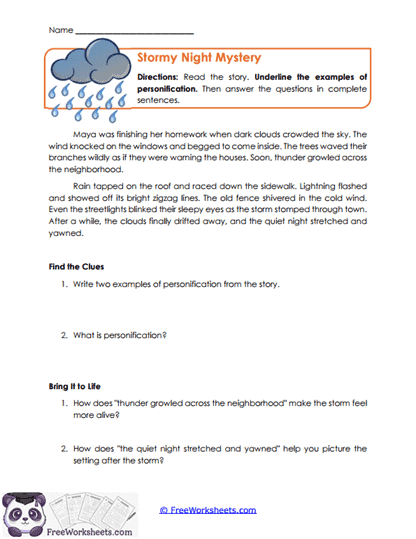
Storm Characters
- What Kids Do:
Students read a story about a storm and identify examples of personification that give human qualities to natural elements. They explain how these descriptions make the setting feel more alive and discuss the author’s purpose for using the device. The activity promotes thoughtful analysis. - Target Skill:
Students develop the ability to recognize personification and evaluate how it enhances imagery, setting, and emotional impact. This skill supports stronger literary comprehension and a deeper understanding of creative language techniques.
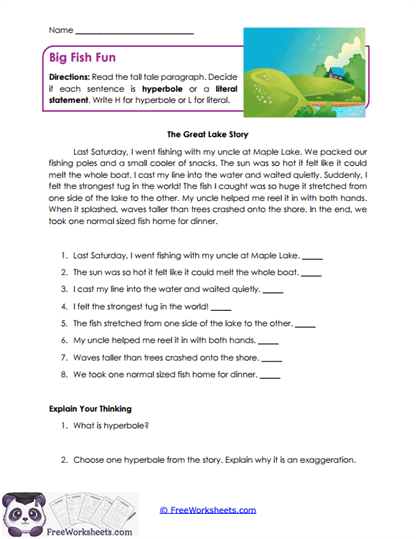
Tall Tales
- What Kids Do:
Students read a humorous fishing story and determine whether statements are examples of hyperbole or literal descriptions. They classify examples, explain their reasoning, and discuss how exaggeration contributes to entertainment and storytelling. The activity encourages critical thinking about language. - Target Skill:
Students strengthen their understanding of hyperbole by distinguishing exaggeration from realistic statements. This supports comprehension of figurative language and helps learners recognize how authors use exaggeration to create humor, emphasis, and memorable descriptions.