
About This Worksheet
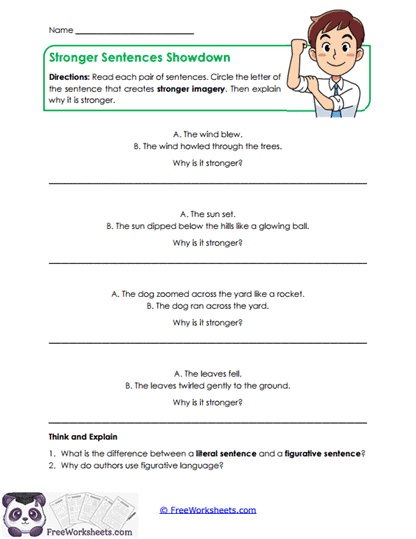
This worksheet focuses on comparing literal and figurative language to determine which creates stronger imagery. Imagery is descriptive language that helps readers form mental pictures and sensory experiences while reading. Third-grade students strengthen comprehension when they learn how figurative language can make writing more vivid and engaging. For example, “The dog zoomed across the yard like a rocket” creates a stronger image than simply saying the dog ran. This activity helps students recognize effective descriptive writing.
Curriculum and Grade Alignment
This activity is intended for Grade 3 students learning about literary devices and descriptive language. The primary objective is evaluating how authors use figurative language to strengthen imagery. Students should already understand basic comparisons and descriptive words. The next stage of learning involves analyzing author choices and explaining how language affects meaning and mood. This worksheet aligns with CCSS RL.3.4 and supports TEKS 3.10D by helping students interpret figurative language.
Student Tasks
On this worksheet, students will read pairs of sentences that describe the same event in different ways. They will decide which sentence creates a stronger mental image and explain their reasoning. Learners must compare literal descriptions with figurative or more detailed language. Students also answer reflection questions about the difference between literal and figurative writing. The activity encourages critical thinking about author word choice.
Common Challenges and Misconceptions
Many students choose a sentence based on length rather than the quality of the imagery it creates. Some learners understand which sentence is stronger but struggle to explain why. Others may think figurative language is always better, even when it is unclear or confusing. Readers sometimes focus only on individual words instead of the overall image created. Teachers should model how descriptive language helps readers picture actions more clearly.
Implementation Guidance
Teachers can use this worksheet during lessons on imagery, figurative language, or writing improvement. It works well as a class discussion activity because students can compare their reasoning. Parents may encourage children to explain the images they picture while reading each sentence. Homeschool educators can extend learning by having students revise simple sentences to make them more descriptive. The worksheet supports both reading analysis and stronger writing skills.
Details and Features
The worksheet presents sentence pairs that allow students to directly compare writing styles. Open-ended response sections encourage explanation and justification rather than simple selection. Reflection questions help students connect literary devices with effective communication. The printable format supports classroom instruction, intervention groups, homework, and homeschool learning. Its structured approach makes abstract literary concepts easier for young readers to understand.