
Text Features Worksheets
3rd Grade reading text features worksheets help students learn how nonfiction authors organize information and guide readers through informational texts. Free, ready-to-print worksheets are available in PDF format for immediate classroom use and independent practice. Students strengthen skills such as using indexes, tables of contents, captions, diagrams, headings, and other text features to locate and understand information.
About This Collection of Worksheets
Text features are essential tools that help readers navigate nonfiction texts efficiently and confidently. This collection introduces students to a variety of informational text features and shows how each one supports comprehension. By learning how authors organize information using headings, diagrams, captions, graphs, sidebars, glossaries, indexes, and tables of contents, students become more effective readers and researchers.
The worksheets provide hands-on practice with both identifying and using text features in meaningful contexts. Students learn when to use specific features, how to gather information from visual elements, and how multiple text features can work together to improve understanding. These activities encourage readers to move beyond simply reading paragraphs and begin using all parts of an informational text to locate, organize, and analyze information.
Teachers, parents, and homeschool educators can use these resources to strengthen nonfiction reading skills across science, social studies, and other content areas. The focused design of each worksheet allows students to practice one feature at a time while gradually building a broader understanding of informational text structures. Together, these activities help learners become more independent, confident, and strategic readers.
Paul’s Teacher Tip
When introducing text features, encourage students to think about each feature as a tool designed to help readers accomplish a specific task. Ask questions such as, “Which feature would help you find information quickly?” or “Which feature would help you understand a picture?” Providing students with real nonfiction books and magazines gives them opportunities to see text features in authentic contexts. It can also be helpful to create classroom anchor charts that connect each feature to its purpose. As students become more comfortable, challenge them to explain why an author chose a particular feature and how it improves the reading experience. This approach helps learners understand that strong nonfiction readers use more than just the main text to gather information.
Worksheet Collection Skill Spotlights
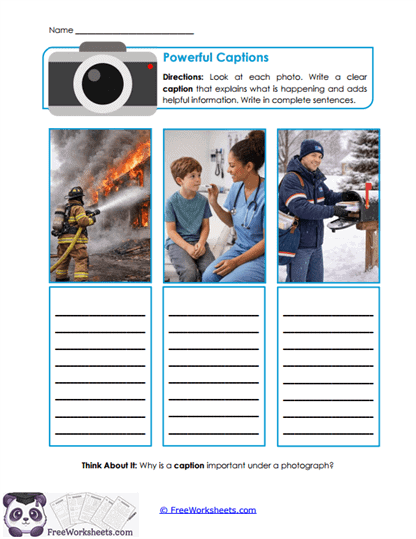
Caption Creators
- What Kids Do:
Students examine photographs and write informative captions that explain what is happening in each image. They add meaningful details that go beyond simple observations and reflect on how captions help readers understand visual information more clearly. - Target Skill:
Students strengthen visual literacy and nonfiction writing skills by creating effective captions. This helps readers understand how images and written explanations work together to communicate information.
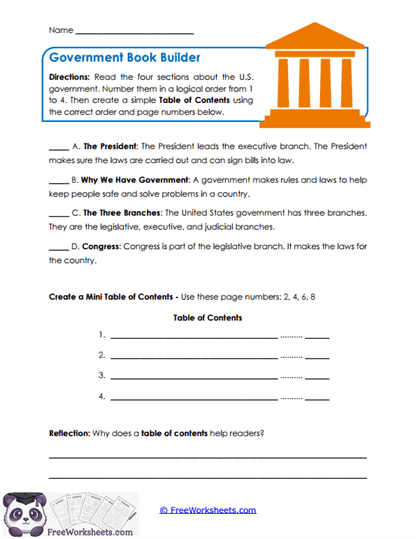
Contents Creator
- What Kids Do:
Students organize informational sections about government topics and create a mini table of contents using provided page numbers. They determine logical sequencing and explain how a table of contents helps readers navigate nonfiction books. - Target Skill:
Students develop an understanding of nonfiction organization and text structure by creating and interpreting tables of contents. This supports stronger navigation and research skills.
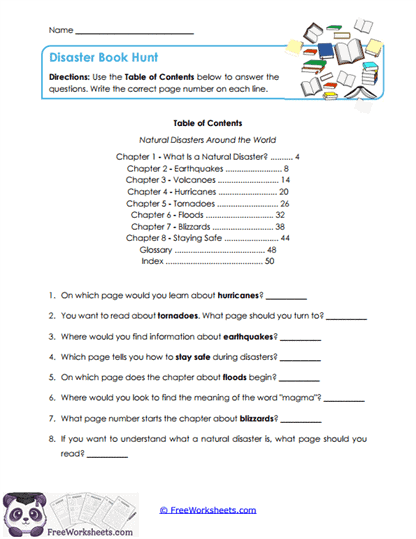
Contents Search
- What Kids Do:
Students analyze a table of contents from a nonfiction book and use chapter titles and page numbers to answer questions. They locate topics efficiently and determine where specific information can be found. - Target Skill:
Students build practical research and navigation skills by learning how to use a table of contents to locate information quickly within informational texts.
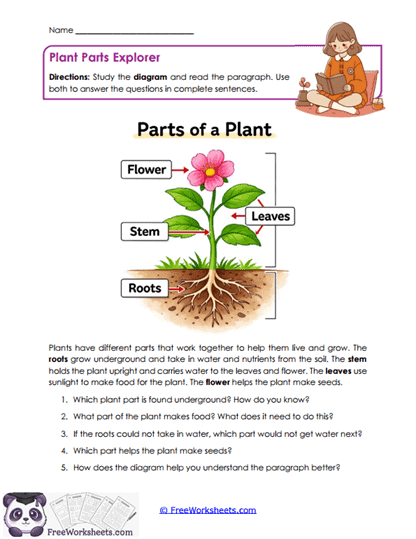
Diagram Discovery
- What Kids Do:
Students study a labeled plant diagram and read a related informational passage. They answer questions using both sources and explain how the diagram supports understanding of the written text. - Target Skill:
Students strengthen their ability to combine visual and written information. This skill supports deeper comprehension and helps readers learn from multiple sources within a text.
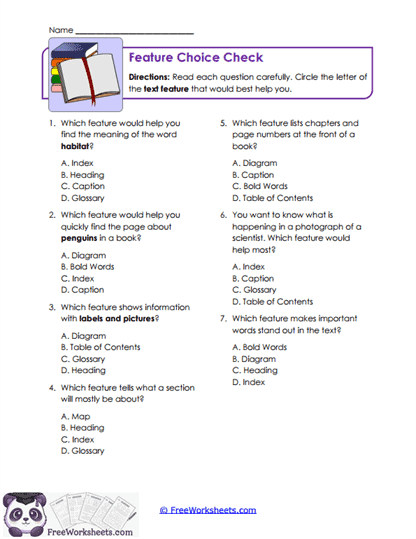
Feature Finder
- What Kids Do:
Students read a variety of nonfiction reading scenarios and determine which text feature would best help a reader accomplish a specific goal. They apply their knowledge of feature purposes to practical situations. - Target Skill:
Students develop strategic reading skills by matching reader needs with the most appropriate text features. This encourages thoughtful application of nonfiction reading tools.
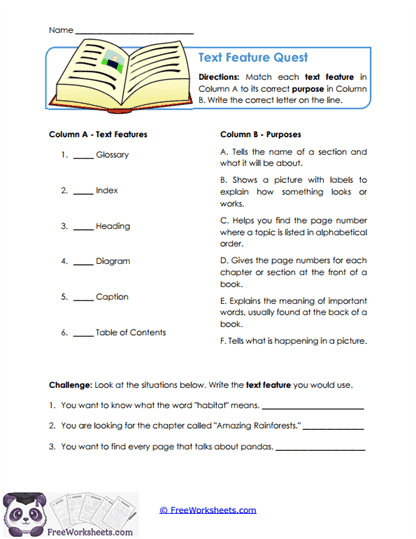
Feature Match
- What Kids Do:
Students match common text features such as glossaries, indexes, captions, diagrams, and headings with their purposes. They then apply their knowledge to real-world reading situations. - Target Skill:
Students strengthen their understanding of how different text features function and when each feature is most useful for readers.
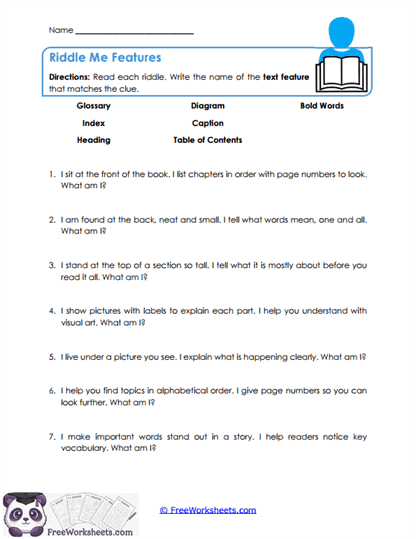
Feature Riddles
- What Kids Do:
Students solve riddles that describe various text features based on their functions. They use clues and descriptions to identify the correct feature and explain their reasoning. - Target Skill:
Students reinforce their knowledge of text features by focusing on purpose and function rather than memorization. This promotes deeper understanding and flexible application.
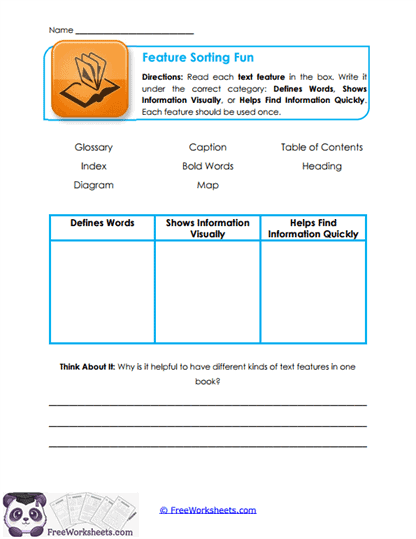
Feature Sorting
- What Kids Do:
Students classify text features into categories based on what they do, such as defining words, presenting visual information, or helping readers locate information. They organize features within a structured chart. - Target Skill:
Students develop a stronger conceptual understanding of nonfiction text features by categorizing them according to purpose and function.
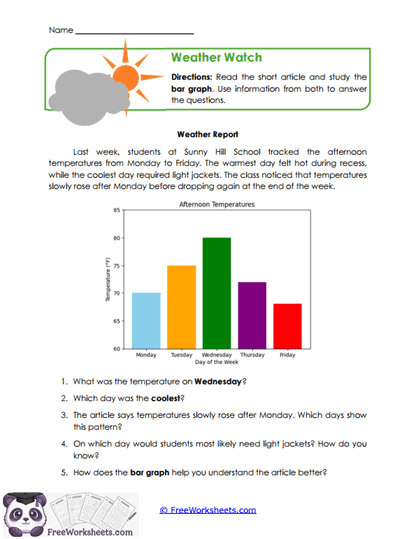
Graph Readers
- What Kids Do:
Students read a weather article and analyze a bar graph showing temperature data. They answer questions using information from both sources and identify trends presented visually. - Target Skill:
Students strengthen data interpretation and informational reading skills by combining information from graphs and written texts.
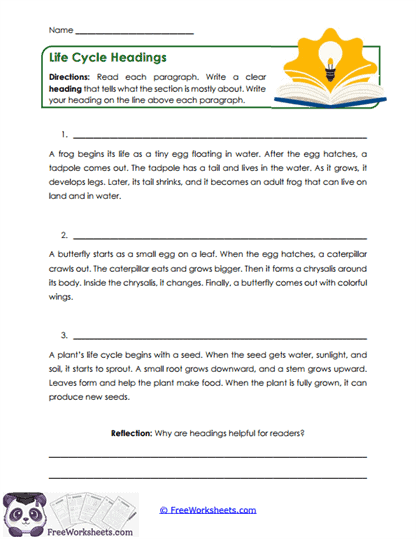
Heading Helpers
- What Kids Do:
Students read informational paragraphs and create appropriate headings based on the main ideas presented. They explain why their headings accurately represent the content. - Target Skill:
Students build summarization and organizational skills by identifying central ideas and understanding how headings help structure nonfiction texts.
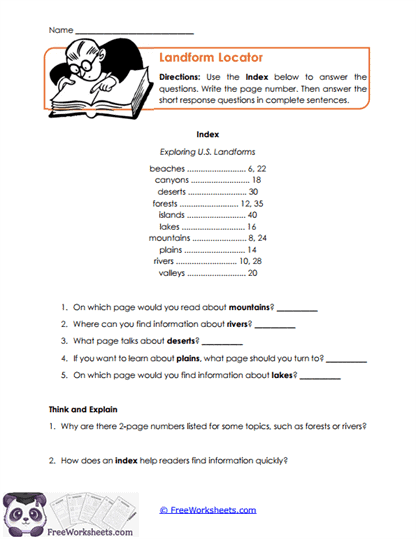
Index Detectives
- What Kids Do:
Students explore an index from a nonfiction book and use alphabetical organization to locate topics and corresponding page numbers. They answer questions about how indexes support readers. - Target Skill:
Students strengthen research and reference skills by learning how indexes help readers find information efficiently.
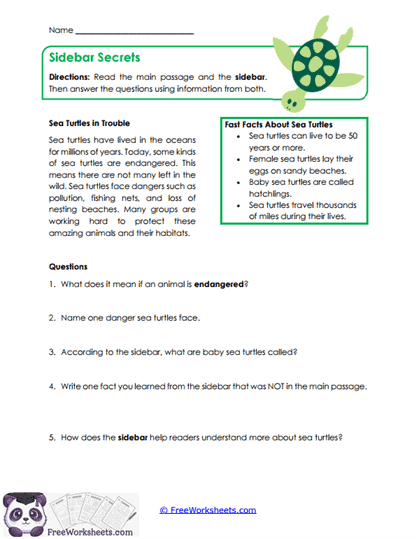
Sidebar Secrets
- What Kids Do:
Students read an article about sea turtles along with a sidebar containing additional facts. They compare information from both sources and explain how the sidebar expands reader understanding. - Target Skill:
Students develop the ability to gather information from multiple text features and understand how sidebars add valuable details to nonfiction texts.