
About This Worksheet
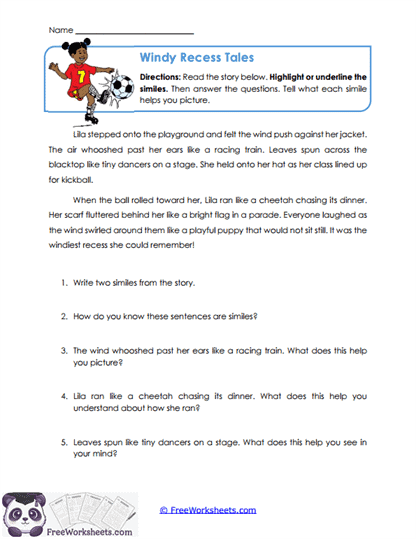
This worksheet focuses on identifying and understanding similes in a narrative passage. A simile is a figure of speech that compares two different things using the words “like” or “as” to create a stronger picture in the reader’s mind. Third-grade students learn how authors use similes to make writing more descriptive and engaging. For example, “The wind moved like a racing train” compares wind to a train to help readers imagine its speed and power. This activity strengthens both reading comprehension and figurative language skills.
Curriculum and Grade Alignment
This worksheet is designed for Grade 3 students studying literary devices and descriptive language. The primary learning goal is recognizing similes and explaining how they contribute to meaning and imagery. Students should already be able to identify basic comparisons in spoken and written language. The next step is analyzing how figurative language affects mood, tone, and visualization. This activity aligns with CCSS RL.3.4 and supports TEKS 3.10D by helping students interpret figurative language in literary texts.
Student Tasks
On this worksheet, students will read a short story about a windy day during recess. They will locate examples of similes used throughout the passage and record them in their answers. Learners must explain how each comparison helps create a mental image for the reader. Students also answer comprehension questions about the effect of specific similes. The activity encourages close reading and thoughtful interpretation of descriptive language.
Common Challenges and Misconceptions
Many students can spot the words “like” or “as” but struggle to explain the comparison being made. Some learners identify a simile correctly but only repeat the sentence instead of describing its meaning. Others may focus on literal meanings and miss the author’s intended imagery. Readers sometimes confuse similes with ordinary descriptions. Teachers should model how to ask, “What picture does this comparison help me see?”
Implementation Guidance
Teachers can use this worksheet during a figurative language unit or as part of a reading comprehension lesson. It works well as guided practice before students begin writing their own similes. Parents can discuss the comparisons aloud and encourage children to describe the images they imagine. Homeschool educators may extend the lesson by asking students to create additional similes about weather or playground activities. The worksheet provides meaningful practice with both reading and language development.
Details and Features
The worksheet includes a high-interest narrative passage filled with age-appropriate similes. Students answer open-ended questions that require explanation rather than simple identification. The layout provides ample space for written responses and comprehension practice. The printable format works well for classrooms, intervention groups, homework, and homeschool instruction. Its focused structure helps students connect figurative language with visualization skills.