
About This Worksheet
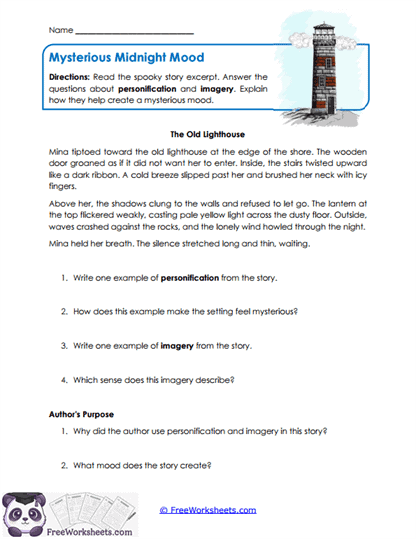
This worksheet focuses on identifying personification and imagery and explaining how they contribute to mood in a story. Mood is the feeling or atmosphere a reader experiences while reading a text. Third-grade students learn that authors carefully choose descriptive language and literary devices to create emotions such as mystery, excitement, or happiness. For example, saying “the shadows clung to the walls” gives shadows a human action and helps create a spooky feeling. This activity helps readers understand how authors influence emotions through word choice.
Curriculum and Grade Alignment
This worksheet is designed for Grade 3 students studying literary devices and story elements. The primary learning goal is identifying personification and imagery while analyzing their effect on mood. Students should already be familiar with basic figurative language and descriptive details. The next progression involves analyzing how literary devices contribute to tone, theme, and character development. This activity aligns with CCSS RL.3.4 and supports TEKS 3.10D through interpretation of figurative language.
Student Tasks
On this worksheet, students will read a mysterious story set near an old lighthouse. They will identify examples of personification and imagery from the passage. Learners must explain how these examples help create a mysterious atmosphere. Students also determine which senses are involved in the imagery and discuss the author’s purpose for using these literary devices. The activity encourages close reading and thoughtful literary analysis.
Common Challenges and Misconceptions
Many students can locate descriptive language but struggle to explain how it affects the mood. Some learners confuse imagery with personification because both create vivid pictures. Others may focus only on the events of the story rather than the author’s language choices. Readers sometimes identify a mood without connecting it to specific evidence from the text. Teachers should encourage students to ask how a particular word or phrase makes them feel as they read.
Implementation Guidance
Teachers can use this worksheet during lessons on mood, figurative language, or narrative reading. It works well as guided practice before students analyze longer stories. Parents may discuss how certain words make the setting feel mysterious or suspenseful. Homeschool educators can extend learning by having students rewrite parts of the story to create a different mood. The worksheet builds strong connections between literary devices and reader response.
Details and Features
The worksheet includes a high-interest mystery passage that contains clear examples of imagery and personification. Students answer open-ended questions that require evidence-based explanations. The response format encourages critical thinking and deeper comprehension. The printable design is appropriate for classroom instruction, homework, intervention groups, and homeschool settings. Its focused structure helps students understand how authors create atmosphere in stories.