
About This Worksheet
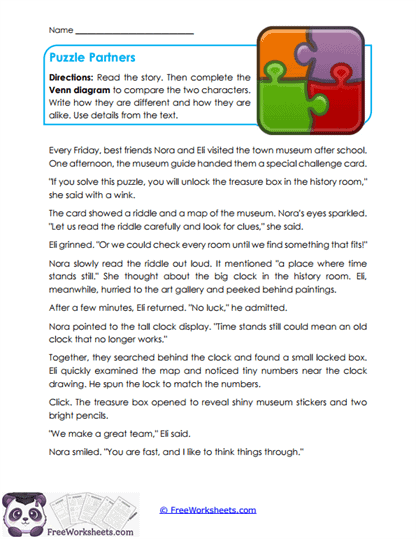
This worksheet focuses on comparing and contrasting characters using evidence from a story. Comparing characters helps readers understand different personalities, strengths, and approaches to solving problems. Third-grade students strengthen comprehension when they analyze how characters are alike and different. For example, one character may be thoughtful and careful while another is quick and energetic. This activity helps students think more deeply about character development and relationships.
Curriculum and Grade Alignment
This worksheet is designed for Grade 3 students studying character analysis and story elements. The primary learning goal is comparing and contrasting characters using details from the text. Students should already understand basic character traits and actions. The next progression involves analyzing how character differences influence plot and outcomes. This activity aligns with CCSS RL.3.3 and supports TEKS 3.8A by helping students describe and compare literary characters.
Student Tasks
On this worksheet, students will read a story about two friends solving a museum challenge. They will identify traits and actions that make the characters different. Learners must also find similarities between the characters and explain how they work together. Students complete a Venn diagram using evidence from the text. The activity encourages close reading and thoughtful character analysis.
Common Challenges and Misconceptions
Many students focus only on differences and forget to identify similarities. Some learners choose details that are true but not important to the comparison. Others may describe actions without explaining what those actions reveal about personality. Readers sometimes place information in the wrong section of the Venn diagram. Teachers should encourage students to support every comparison with evidence from the story.
Implementation Guidance
Teachers can use this worksheet during lessons on character traits and comparison skills. It works well as a partner activity because students can discuss evidence before completing the diagram. Parents may talk about how different people contribute different strengths when working together. Homeschool educators can extend learning by comparing characters from multiple stories. The worksheet supports both comprehension and critical thinking.
Details and Features
The worksheet includes a mystery-style story with two well-developed characters who solve a challenge together. Students complete a Venn diagram to organize similarities and differences. The format encourages evidence-based thinking and literary analysis. The printable design supports classroom instruction, homework assignments, intervention groups, and homeschool learning. Its engaging storyline helps students connect character analysis to meaningful reading experiences.