
About This Worksheet
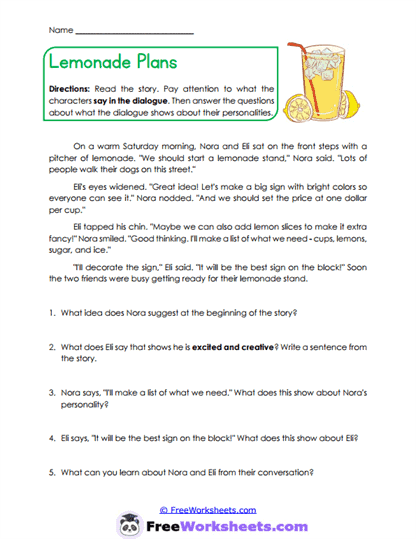
This worksheet focuses on analyzing dialogue to learn about character personality traits. Dialogue is the conversation between characters in a story, and it often reveals thoughts, feelings, and personal qualities. Third-grade students strengthen comprehension when they learn to use what characters say as evidence for understanding them. For example, a character who makes a plan and creates a supply list may demonstrate responsibility and organization. This activity helps students become more thoughtful readers of literary texts.
Curriculum and Grade Alignment
This activity is intended for Grade 3 students studying character analysis and literary comprehension. The primary learning goal is identifying personality traits through dialogue and character interactions. Students should already understand basic character traits and story elements. The next progression involves comparing characters and analyzing motivations. This worksheet aligns with CCSS RL.3.3 and supports TEKS 3.8A by helping students describe characters using textual evidence.
Student Tasks
On this worksheet, students will read a story about two friends planning a lemonade stand. They will examine what the characters say to one another throughout the dialogue. Learners must answer questions about personality traits and support their answers with evidence from the conversation. Students analyze how specific statements reveal qualities such as creativity, responsibility, and enthusiasm. The activity encourages close reading and evidence-based thinking.
Common Challenges and Misconceptions
Many students focus only on actions and overlook important clues found in dialogue. Some learners identify positive traits but cannot explain how the character’s words support those conclusions. Others may confuse emotions with personality traits. Readers sometimes choose traits based on personal opinions rather than evidence from the text. Teachers should encourage students to ask what the character’s words reveal about how they think and behave.
Implementation Guidance
Teachers can use this worksheet during lessons on character analysis and dialogue. It works well as a partner activity where students discuss character traits before writing responses. Parents may talk through the conversation and ask children what they learn about each character. Homeschool educators can extend learning by having students create their own dialogue that demonstrates specific personality traits. The worksheet helps students use textual evidence more effectively.
Details and Features
The worksheet includes a realistic story centered on planning a neighborhood lemonade stand. Students analyze dialogue and answer open-ended questions about character traits. The response format encourages critical thinking and evidence-based explanations. The printable design supports classroom instruction, homework assignments, literacy centers, and homeschool learning. Its engaging scenario helps students connect literary analysis to everyday experiences.