
About This Activity
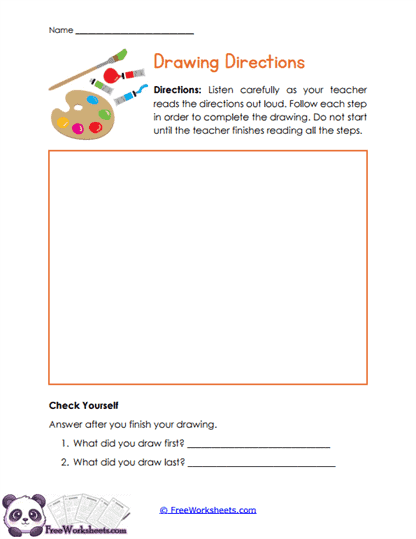
This Grade 3 listening and speaking page helps children practice following multi-step oral directions. Instead of reading the directions themselves, students listen while the teacher explains what to draw. They must wait until all the steps are given, remember the order, and then complete the picture correctly.
This kind of practice is very useful in the classroom because children are asked to follow spoken directions all day long. They may need to remember several steps for an art project, science task, group activity, or classroom routine. This activity gives them a fun way to build that skill.
Learning Goals
The main goal is to help students listen carefully, remember a sequence of directions, and complete the steps in the correct order.
Children practice attention, working memory, sequencing, and self-control. They also learn that good listening means waiting until the speaker is finished instead of starting too early and missing later instructions.
What Students Will Do
The teacher reads a set of drawing directions aloud. Students are told not to begin until all of the steps have been read.
Once the directions are finished, students use the large drawing box to complete the picture from memory. They may need to remember what to draw first, what should be added next, where certain objects belong, or what colors or details were mentioned.
After finishing the drawing, students complete two reflection questions: What did you draw first? and What did you draw last?
These questions help students think back through the order of the directions instead of only looking at the finished picture.
Common Challenges
Some children may want to start drawing as soon as they hear the first step. Others may remember the objects but forget the order or location.
A teacher can remind students before beginning, “Your first job is only to listen.” That keeps the focus on listening before action.
Students who struggle with several directions at once may benefit from hearing a shorter set first and building up to longer sequences.
Teaching Suggestions
Keep the spoken directions clear, short, and appropriate for Grade 3. Pause slightly between steps, but do not give hints through gestures unless that is part of the lesson.
After students finish, compare the pictures as a class. The goal is not to make every drawing look identical, but to see whether the important directions were followed.
Teachers can also ask students which step was hardest to remember and what strategy helped them. Some children may picture the directions in their mind, while others quietly repeat them to themselves.
For an extension, let students create their own short set of drawing directions and give them to a partner.
Worksheet Features
The page includes a large open drawing area and two short reflection questions about sequence. Because there is very little text for the student to read, the task truly focuses on listening rather than reading ability.
This worksheet works especially well for oral-direction practice, listening centers, classroom routines, or lessons on following multi-step instructions.