
About This Worksheet
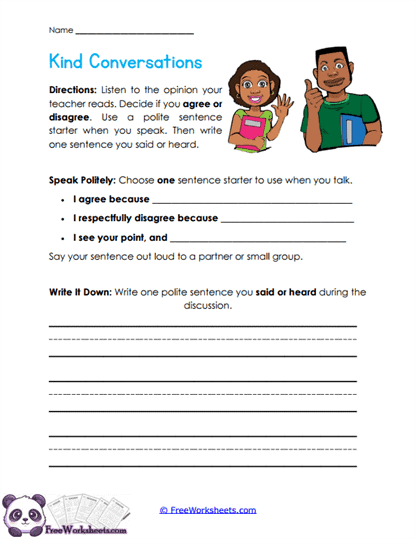
This Grade 3 listening and speaking worksheet helps children practice how to agree or disagree in a respectful way. Students listen to an opinion read aloud by the teacher, decide what they think, and then use a polite sentence starter to respond.
The purpose is not to make everyone agree. It is to teach children how to join a discussion without interrupting, arguing rudely, or dismissing someone else’s idea.
Learning Goals
The main goal is to help students speak politely during classroom conversations. Children practice listening to another opinion, deciding whether they agree or disagree, and giving a response that stays respectful.
They also learn how phrases such as “I agree because…,” “I respectfully disagree because…,” and “I see your point, and…” can help keep a discussion calm and productive.
What Students Will Do
The teacher reads an opinion aloud. Students listen and decide whether they agree or disagree.
Then they choose one of the sentence starters on the page and complete it with their own idea. They say the sentence aloud to a partner or small group.
After the discussion, students write one polite sentence that they either said themselves or heard from someone else. This gives them a chance to connect speaking and listening with writing.
Common Challenges
Some children may say whether they agree or disagree but forget to give a reason. Others may respond to the person instead of the idea and sound unfriendly.
A parent or teacher can remind them, “Talk about the idea, not the person.” It also helps to require the word because so students explain their thinking.
Teaching Suggestions
Teachers can model both a respectful agreement and a respectful disagreement. Show the difference between saying, “That’s wrong,” and saying, “I respectfully disagree because…”
Parents can practice the same skill with safe everyday topics. Let the child disagree with you, as long as the response stays polite and includes a reason.
For an added challenge, ask students to restate the other person’s idea before giving their own response. That shows they were listening first.
Worksheet Features
The page includes three polite sentence starters, a short speaking task, and several lines for recording one respectful statement from the discussion. The structure gives children clear language they can use right away.
This worksheet works well for partner discussions, classroom community lessons, speaking practice, or social communication review.