
Literary Devices Worksheets
These worksheets help students understand how authors use language to create deeper meaning, emotion, and tone. These free, ready-to-print PDF worksheets are designed for immediate classroom use or easy at-home learning. Students build skills like analyzing symbolism, interpreting figurative language, evaluating tone shifts, and explaining how multiple literary devices work together.
About This Collection of Worksheets
This collection is designed to support high-level literary analysis by helping students move beyond surface-level reading and into deeper interpretation. Each worksheet focuses on how authors use literary devices like symbolism, imagery, irony, and figurative language to communicate meaning. Students are encouraged to explain not just what they see in a text, but why it matters and how it shapes the overall message.
The passages included are rich and engaging, giving students meaningful opportunities to practice close reading and critical thinking. Questions are open-ended and require evidence-based responses, helping students strengthen both comprehension and written explanation skills. This approach mirrors the type of thinking expected in advanced coursework and standardized assessments.
These worksheets are ideal for both classroom instruction and independent practice. Teachers can use them to guide discussion, prepare students for literary essays, or reinforce key concepts. The variety of topics ensures students encounter multiple ways authors build meaning, helping them become more confident and flexible readers.
Paul’s Teacher Tip
When working with literary devices at this level, encourage students to slow down and really sit with the text. Instead of rushing to identify a device, ask them to explain what it reveals about the character, theme, or situation. It often helps to model one example together before releasing students to work independently. You can also turn responses into discussions, allowing students to hear multiple interpretations and defend their thinking. Remind them that strong answers always include both clear reasoning and direct evidence. This builds the kind of analytical thinking they will need for essays and exams.
Worksheet Collection Skill Spotlights
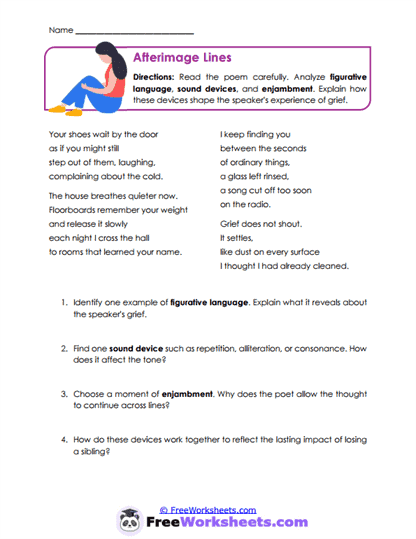
Afterimage Lines
- What Kids Do:
Students read a reflective poem centered on memory and loss, then closely examine how the poet uses language and structure to express emotion. They identify figurative language, notice sound patterns, and analyze how lines flow across breaks. They also explain how these elements work together to create a feeling that unfolds gradually, encouraging deeper engagement with poetic meaning. - Target Skill:
Students strengthen their ability to analyze how figurative language, sound devices, and structural elements like enjambment contribute to tone and meaning. This aligns with advanced Common Core expectations by requiring interpretation of layered poetic techniques and explanation of how form and content interact to shape the reader’s experience.
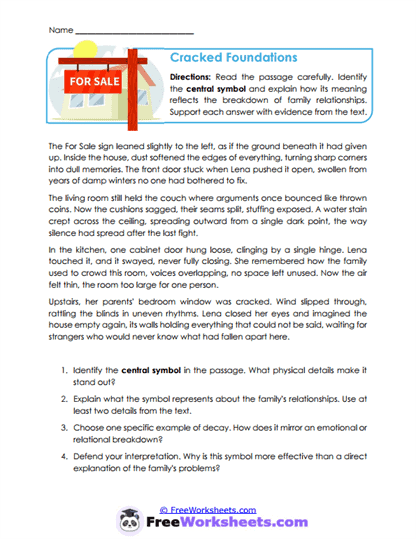
Cracked Foundations
- What Kids Do:
Students explore a passage describing a deteriorating home and look beyond the physical details to uncover deeper meaning. They identify a central symbol and connect it to emotional or relational struggles within the story. By examining specific descriptions, they explain how the setting reflects internal conflict and supports their ideas with clear textual evidence. - Target Skill:
Students develop the ability to analyze symbolism and connect it to theme and character development. This supports Common Core goals by requiring students to interpret how specific details contribute to broader meaning and to construct well-supported explanations grounded in textual analysis.
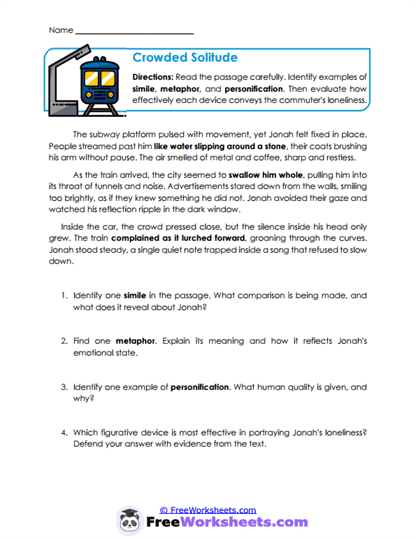
Crowded Solitude
- What Kids Do:
Students read a passage about a character feeling isolated in a busy environment and identify examples of simile, metaphor, and personification. They break down each comparison to understand what it reveals about the character’s emotions. Students also evaluate which figurative device is most effective and explain their reasoning in detail. - Target Skill:
Students build skill in identifying and interpreting multiple types of figurative language while connecting them to character emotion and mood. This aligns with Common Core standards by requiring analysis of how language shapes meaning and encourages students to support interpretations with clear, text-based explanations.
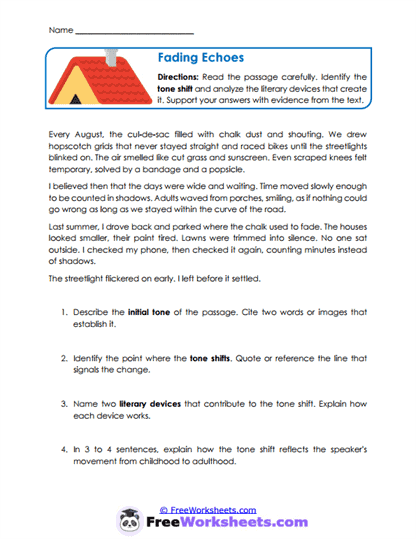
Fading Echoes
- What Kids Do:
Students read a reflective passage and track how the tone changes from beginning to end. They identify key words and phrases that signal this shift and explain how the emotional direction of the text evolves. Students also examine how literary devices support the transition in tone and deepen the overall meaning. - Target Skill:
Students learn to analyze tone and track how it develops across a text, a key Common Core expectation. They practice identifying shifts, explaining their causes, and connecting them to larger themes, strengthening their ability to interpret complex emotional and structural changes in literature.
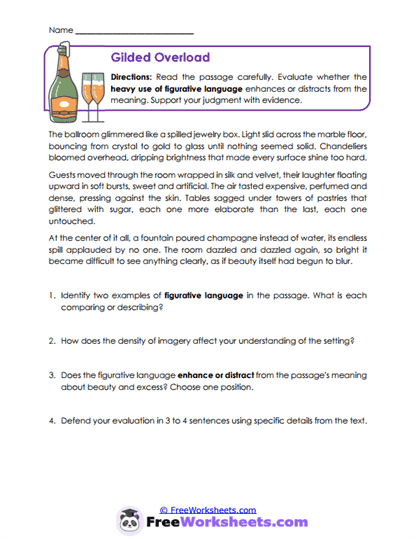
Gilded Overload
- What Kids Do:
Students examine a richly descriptive passage filled with figurative language and imagery. They identify specific examples and then evaluate whether these details enhance understanding or create confusion. Students defend their opinions using textual evidence, practicing both analysis and critical judgment about author choices. - Target Skill:
Students strengthen evaluative reading skills by analyzing the effectiveness of figurative language. This aligns with Common Core expectations by requiring students not only to identify literary devices but also to assess their impact on meaning and clarity, supporting deeper critical thinking.
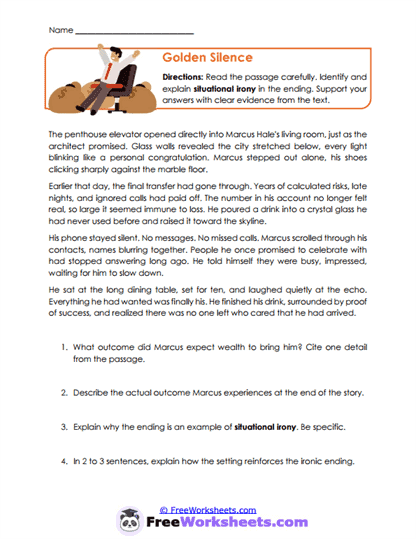
Golden Silence
- What Kids Do:
Students read a story about success and expectations, then identify what a character believed would happen compared to what actually occurred. They analyze how this difference creates situational irony and explain how it contributes to the overall message. Students also connect setting details to the ironic outcome. - Target Skill:
Students develop the ability to recognize and explain situational irony while connecting it to theme and character experience. This supports Common Core goals by requiring analysis of how plot outcomes shape meaning and how contrasting expectations and reality create deeper significance.
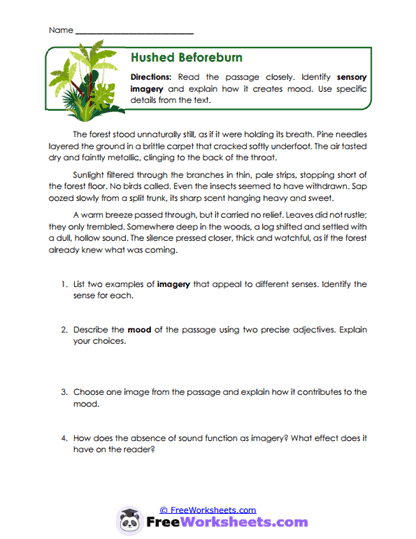
Hushed Beforeburn
- What Kids Do:
Students read a vivid descriptive passage and identify sensory details that appeal to sight, sound, and touch. They explain how these details create a specific mood and influence how the reader experiences the setting. Students also analyze how different sensory elements work together to build a strong emotional atmosphere. - Target Skill:
Students enhance their understanding of imagery by analyzing how descriptive language shapes mood and tone. This aligns with Common Core standards by focusing on word choice and its impact on meaning, encouraging students to explain how language engages the reader’s senses and emotions.
Silent Weighing
- What Kids Do:
Students read a passage about a character facing a difficult decision and identify examples of symbolism, metaphor, and irony. They interpret what each element represents and explain how it connects to the character’s internal conflict. Students then combine their ideas to describe the deeper emotional struggle in the text. - Target Skill:
Students build advanced analysis skills by interpreting multiple literary devices and explaining how they reveal character motivations and themes. This aligns with Common Core expectations by emphasizing word choice, figurative meaning, and the integration of evidence into clear, thoughtful explanations.
Truth Unveiled
- What Kids Do:
Students analyze a powerful scene where a character reveals an important truth. They identify imagery, symbolism, and irony within the passage and explain how each contributes to the moment. Students then synthesize their ideas into a clear explanation of the author’s purpose and the scene’s overall impact. - Target Skill:
Students strengthen their ability to analyze how multiple literary devices interact to create meaning. This supports Common Core goals by requiring synthesis of ideas, deeper interpretation of complex texts, and clear explanation of how different techniques work together to support theme and purpose.