
Main Idea Worksheets
These worksheets help students identify central ideas, evaluate arguments, and analyze complex informational texts. These free, ready-to-print PDF format resources are built for immediate classroom use and flexible instruction. Students strengthen skills in summarizing, inference, and text structure aligned to curriculum standards.
About This Collection of Worksheets
This collection focuses on helping students master one of the most important reading skills at the high school level: identifying the main idea. Each worksheet is designed to guide students through different types of texts, including editorials, speeches, scientific passages, and historical writing. By working with a wide range of topics, students learn how to consistently find the central message, no matter the subject.
The activities move beyond simple identification and ask students to explain, support, and evaluate central ideas. Students practice connecting details to larger messages, distinguishing between topics and main ideas, and understanding how authors develop their points. These skills are essential for college readiness and real-world reading.
Teachers will find these worksheets easy to use in a variety of settings, including whole-class lessons, small groups, or independent work. The structured format helps students build confidence step by step, while still encouraging deeper thinking. This collection supports strong comprehension habits that carry across all academic areas.

Paul’s Teacher Tip
When teaching main idea at this level, it helps to remind students that the central idea is not just a summary-it is the message the author wants to leave behind. Encourage students to say the idea out loud before writing it down, as this often leads to clearer thinking. You can also model how to eliminate answers that are too narrow or too broad. Having students explain why a detail does or does not fit the main idea can deepen understanding. Keep reinforcing that strong answers are clear, focused, and supported by the text.
Worksheet Collection Skill Spotlights
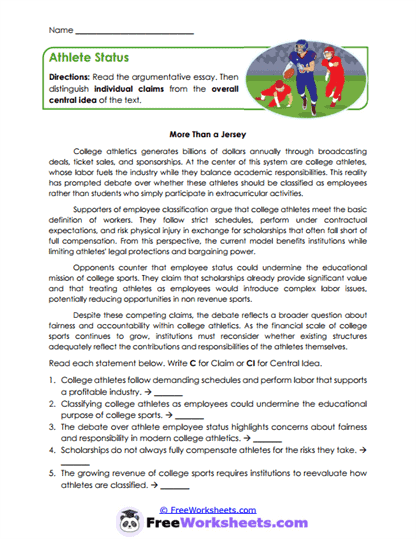
Athlete Status
- What Kids Do:
Students read an argumentative passage about college athletes and sort statements to determine whether each one represents a supporting claim or the overall central idea. As they work, they think carefully about how each idea fits into the larger argument and how authors build positions step by step using multiple points. - Target Skill:
Students strengthen their ability to distinguish between claims and central ideas in complex argumentative texts. This aligns with Common Core expectations by requiring students to analyze structure, evaluate how ideas are organized, and explain how supporting points connect to a unified central argument.
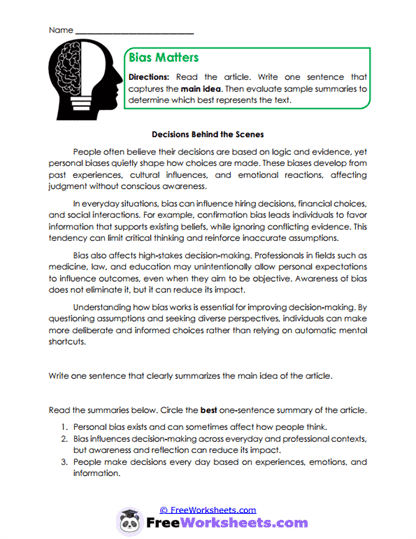
Bias Matters
- What Kids Do:
Students explore an informational passage about bias in decision-making and write a clear sentence that captures the main idea. They then review several summary options and decide which one best represents the entire text, encouraging them to evaluate accuracy and completeness in how ideas are presented. - Target Skill:
Students develop the ability to identify and evaluate central ideas while comparing multiple summaries for accuracy. This supports Common Core standards by requiring students to assess how well a summary captures the full meaning of a text and to justify their reasoning with evidence.
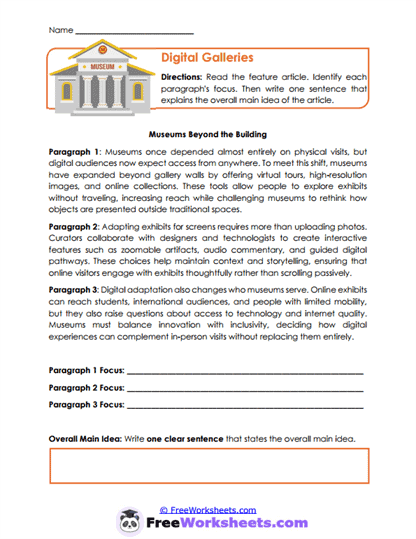
Digital Galleries
- What Kids Do:
Students read a multi-paragraph article about modern museums and identify the focus of each paragraph. They then connect those smaller ideas into one clear central idea, helping them see how different parts of a text work together to build a larger message. - Target Skill:
Students practice analyzing text structure by identifying paragraph-level ideas and synthesizing them into a central idea. This aligns with Common Core standards by emphasizing how ideas develop across a text and how structure supports overall meaning.
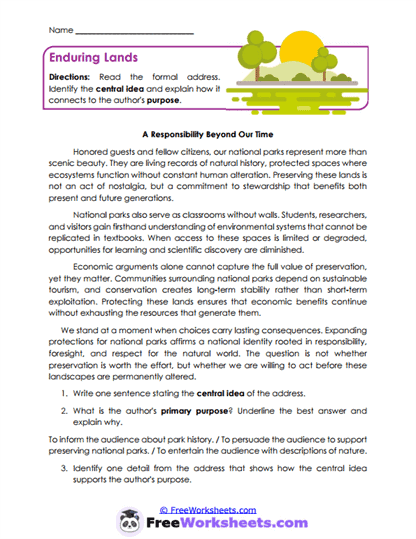
Enduring Lands
- What Kids Do:
Students examine a formal speech about preserving national parks and identify the central idea. They also explain the author’s purpose and connect it to the main message, using specific details from the passage to support their thinking and deepen their understanding of persuasive texts. - Target Skill:
Students build skills in identifying central ideas and connecting them to author’s purpose. This supports Common Core expectations by requiring analysis of how ideas and intent work together in informational and persuasive texts.
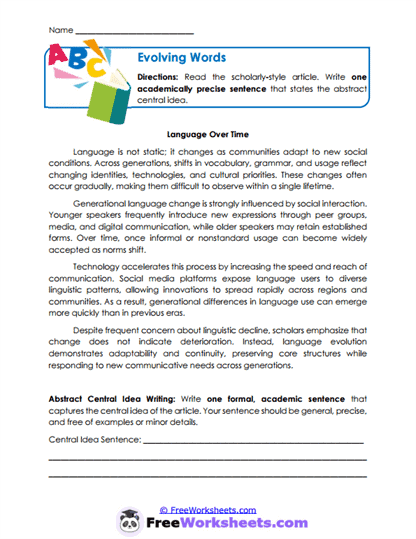
Evolving Words
- What Kids Do:
Students read an academic-style passage about how language changes over time and write one precise sentence that states the central idea. They focus on using formal language and avoiding unnecessary details, which helps them prepare for college-level reading and writing tasks. - Target Skill:
Students refine their ability to express central ideas clearly and formally. This aligns with Common Core standards by emphasizing precision in writing and the ability to capture complex ideas in a concise, academically appropriate way.
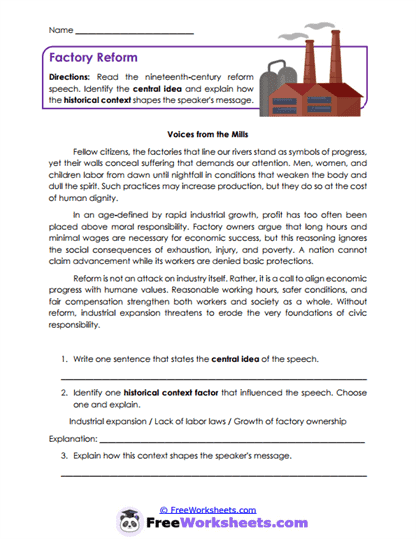
Factory Reform
- What Kids Do:
Students read a historical speech about factory conditions and identify the central idea while also considering the time period in which it was written. They connect historical context to the message, helping them understand how real-world events shape what authors communicate. - Target Skill:
Students strengthen their ability to analyze central ideas within historical context. This supports Common Core goals by requiring students to connect ideas to time and place and explain how context influences meaning in informational texts.
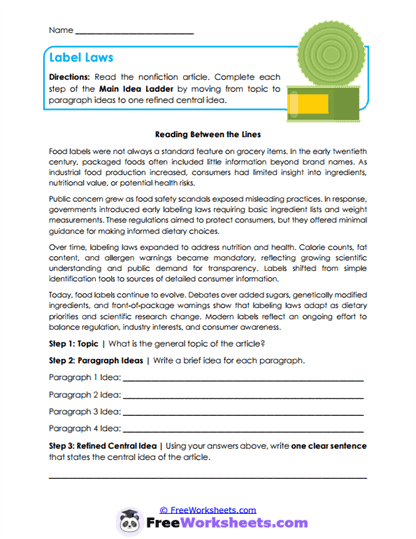
Label Laws
- What Kids Do:
Students follow a step-by-step “Main Idea Ladder” process while reading about the history of food labeling. They identify the topic, determine paragraph ideas, and then combine those ideas into one clear central idea, building understanding gradually through structured thinking. - Target Skill:
Students develop skills in organizing information and synthesizing multiple ideas into a central idea. This aligns with Common Core standards by focusing on text structure and the ability to move from details to a cohesive overall message.
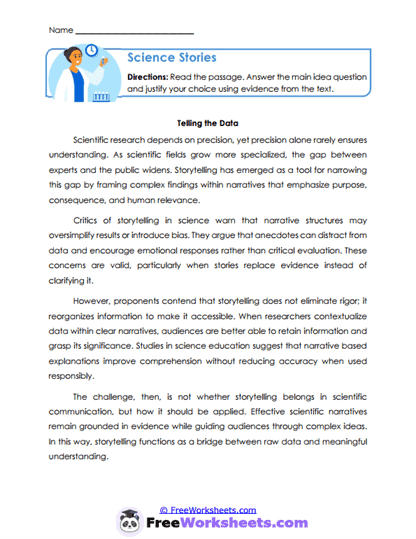
Science Stories
- What Kids Do:
Students read a science-focused passage about storytelling and identify the central idea while supporting their answer with evidence. They connect examples from the text to the larger message, helping them see how complex ideas can be communicated clearly. - Target Skill:
Students practice identifying and supporting central ideas in informational texts. This supports Common Core expectations by requiring evidence-based reasoning and clear explanation of how details contribute to overall meaning.
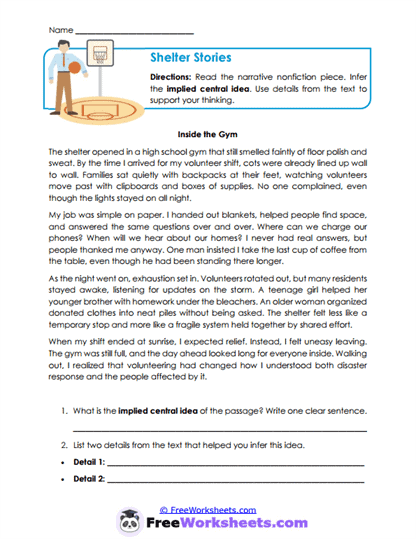
Shelter Stories
- What Kids Do:
Students read a narrative nonfiction passage about volunteering and determine the implied central idea by reading between the lines. They support their interpretation with details from the text, helping them move beyond obvious answers to deeper understanding. - Target Skill:
Students build inference skills by identifying unstated central ideas and supporting them with textual evidence. This aligns with Common Core standards by emphasizing deeper comprehension and interpretation of implicit meaning.
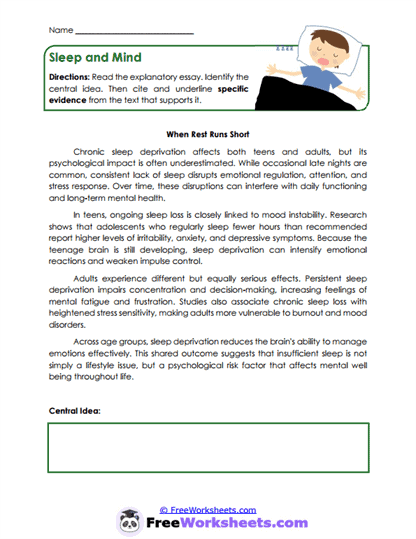
Sleep and Mind
- What Kids Do:
Students read an informational passage about how sleep affects the brain and identify the central idea. They highlight or reference specific details that support their answer, helping them connect evidence directly to the main message of the text. - Target Skill:
Students strengthen their ability to identify and support central ideas using evidence. This supports Common Core expectations by requiring students to connect details to broader meaning and explain how information builds a clear message.
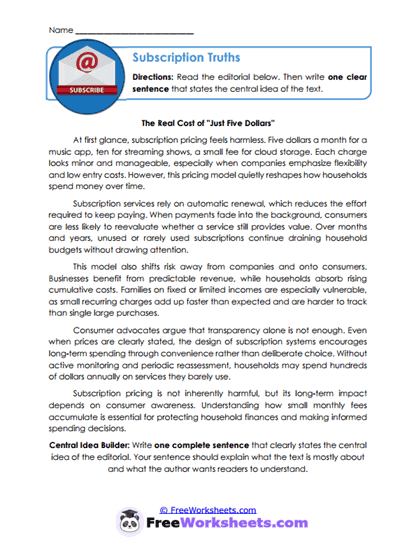
Subscription Truths
- What Kids Do:
Students analyze an editorial about subscription services and write one clear sentence that captures the central idea. They must pull together multiple details into a focused statement, practicing precision and clarity in their thinking. - Target Skill:
Students develop the ability to summarize complex informational texts into a single, clear central idea. This aligns with Common Core standards by emphasizing synthesis of ideas and clear written expression.
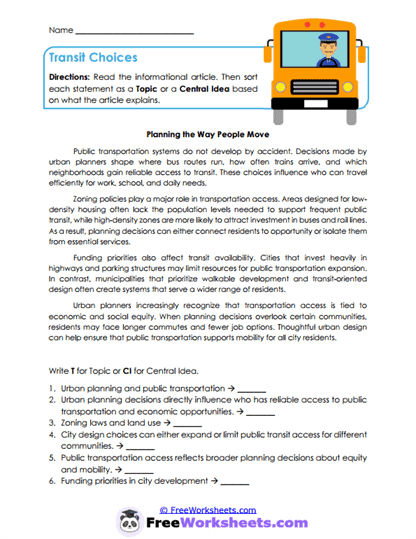
Transit Choices
- What Kids Do:
Students read an informational passage about transportation and sort statements to determine whether they represent a topic or a central idea. This helps them understand the difference between general subjects and specific messages within a text. - Target Skill:
Students build understanding of the distinction between topic and central idea. This supports Common Core standards by requiring precise thinking about how ideas are defined and communicated within informational texts.