
Analyzing Informational Texts Worksheets
These worksheets help students evaluate arguments, analyze evidence, and think critically about complex real-world issues. These free, ready-to-print PDF worksheets are designed for immediate classroom use or easy at-home learning. Students build skills like identifying bias, evaluating reasoning, analyzing multiple perspectives, and judging the strength of claims.
About This Collection of Worksheets
This collection is designed to prepare students for college-level reading and real-world decision-making. Each worksheet focuses on important skills like evaluating evidence, identifying bias, analyzing rhetorical strategies, and comparing multiple viewpoints. Topics such as artificial intelligence, public policy, and education make the reading relevant and meaningful.
Students are guided to go beyond understanding and begin questioning texts. Many activities ask them to judge whether evidence is strong, recognize missing perspectives, and evaluate how well arguments respond to opposing views. They also practice writing thoughtful responses that explain their reasoning clearly.
The worksheets are designed to build skills step-by-step, from identifying claims and evidence to analyzing complex argument structures and synthesizing ideas across texts. These resources align with Grade 12 standards and support advanced comprehension, critical thinking, and writing skills needed for college and beyond.
Paul’s Teacher Tip
At this level, students should read like investigators. Encourage them to ask, “Is this evidence strong?” and “What might be missing?” It also helps to compare multiple sources on the same topic to see how arguments differ. If students struggle, guide them to focus on one part of the argument at a time-claim, evidence, or reasoning. Over time, this builds stronger, more independent thinkers.
Worksheet Collection Skill Spotlights
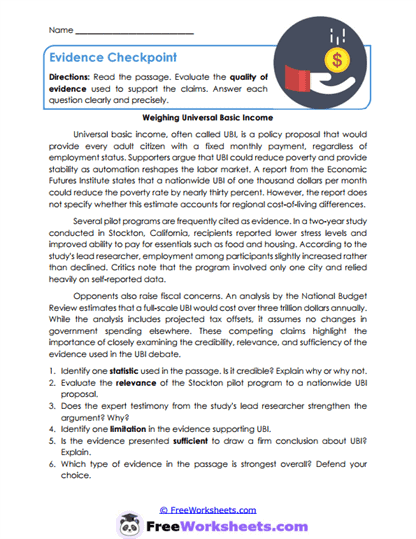
Evidence Checkpoint
- What Kids Do:
Students evaluate the strength and reliability of evidence in a passage about universal basic income. They analyze statistics, expert opinions, and reasoning. This helps them decide what makes evidence trustworthy. - Target Skill:
Students build skills in evaluating evidence and judging argument quality. They learn how to distinguish strong support from weak claims. This supports critical reading.
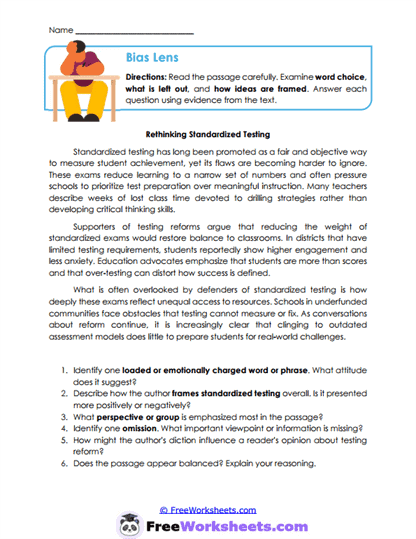
Bias Lens
- What Kids Do:
Students analyze how word choice and missing information create bias in a text about standardized testing. They identify subtle clues that shape opinion. This builds awareness of perspective. - Target Skill:
Students strengthen their ability to identify bias and analyze author perspective. They learn how language influences meaning. This supports media literacy.
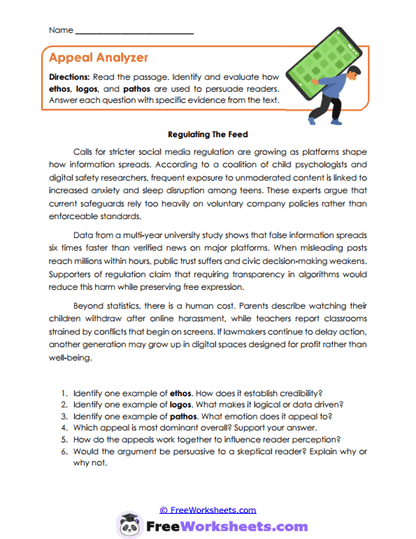
Appeal Analyzer
- What Kids Do:
Students identify rhetorical appeals like ethos, logos, and pathos in a passage about social media regulation. They explain how each appeal influences the reader. This builds understanding of persuasion. - Target Skill:
Students develop skills in analyzing persuasive techniques and argument structure. They learn how authors influence audiences. This supports critical thinking.
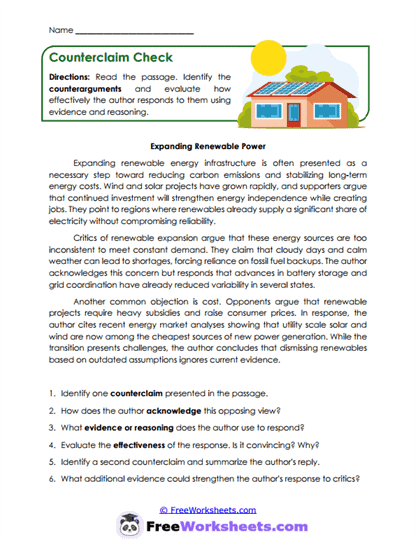
Counterclaim Check
- What Kids Do:
Students identify opposing viewpoints in a passage about renewable energy and evaluate how the author responds. They analyze whether the response is strong or weak. This builds balanced thinking. - Target Skill:
Students strengthen their ability to evaluate counterclaims and reasoning. They learn how strong arguments address multiple viewpoints. This supports analytical reading.
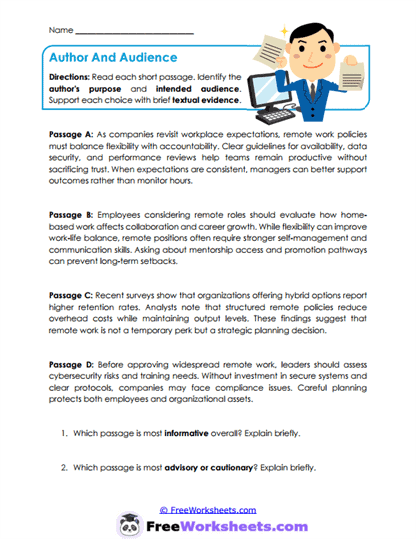
Author And Audience
- What Kids Do:
Students analyze short passages about remote work and identify purpose and audience. They compare how writing changes based on who it is for. This builds real-world communication skills. - Target Skill:
Students develop skills in analyzing author’s purpose and audience. They learn how tone and detail reflect intent. This supports comprehension.
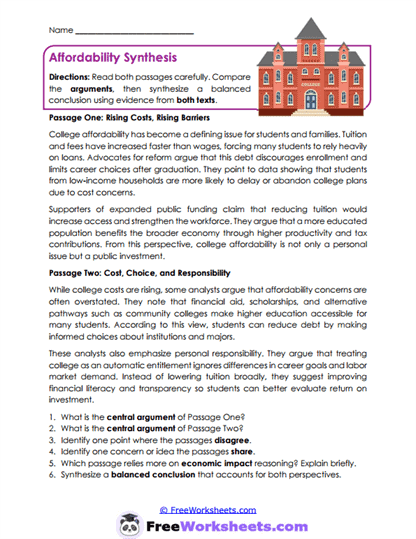
Affordability Synthesis
- What Kids Do:
Students compare two texts about college costs and combine ideas into a balanced conclusion. They analyze differences in argument and evidence. This builds synthesis skills. - Target Skill:
Students improve their ability to compare and synthesize multiple texts. They learn how to form balanced conclusions. This supports advanced reading and writing.
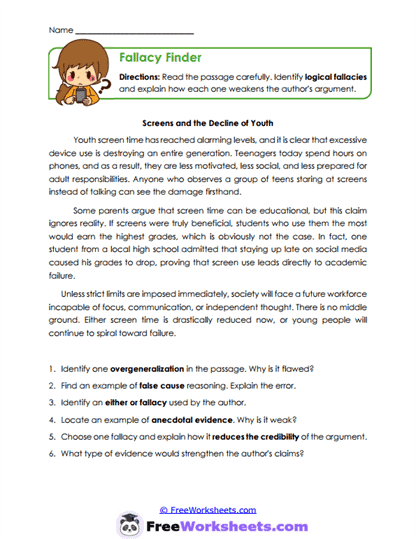
Fallacy Finder
- What Kids Do:
Students identify logical fallacies in a passage about screen time. They explain why the reasoning is flawed and suggest stronger evidence. This builds careful thinking. - Target Skill:
Students strengthen their ability to evaluate reasoning and identify weak arguments. They learn how to avoid faulty logic. This supports critical analysis.
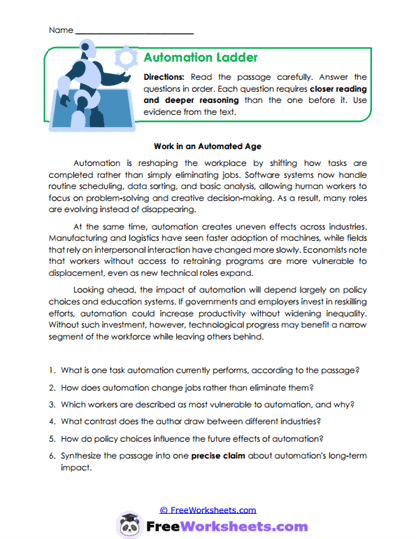
Automation Ladder
- What Kids Do:
Students track how ideas about automation develop step by step in a text. They explain how each idea builds on the previous one. This helps them follow complex arguments. - Target Skill:
Students develop skills in analyzing idea development and text structure. They learn how arguments grow over time. This supports comprehension.
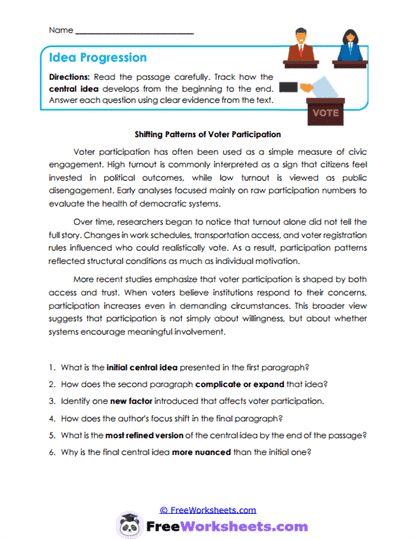
Idea Progression
- What Kids Do:
Students analyze how a central idea becomes more complex across a passage about voter participation. They track how new information adds depth. This builds deeper understanding. - Target Skill:
Students strengthen their ability to analyze central idea development. They learn how ideas evolve across a text. This supports advanced comprehension.
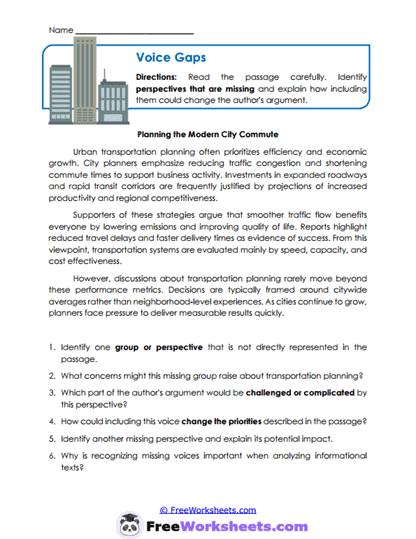
Voice Gaps
- What Kids Do:
Students identify missing perspectives in a passage about urban planning. They explain how leaving out certain voices affects the message. This builds awareness of fairness. - Target Skill:
Students develop skills in analyzing perspective and missing viewpoints. They learn how incomplete information shapes arguments. This supports critical thinking.
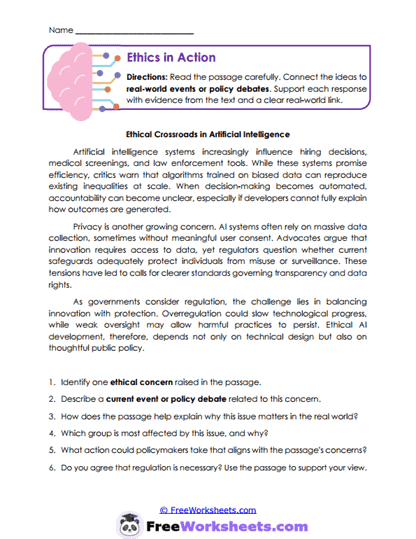
Ethics in Action
- What Kids Do:
Students connect a passage about artificial intelligence to real-world ethical issues. They explain how the text relates to current events. This makes reading meaningful. - Target Skill:
Students strengthen their ability to connect texts to real-world issues. They learn how reading applies beyond the classroom. This supports deeper thinking.
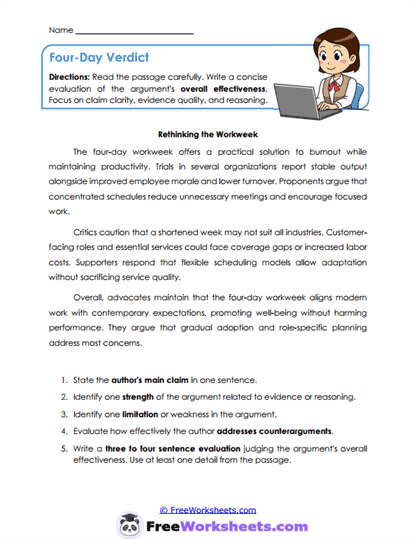
Four-Day Verdict
- What Kids Do:
Students evaluate an argument about a four-day workweek by identifying strengths and weaknesses. They judge how convincing the argument is. This builds reasoning skills. - Target Skill:
Students build skills in evaluating argument effectiveness and reasoning. They learn how to judge the quality of claims and evidence. This supports advanced analysis.