
Nonfiction Book Study Worksheets
This collection of worksheets help students analyze author's purpose, evaluate arguments, and interpret complex informational texts. These free, ready-to-print PDF format resources support immediate classroom use and flexible instruction. Students strengthen skills in critical thinking, evidence evaluation, and text structure aligned to curriculum.
About This Collection of Worksheets
This collection is designed to help students engage deeply with nonfiction texts by exploring how ideas are developed, supported, and communicated. Each worksheet focuses on a different aspect of nonfiction analysis, from understanding author’s purpose to evaluating evidence and recognizing bias. Students are encouraged to go beyond surface-level reading and think carefully about how meaning is constructed.
The passages reflect real-world topics and academic content, giving students meaningful practice with the types of texts they will encounter in college and beyond. Activities guide students to explain their thinking, support their answers with evidence, and evaluate how authors use language and structure. This helps build both comprehension and analytical writing skills.
Teachers can use these worksheets in a variety of ways, including guided instruction, independent practice, or discussion-based lessons. The structured format supports step-by-step learning while still encouraging deeper thinking. This collection helps students become more confident readers who can handle complex nonfiction texts with clarity.
Paul’s Teacher Tip
When working with nonfiction at this level, encourage students to ask questions as they read instead of just looking for answers. Remind them that strong readers think about why an author made certain choices, not just what the author said. It helps to model one example together and show how to connect evidence to a bigger idea. You can also have students explain their thinking out loud before writing, which often leads to clearer responses. Keep reinforcing that good analysis includes both clear ideas and strong support from the text.
Worksheet Collection Skill Spotlights
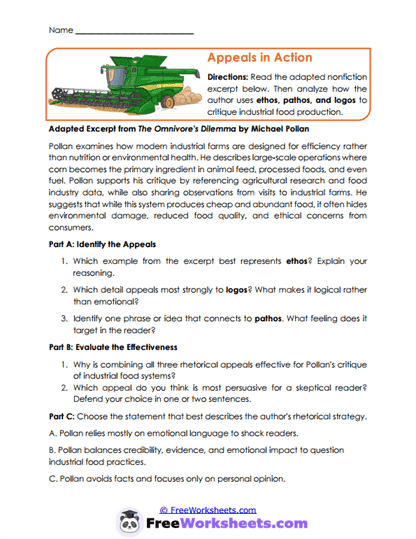
Appeals in Action
- What Kids Do:
Students read a nonfiction passage about food systems and identify examples of ethos, pathos, and logos throughout the text. As they work, they explain how each example appeals to credibility, emotion, or logic, and they evaluate how these techniques influence the reader’s understanding of the argument. - Target Skill:
Students strengthen their ability to analyze rhetorical appeals and evaluate how authors build persuasive arguments. This aligns with Common Core standards by requiring students to identify techniques, explain their function, and assess how they contribute to the effectiveness of a text.
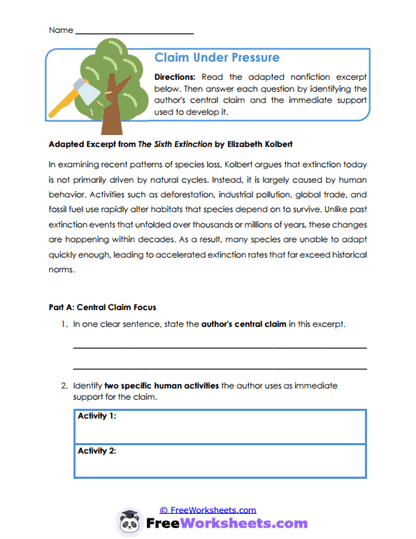
Claim Under Pressure
- What Kids Do:
Students read a nonfiction passage about environmental change and identify the author’s central claim along with key supporting evidence. They connect specific examples directly to the claim, helping them understand how arguments are constructed and supported in real-world texts. - Target Skill:
Students build skills in identifying central claims and analyzing supporting evidence. This supports Common Core expectations by requiring students to evaluate how arguments are developed and how evidence is used to strengthen an author’s position.
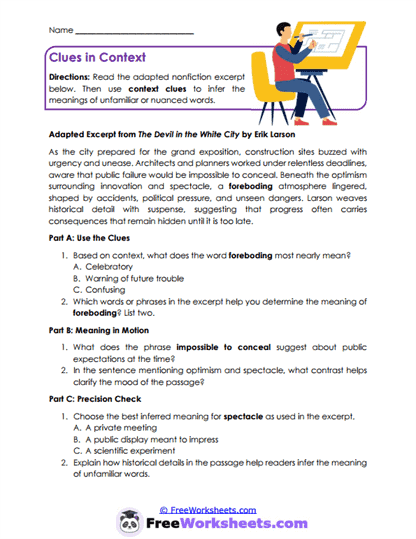
Clues in Context
- What Kids Do:
Students examine a nonfiction passage with challenging vocabulary and determine word meanings using context clues. They explain how surrounding sentences help define unfamiliar terms and analyze how those words contribute to tone and meaning within the text. - Target Skill:
Students develop advanced vocabulary skills by using context to determine meaning and analyze word choice. This aligns with Common Core standards by emphasizing how language shapes meaning and how readers can independently decode complex texts.
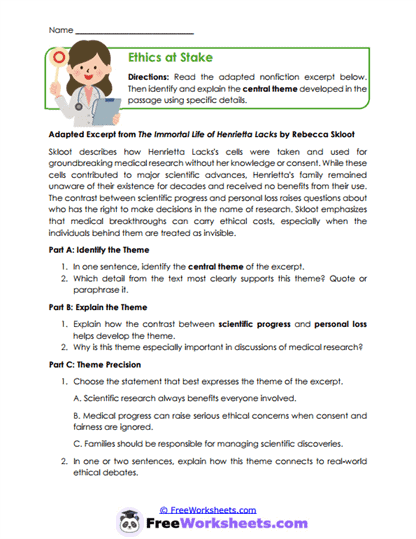
Ethics at Stake
- What Kids Do:
Students read a nonfiction passage about scientific ethics and identify the central theme by connecting ideas about progress, responsibility, and consequences. They support their interpretation with evidence and explain how contrasting ideas work together to develop the message. - Target Skill:
Students strengthen their ability to interpret themes in nonfiction texts and support their ideas with evidence. This supports Common Core goals by requiring deeper analysis of how ideas interact and contribute to a broader message.
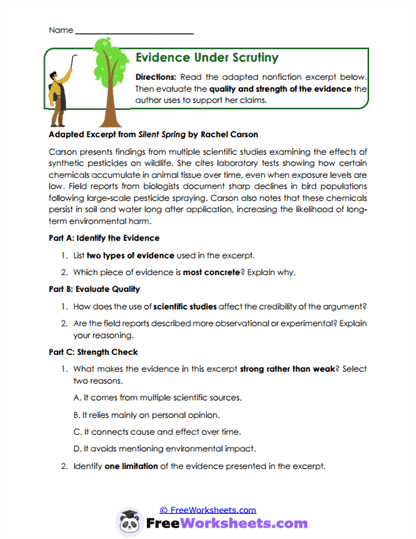
Evidence Under Scrutiny
- What Kids Do:
Students analyze a nonfiction passage on environmental issues and identify different types of evidence used by the author. They evaluate which evidence is most reliable and explain how it supports the argument, encouraging careful and thoughtful reading. - Target Skill:
Students build critical evaluation skills by analyzing the quality and effectiveness of evidence. This aligns with Common Core standards by requiring students to assess credibility and explain how evidence strengthens or weakens an argument.
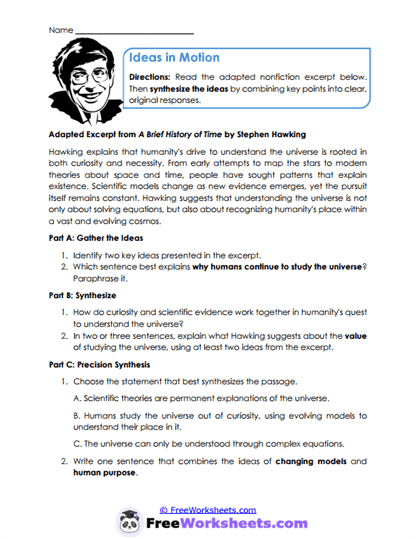
Ideas in Motion
- What Kids Do:
Students read a passage about science and curiosity and identify key ideas before combining them into a deeper understanding. They respond to questions that require them to connect multiple points and explain how those ideas work together to form meaning. - Target Skill:
Students develop synthesis skills by combining information from a text into clear, organized responses. This supports Common Core expectations by emphasizing the ability to connect ideas and explain complex thinking in writing.
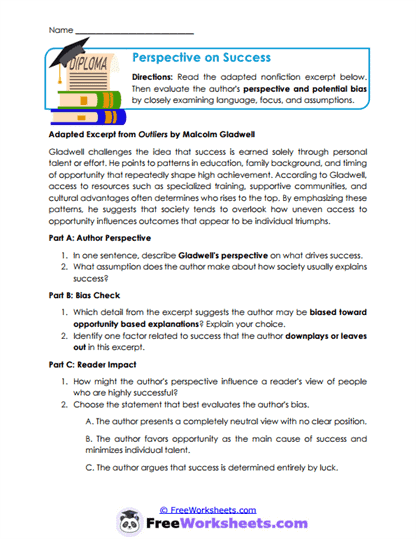
Perspective on Success
- What Kids Do:
Students read a nonfiction passage about success and describe the author’s perspective, looking for clues that reveal bias or emphasis. They analyze which ideas are highlighted and consider how those choices shape the reader’s understanding. - Target Skill:
Students strengthen their ability to analyze author perspective and detect bias. This aligns with Common Core standards by requiring students to evaluate how viewpoint influences meaning and presentation in informational texts.
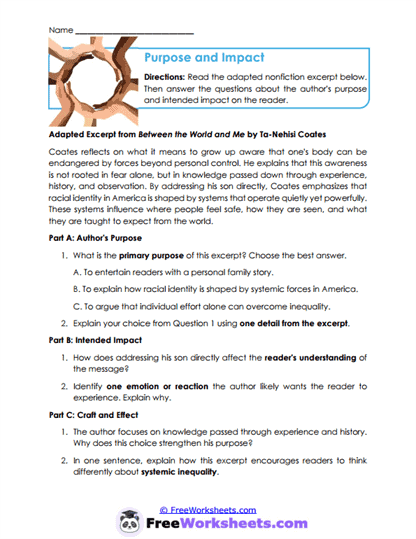
Purpose and Impact
- What Kids Do:
Students read a nonfiction excerpt and determine the author’s purpose by considering what the writer wants the reader to think, feel, or understand. They explain how specific details contribute to that purpose and describe the overall impact of the text. - Target Skill:
Students build skills in analyzing author’s purpose and its effect on the reader. This supports Common Core goals by requiring students to connect ideas, tone, and details to the author’s intent.
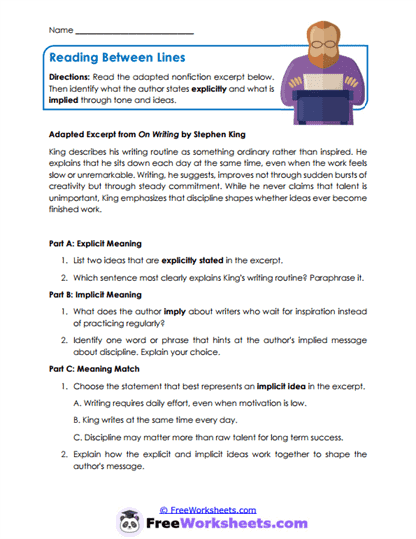
Reading Between Lines
- What Kids Do:
Students read a nonfiction passage and identify both explicit ideas and implied meaning. They explain what is directly stated and what is suggested, helping them understand how authors communicate ideas beyond the surface level. - Target Skill:
Students develop inference skills by distinguishing between explicit and implicit meaning. This aligns with Common Core standards by emphasizing deeper comprehension and evidence-based interpretation.
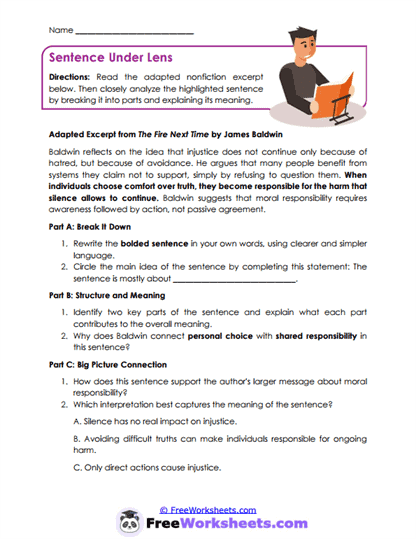
Sentence Under Lens
- What Kids Do:
Students closely analyze a complex sentence from a nonfiction text by breaking it into parts and rewriting it in simpler terms. They identify the main idea within the sentence and explain how each part contributes to the overall meaning. - Target Skill:
Students enhance close reading skills by analyzing sentence structure and meaning. This supports Common Core expectations by focusing on how language and syntax shape understanding in informational texts.
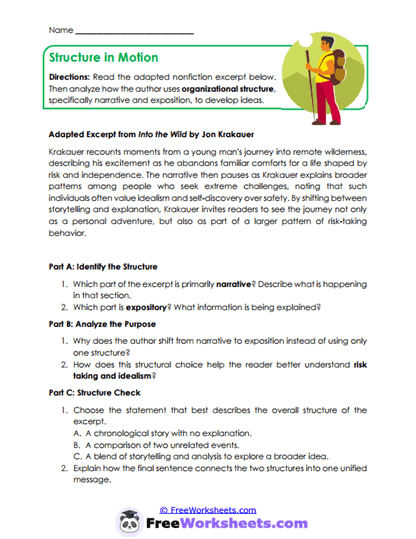
Structure in Motion
- What Kids Do:
Students read a passage that blends storytelling with explanation and identify where the structure shifts. They explain why the author moves between narrative and exposition and how this choice helps clarify ideas for the reader. - Target Skill:
Students build understanding of text structure by analyzing how different organizational patterns work together. This aligns with Common Core standards by emphasizing how structure supports meaning and purpose.
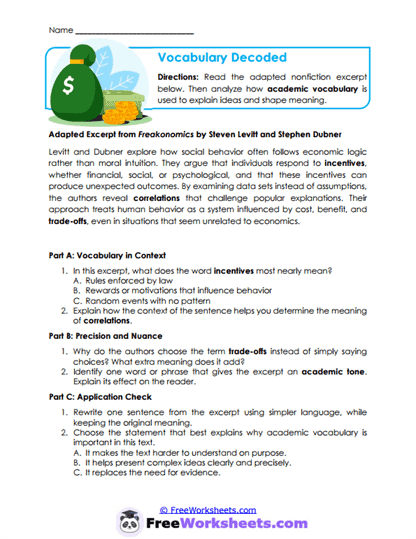
Vocabulary Decoded
- What Kids Do:
Students read a nonfiction passage with academic vocabulary and determine the meaning of key terms using context. They also explain why the author chose specific words and how those choices contribute to clarity and precision. - Target Skill:
Students strengthen vocabulary and language analysis skills by interpreting word meaning in context. This supports Common Core goals by emphasizing precision, nuance, and the role of word choice in conveying meaning.