
Audience, Purpose, And Tone Worksheets
These worksheets help students understand how messages are shaped for different readers and goals. These free, ready-to-print PDF worksheets are designed for immediate classroom use or easy at-home learning. Students build skills like analyzing tone, identifying author intent, recognizing bias, and adapting writing for different audiences.
About This Collection of Worksheets
This collection is designed to help students think deeply about how communication works in real-world texts. Each worksheet focuses on key ideas like identifying audience, analyzing tone shifts, and understanding how purpose shapes meaning. Students work with speeches, editorials, and professional writing to see how language changes depending on the situation.
Students are guided to go beyond simple identification and begin evaluating how effective communication is. Many activities ask them to analyze assumptions, detect bias, and explain how tone strengthens or weakens an argument. They also practice rewriting text for different audiences, helping them become more flexible and skilled writers.
The worksheets are designed to build skills step-by-step, from recognizing tone and purpose to analyzing complex rhetorical choices and adapting communication. These resources align with Grade 12 standards and prepare students for college-level reading, writing, and real-world communication tasks.
Paul’s Teacher Tip
At this level, remind students that strong readers pay attention to how something is said-not just what is said. Encourage them to ask, “Who is this for?” and “Why was it written this way?” It also helps to compare how the same message changes for different audiences. If students struggle, have them focus on word choice and tone first, then connect it back to purpose. Over time, this builds stronger and more confident communicators.
Worksheet Collection Skill Spotlights
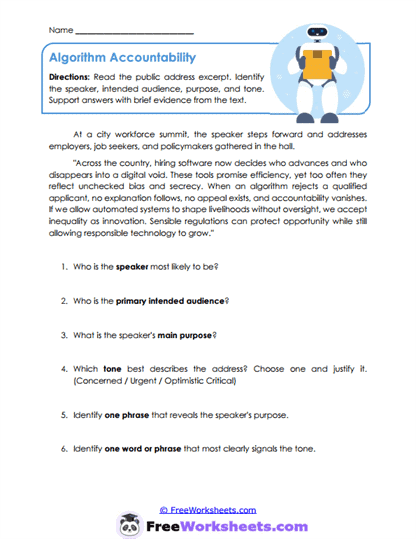
Algorithm Accountability
- What Kids Do:
Students analyze a public speech about automation and identify the speaker, audience, purpose, and tone. They use specific words and phrases to support their answers. This helps them understand how messages are crafted. - Target Skill:
Students build skills in analyzing audience, purpose, and tone together. They learn how communication is shaped by intent. This supports critical reading.
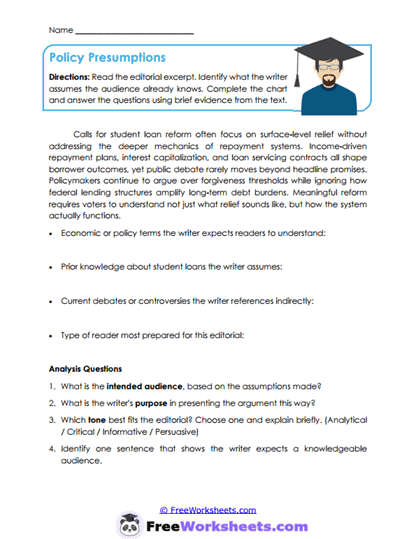
Policy Presumptions
- What Kids Do:
Students read an editorial about student loans and identify assumptions the author makes about the reader. They analyze how these assumptions affect understanding. This builds deeper awareness. - Target Skill:
Students strengthen their ability to identify author assumptions and intended audience. They learn how missing information shapes meaning. This supports advanced comprehension.
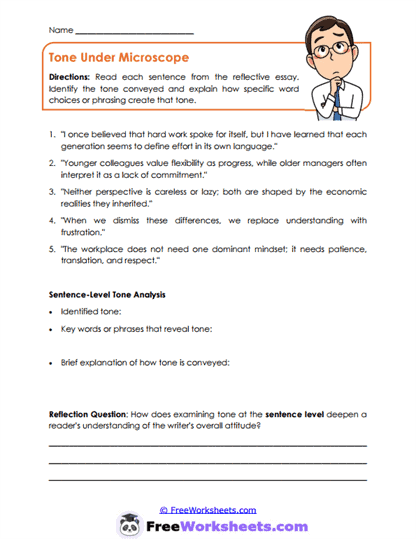
Tone Under Microscope
- What Kids Do:
Students analyze tone at the sentence level by identifying key words and phrases. They explain how small language choices shape meaning. This builds close reading skills. - Target Skill:
Students develop skills in analyzing tone through word choice. They learn how language creates attitude. This supports detailed analysis.
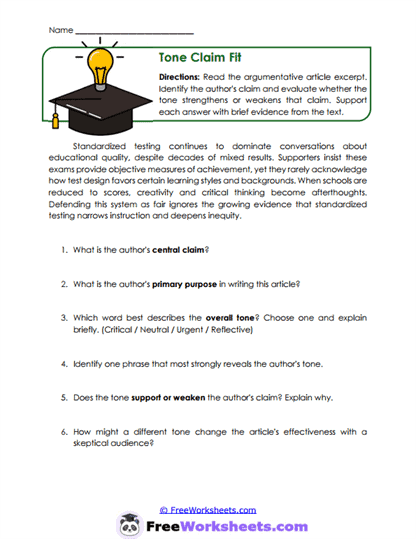
Tone Claim Fit
- What Kids Do:
Students connect tone to an author’s claim in a persuasive passage. They evaluate whether the tone strengthens or weakens the argument. This builds reasoning skills. - Target Skill:
Students improve their ability to analyze how tone supports purpose and argument. They learn how language affects persuasion. This supports critical thinking.
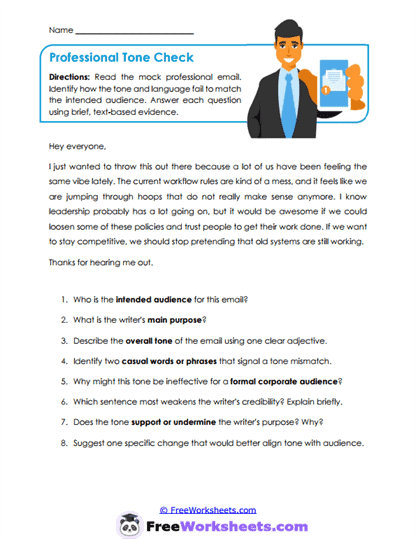
Professional Tone Check
- What Kids Do:
Students analyze a professional email and identify tone mismatches. They suggest improvements to make the message more appropriate. This builds real-world skills. - Target Skill:
Students develop skills in evaluating tone for audience and purpose. They learn how to revise writing for clarity and professionalism. This supports communication.
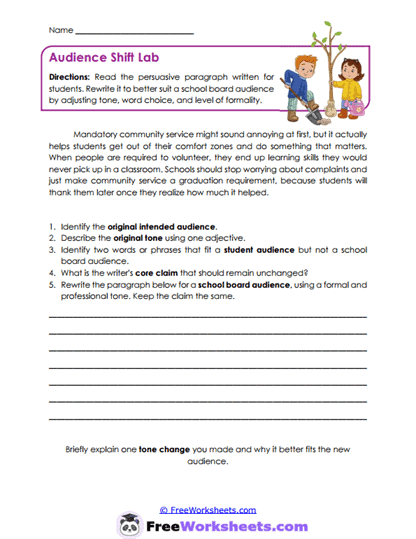
Audience Shift Lab
- What Kids Do:
Students rewrite a paragraph for a new audience, adjusting tone and word choice. They reflect on how their changes improve the message. This builds flexibility in writing. - Target Skill:
Students strengthen their ability to adapt writing for different audiences. They learn how tone and structure change based on purpose. This supports writing development.
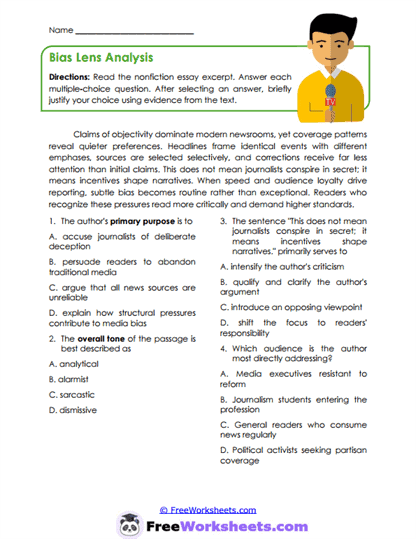
Bias Lens Analysis
- What Kids Do:
Students analyze a nonfiction passage and answer questions about bias, structure, and tone. They support their answers with evidence. This builds careful reading habits. - Target Skill:
Students develop skills in identifying bias and evaluating nonfiction texts. They learn how language shapes meaning. This supports media literacy.
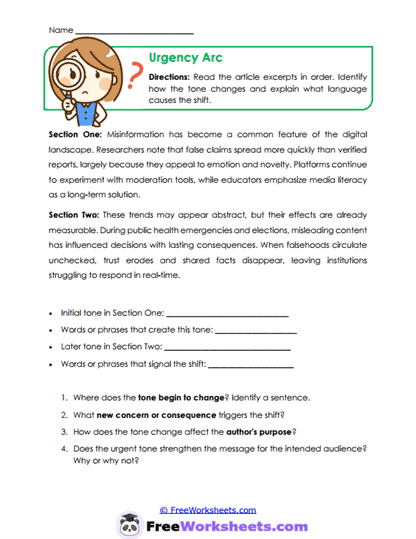
Urgency Arc
- What Kids Do:
Students track how tone shifts across a passage and identify where it becomes more urgent. They explain how this shift supports the author’s purpose. This builds deeper understanding. - Target Skill:
Students strengthen their ability to analyze tone shifts and connect them to meaning. They learn how tone develops across a text. This supports comprehension.
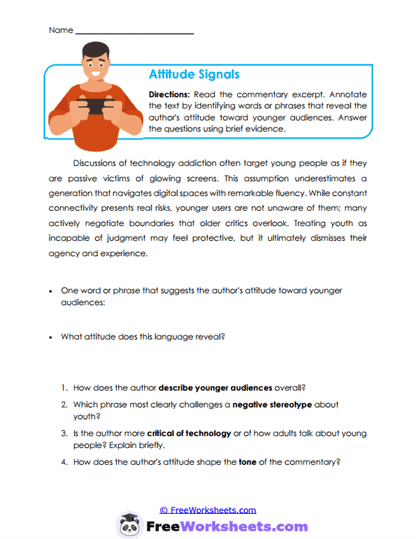
Attitude Signals
- What Kids Do:
Students identify words that reveal the author’s attitude toward a topic. They explain how these words shape tone. This builds awareness of perspective. - Target Skill:
Students improve their ability to analyze tone and author attitude. They learn how word choice reflects opinion. This supports interpretation.
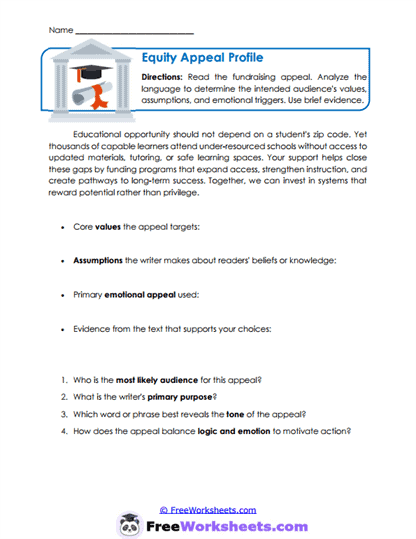
Equity Appeal Profile
- What Kids Do:
Students analyze a persuasive message and identify emotional and logical appeals. They explain how the message motivates the audience. This builds understanding of persuasion. - Target Skill:
Students develop skills in analyzing rhetorical appeals and audience targeting. They learn how arguments are designed to influence readers. This supports critical thinking.
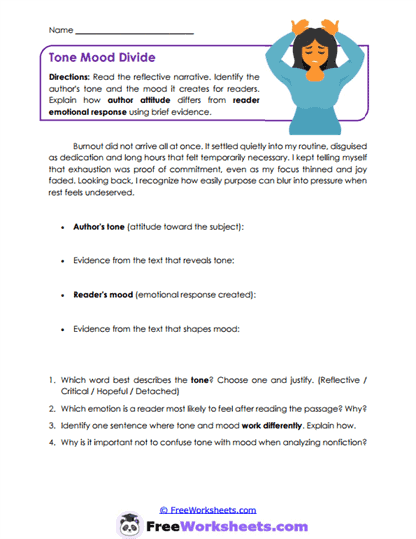
Tone Mood Divide
- What Kids Do:
Students distinguish between tone and mood in a passage. They explain how the author’s attitude differs from the reader’s emotional response. This builds clarity. - Target Skill:
Students strengthen their understanding of tone versus mood. They learn how both shape reading experience. This supports deeper comprehension.
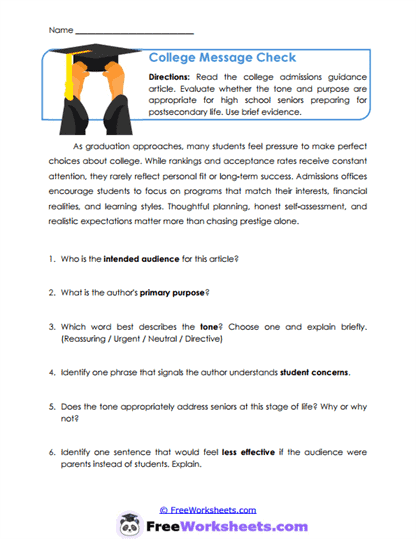
College Message Check
- What Kids Do:
Students analyze a passage about college decisions and evaluate how well the tone fits the audience. They suggest improvements. This connects reading to real life. - Target Skill:
Students build skills in evaluating communication effectiveness. They learn how tone supports purpose and audience needs. This supports practical reading and writing.