
Analyzing Literature Worksheets
These worksheets help students explore complex themes, analyze character decisions, and interpret how authors use language and structure to create meaning. These free, ready-to-print PDF worksheets are designed for immediate classroom use or easy at-home learning. Students build skills like analyzing symbolism, evaluating point of view, and explaining how literary elements work together.
About This Collection of Worksheets
This collection is designed to help students move beyond basic comprehension and into deep literary analysis. Each worksheet focuses on important skills like understanding theme, analyzing symbolism, evaluating narrator reliability, and exploring how structure shapes meaning. Students work with rich passages that require close reading and thoughtful interpretation.
Students are guided to think critically about how texts are constructed. Many activities ask them to connect small details-like a symbol or a word choice-to larger ideas about identity, conflict, and meaning. They also practice writing clear, evidence-based responses, which prepares them for essays and advanced discussions.
The worksheets are designed to build skills step-by-step, from identifying literary elements to analyzing complex ideas like perspective, structure, and theme development. These resources align with Grade 12 standards and support the kind of deep thinking students need for college-level reading and writing.

Paul’s Teacher Tip
At this level, encourage students to slow down and really focus on how meaning is built. Remind them that every detail-an object, a word, or even the order of events-can reveal something important. It also helps to ask, “What does this represent?” or “Why did the author structure it this way?” If students get stuck, have them start with one detail and build their thinking step by step. Over time, this leads to stronger and more confident analysis.
Worksheet Collection Skill Spotlights
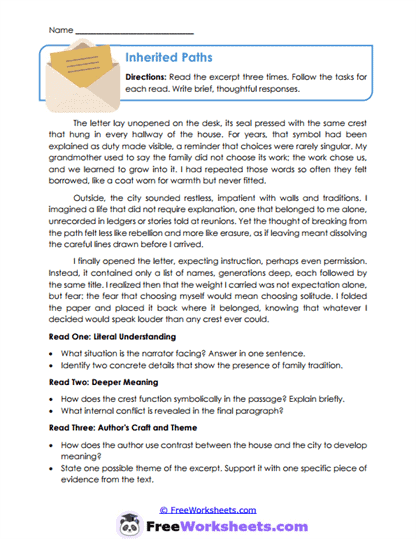
Inherited Paths
- What Kids Do:
Students analyze how symbols and traditions shape a character’s identity. They connect details like objects and setting to deeper ideas about family expectations. This helps them move beyond surface-level reading. - Target Skill:
Students build skills in analyzing theme, symbolism, and internal conflict. They learn how details connect to larger meanings. This supports advanced literary analysis.
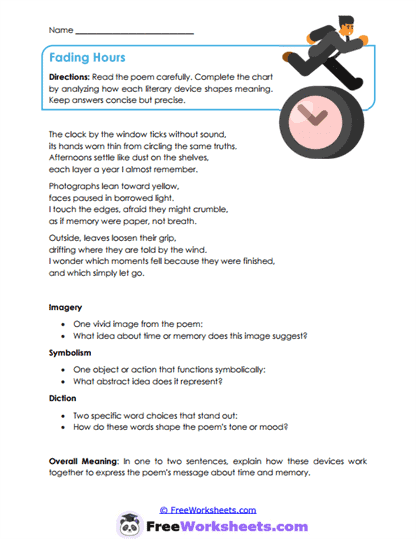
Fading Hours
- What Kids Do:
Students analyze a poem by identifying imagery, symbolism, and word choice. They explain how these elements express ideas about time and memory. This builds deeper interpretation skills. - Target Skill:
Students strengthen their ability to analyze figurative language and connect it to theme. They learn how poetic devices create meaning. This supports literary understanding.
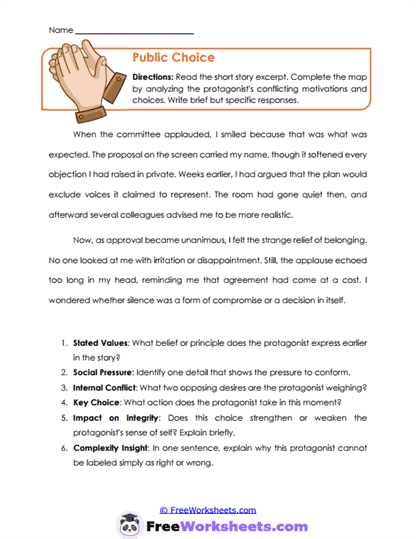
Public Choice
- What Kids Do:
Students explore a character’s internal conflict when facing social pressure. They analyze decisions and explain how they affect identity. This builds thoughtful analysis. - Target Skill:
Students develop skills in analyzing character conflict and decision-making. They learn how choices reveal deeper ideas. This supports comprehension.
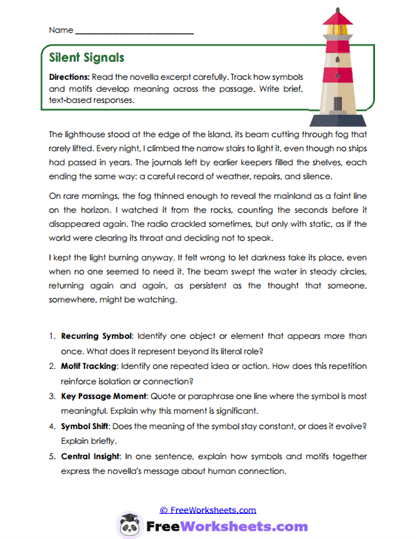
Silent Signals
- What Kids Do:
Students track a symbol or motif across a passage and explain how its meaning changes. They connect repeated elements to a central message. This builds pattern recognition. - Target Skill:
Students strengthen their ability to analyze symbolism and motif development. They learn how repeated ideas shape theme. This supports deeper reading.
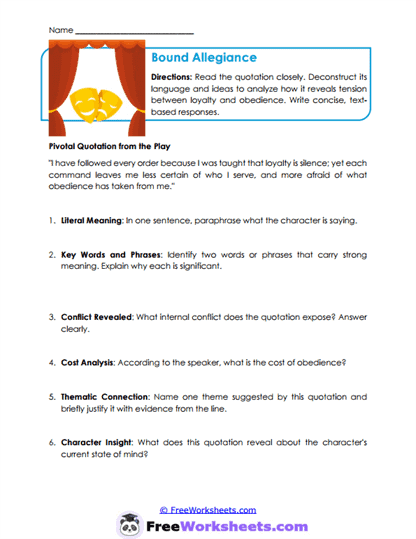
Bound Allegiance
- What Kids Do:
Students break down a quotation and explain its meaning, key words, and connection to conflict. They connect the quote to a larger theme. This builds close reading skills. - Target Skill:
Students improve their ability to analyze word choice and interpret meaning. They learn how small details reveal big ideas. This supports literary analysis.
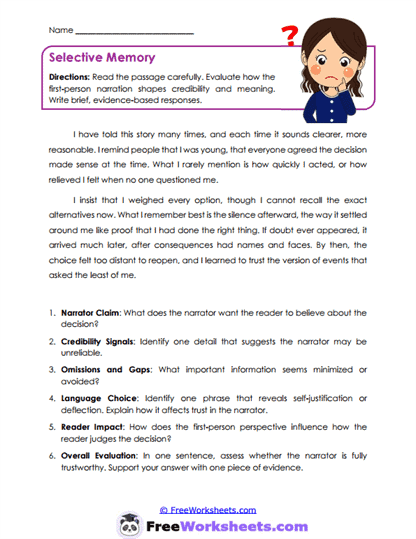
Selective Memory
- What Kids Do:
Students evaluate whether a narrator is reliable by identifying bias and missing details. They explain what the narrator wants the reader to believe. This builds critical thinking. - Target Skill:
Students develop skills in analyzing point of view and narrator reliability. They learn how perspective shapes meaning. This supports advanced comprehension.
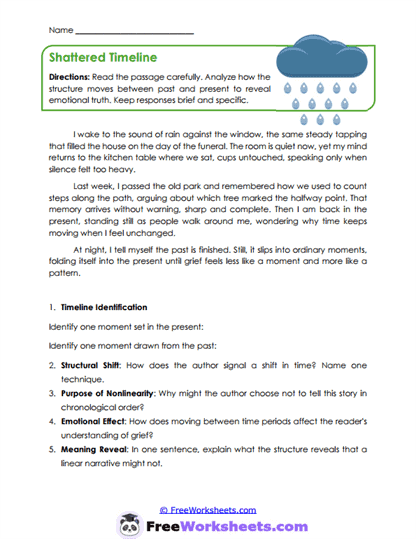
Shattered Timeline
- What Kids Do:
Students analyze how shifts between past and present affect meaning. They explain how structure reveals deeper emotions or ideas. This builds understanding of storytelling techniques. - Target Skill:
Students strengthen their ability to analyze narrative structure and its impact on meaning. They learn how time shifts shape interpretation. This supports literary analysis.
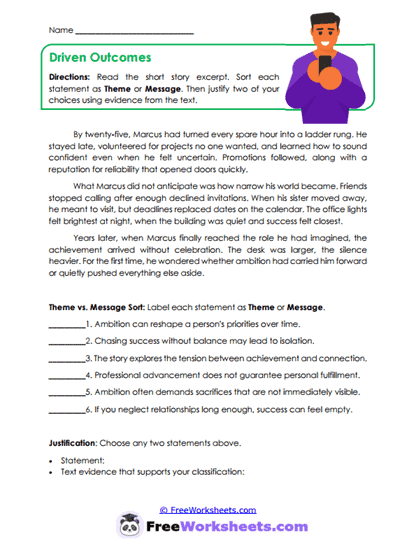
Driven Outcomes
- What Kids Do:
Students classify ideas as theme or message and support their thinking with evidence. They explain how actions in the story reflect deeper ideas. This builds clarity. - Target Skill:
Students develop skills in distinguishing theme from message. They learn how ideas are supported in a text. This supports comprehension and analysis.
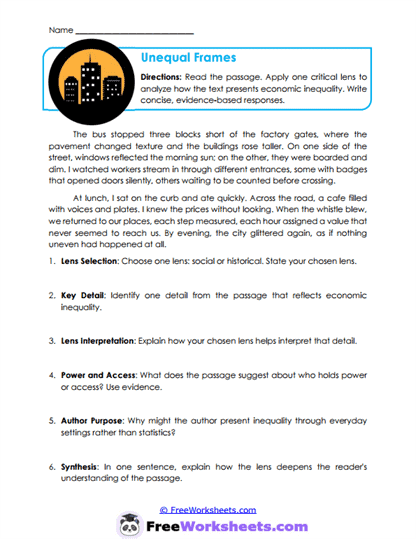
Unequal Frames
- What Kids Do:
Students analyze a passage through a specific lens, such as social or historical. They identify how inequality or perspective shapes meaning. This builds deeper interpretation. - Target Skill:
Students strengthen their ability to analyze texts using different perspectives. They learn how viewpoint changes understanding. This supports critical thinking.
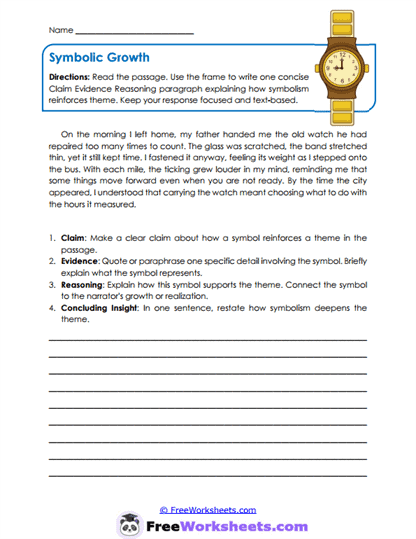
Symbolic Growth
- What Kids Do:
Students write a claim about how a symbol connects to theme and character growth. They support their ideas with evidence. This connects reading and writing. - Target Skill:
Students improve their ability to analyze symbolism using clear reasoning. They learn how to connect details to larger ideas. This supports essay writing.
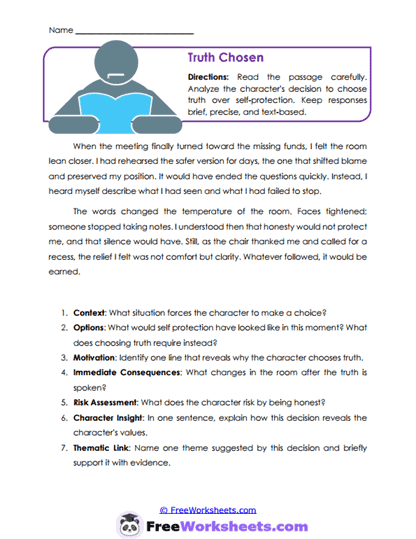
Truth Chosen
- What Kids Do:
Students analyze a character’s ethical decision and explain motivations and consequences. They connect the choice to a broader theme. This builds deeper understanding. - Target Skill:
Students build skills in analyzing character decisions and moral dilemmas. They learn how choices reveal meaning. This supports literary comprehension.
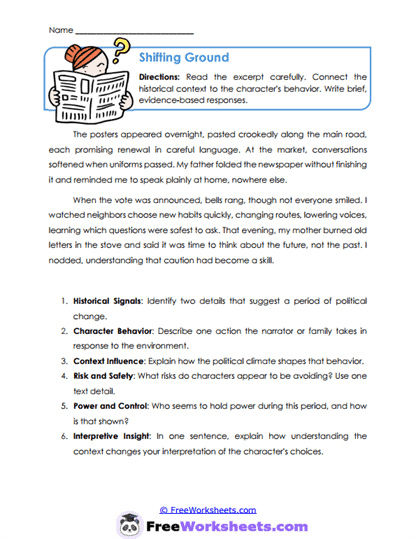
Shifting Ground
- What Kids Do:
Students examine how historical or social context influences character behavior. They explain how setting shapes decisions. This builds contextual understanding. - Target Skill:
Students develop skills in analyzing context and its impact on characters. They learn how time and place shape meaning. This supports deeper literary analysis.