
Business Documents Worksheets
These worksheets help students understand professional texts used in workplaces, from memos and emails to contracts and proposals. These free, ready-to-print PDF worksheets are designed for immediate classroom use or easy at-home learning. Students strengthen skills like analyzing purpose, evaluating tone, improving clarity, and making evidence-based decisions.
About This Collection of Worksheets
This collection focuses on helping students read and interpret real-world business documents with confidence. Each worksheet gives students practice understanding how information is presented, what actions are expected, and how tone and wording affect meaning. Students work with realistic examples like meeting summaries, memos, and professional emails.
Students are also guided to think critically about communication. Many activities ask them to evaluate clarity, identify vague language, and revise writing to make it more professional. They also practice analyzing arguments in proposals, balancing risks and benefits, and using evidence to make decisions. This helps prepare them for college and career situations.
The worksheets are designed to build skills step-by-step, from identifying purpose and audience to evaluating effectiveness and improving communication. Students also practice reading complex language, tracking details, and making informed recommendations. These resources align with Grade 12 standards and support practical, real-world literacy skills.

Paul’s Teacher Tip
At this level, remind students that business documents are written to get things done. Encourage them to ask, “What action is expected?” and “Is this message clear?” It also helps to practice rewriting unclear or informal language into something more professional. If students struggle, guide them to focus on key phrases and details first. Over time, they will become more confident in handling real-world texts.
Worksheet Collection Skill Spotlights
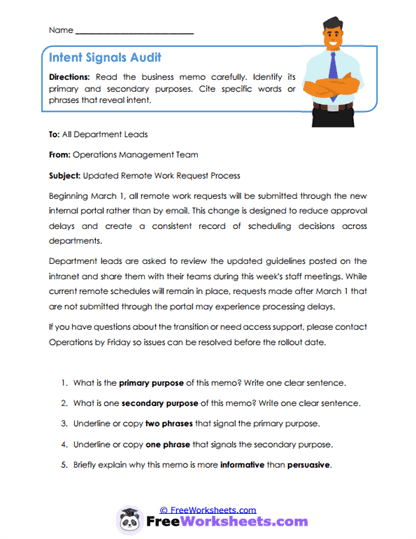
Intent Signals Audit
- What Kids Do:
Students read a business memo and identify both the main and secondary purposes. They find phrases that clearly show the writer’s intent. This helps them understand why messages are written. - Target Skill:
Students build skills in analyzing purpose and identifying key evidence. They learn how wording reveals intent. This supports comprehension of workplace texts.
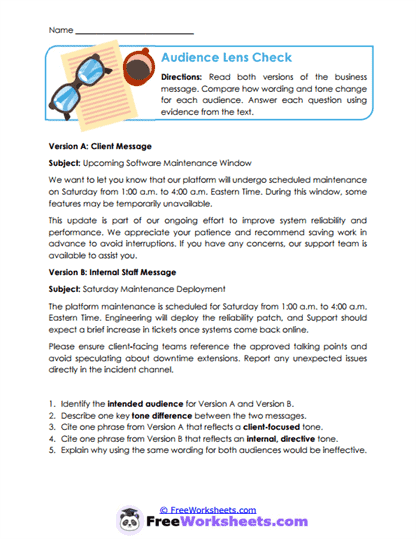
Audience Lens Check
- What Kids Do:
Students compare two versions of the same message written for different audiences. They analyze tone and wording differences. This helps them see how communication changes. - Target Skill:
Students strengthen their ability to analyze audience and tone. They learn how writing shifts based on the reader. This supports real-world communication skills.
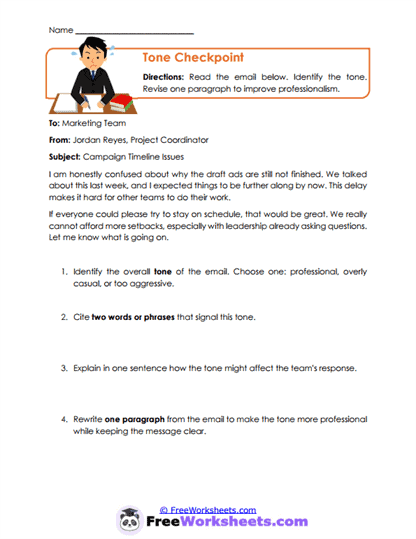
Tone Checkpoint
- What Kids Do:
Students analyze a workplace email and identify tone issues. They rewrite parts of the message to sound more professional. This builds practical writing skills. - Target Skill:
Students develop skills in evaluating and revising tone. They learn how language affects how a message is received. This supports communication.
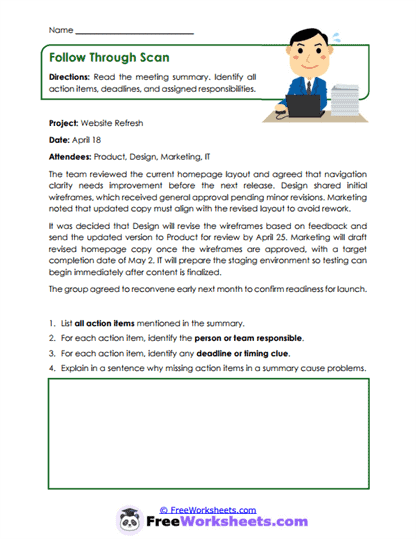
Follow Through Scan
- What Kids Do:
Students read a meeting summary and list action items, deadlines, and responsibilities. They track who needs to do what and when. This builds organization skills. - Target Skill:
Students strengthen their ability to identify key details in informational texts. They learn how organization supports understanding. This supports real-world reading.
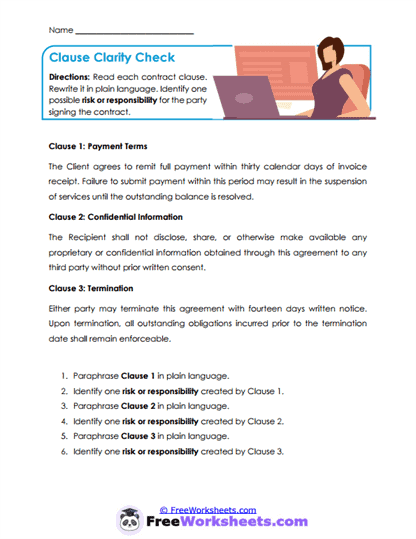
Clause Clarity Check
- What Kids Do:
Students rewrite complex contract language in simpler terms. They identify responsibilities and risks in each clause. This helps them understand formal documents. - Target Skill:
Students build skills in interpreting and simplifying complex language. They learn how meaning and responsibility are communicated. This supports comprehension.
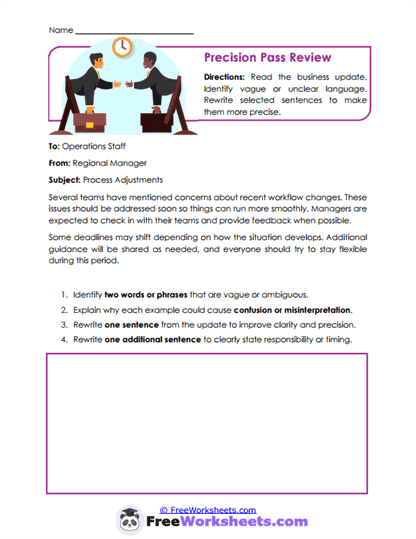
Precision Pass Review
- What Kids Do:
Students identify vague language in a business message and rewrite it more clearly. They explain how improved wording helps understanding. This builds clarity. - Target Skill:
Students develop skills in improving clarity and precision in writing. They learn how clear language prevents confusion. This supports communication.
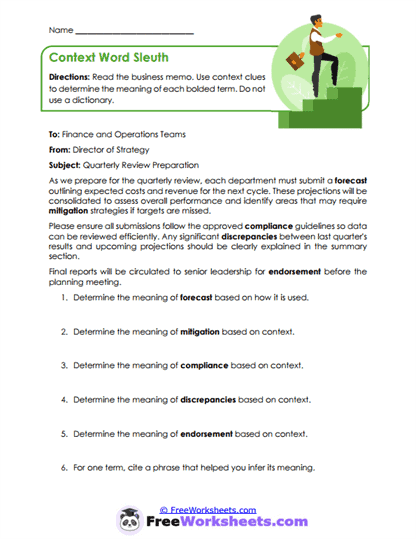
Context Word Sleuth
- What Kids Do:
Students determine the meaning of vocabulary words using context clues in a business memo. They explain how they figured out each word. This builds independence. - Target Skill:
Students strengthen vocabulary skills using context clues. They learn how to understand unfamiliar terms. This supports reading fluency.
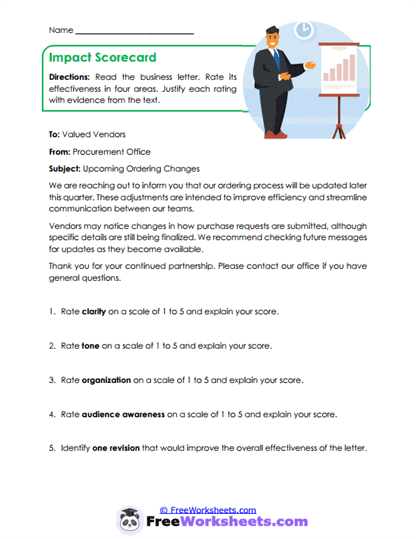
Impact Scorecard
- What Kids Do:
Students evaluate a business letter by rating clarity, tone, and organization. They explain their ratings with evidence. This builds critical thinking. - Target Skill:
Students develop skills in evaluating communication effectiveness. They learn how to judge quality and suggest improvements. This supports analysis.
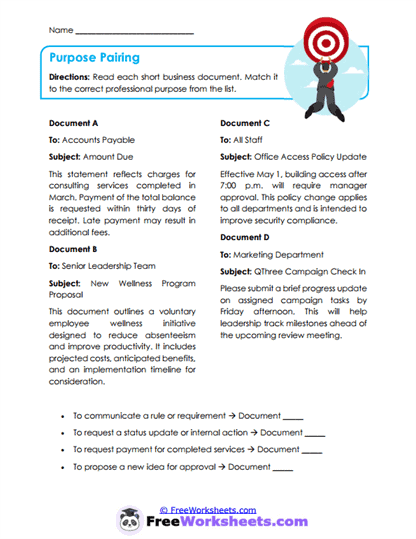
Purpose Pairing
- What Kids Do:
Students match different business documents to their correct purpose. They use clues from the text to support their answers. This builds understanding of function. - Target Skill:
Students improve their ability to identify purpose in real-world texts. They learn how different documents serve different goals. This supports comprehension.
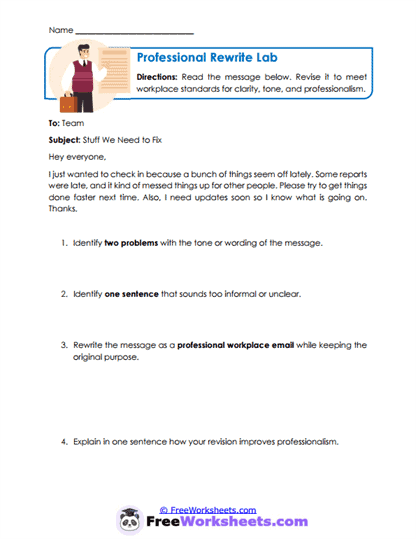
Professional Rewrite Lab
- What Kids Do:
Students revise a casual workplace message to make it more professional. They identify tone and clarity issues and improve them. This builds strong writing habits. - Target Skill:
Students strengthen their ability to revise writing for tone and clarity. They learn how to communicate professionally. This supports real-world skills.
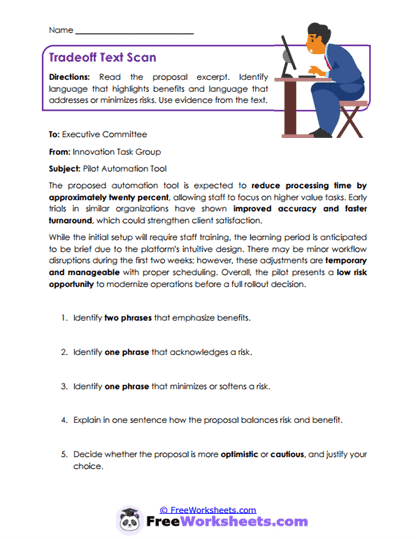
Tradeoff Text Scan
- What Kids Do:
Students analyze a proposal and identify both benefits and risks. They explain how the writer balances these ideas. This builds reasoning skills. - Target Skill:
Students develop skills in evaluating arguments and balancing perspectives. They learn how writers present both sides. This supports critical thinking.
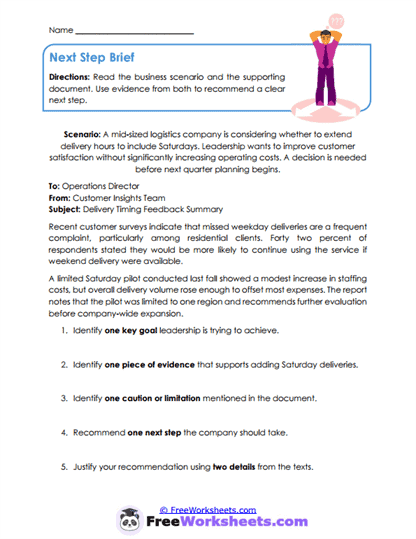
Next Step Brief
- What Kids Do:
Students read multiple sources and recommend a next step based on evidence. They justify their decision clearly. This builds decision-making skills. - Target Skill:
Students build skills in synthesizing information and making evidence-based recommendations. They learn how to support decisions with details. This supports advanced reading and writing.