
12th Grade Reading Passages Worksheets
These worksheets give students meaningful, real-world texts that build strong reading, writing, and reasoning skills. These free, ready-to-print PDF worksheets are designed for immediate classroom use or easy at-home learning. Students practice analyzing arguments, interpreting literature, evaluating evidence, and making thoughtful connections across texts.
About This Collection of Worksheets
This collection is designed to help students move from basic understanding into deeper analysis and real-world thinking. The passages cover a mix of topics, including media influence, civic responsibility, historical context, and personal decision-making. Students learn how to break down complex ideas, recognize perspective, and explain their thinking clearly.
What makes this set especially useful is how it mirrors the kinds of reading students will see after high school. Some passages ask students to evaluate arguments, while others focus on literary meaning or historical context. This balance helps students build confidence across different types of texts. Over time, they learn not just to understand what they read, but to question it and respond thoughtfully.
The worksheets are also structured to build skills step-by-step. Students move from identifying ideas and vocabulary to analyzing tone, evaluating evidence, and writing their own responses. This gradual progression helps them feel more comfortable with complex reading tasks. These resources align with Grade 12 standards and prepare students for college-level work and real-world reading situations.

Paul’s Teacher Tip
At this level, students benefit from slowing down and really thinking about what they read. Encourage them to go back to the text and find proof for their answers instead of relying on memory. It also helps to talk through ideas before writing-this builds clarity and confidence. If your student feels stuck, remind them they don’t have to understand everything at once. Taking it one paragraph at a time can make even the hardest texts feel manageable.
Worksheet Collection Skill Spotlights
Digital Gatekeepers
- What Kids Do:
Students read an opinion-based passage about social media and analyze what the author believes. They look closely at how the message is shaped and who it is meant for. This helps them understand how arguments work in real life. - Target Skill:
Students build skills in analyzing author’s purpose, audience, and perspective. They learn how opinions are presented and supported. This supports critical reading.
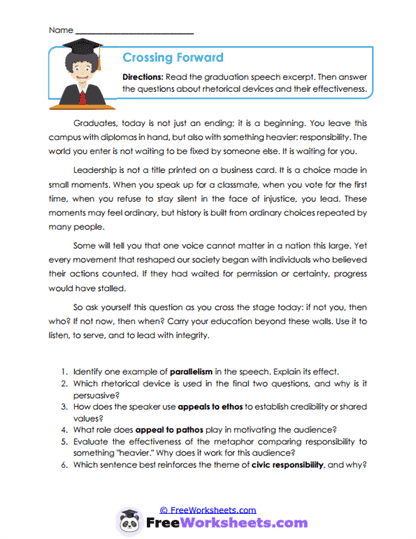
Crossing Forward
- What Kids Do:
Students read a speech and identify techniques like repetition and emotional appeal. They explain how these techniques inspire the audience. This builds awareness of persuasive language. - Target Skill:
Students strengthen their ability to analyze rhetorical devices and their effects. They learn how speeches are designed to motivate people. This supports deeper comprehension.
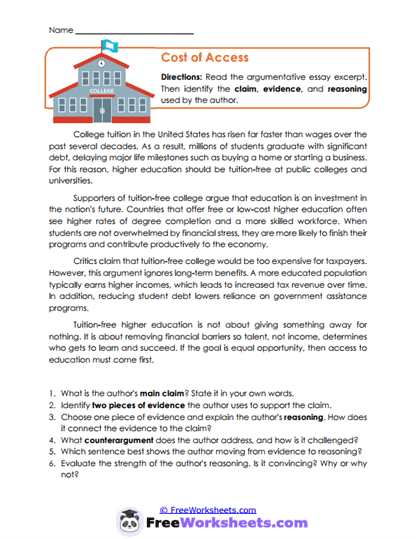
Cost of Access
- What Kids Do:
Students analyze an argument about college costs by identifying claims and evidence. They explain how the argument is built and whether it is convincing. This builds reasoning skills. - Target Skill:
Students develop skills in evaluating arguments and evidence. They learn how to judge the strength of claims. This supports critical thinking.
Policy and Impact
- What Kids Do:
Students use context clues to figure out the meaning of challenging academic vocabulary. They explain how surrounding sentences help them understand. This builds independence in reading. - Target Skill:
Students strengthen vocabulary skills using context clues. They learn how to understand complex language. This supports comprehension.
Silent Days
- What Kids Do:
Students read a passage and make inferences based on small details. They explain what is happening even when it is not directly stated. This builds deeper understanding. - Target Skill:
Students build skills in making text-based inferences. They learn how to support ideas with evidence. This supports critical reading.
Power of Ballots
- What Kids Do:
Students write a response to an editorial about voting and support their ideas with evidence. They organize their thinking into a clear answer. This connects reading and writing. - Target Skill:
Students strengthen their ability to write evidence-based responses. They learn how to support ideas clearly. This supports academic writing.
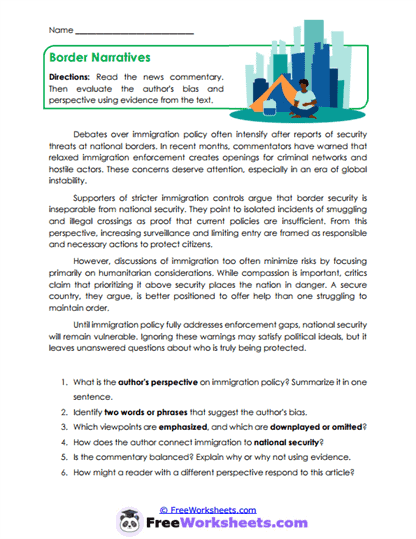
Border Narratives
- What Kids Do:
Students analyze a commentary and identify the author’s perspective and possible bias. They consider what viewpoints may be missing. This builds awareness of how texts shape opinions. - Target Skill:
Students develop skills in analyzing perspective and bias. They learn how authors influence readers. This supports media literacy.
Quiet Choice
- What Kids Do:
Students read a literary passage and identify its theme. They connect character actions to deeper ideas about responsibility and choice. This builds thoughtful interpretation. - Target Skill:
Students strengthen their ability to analyze theme and character development. They learn how stories communicate meaning. This supports literary analysis.
Liberty in Time
- What Kids Do:
Students analyze a historical text and explain how past events shape its meaning. They connect ideas from the text to real-world history. This builds deeper understanding. - Target Skill:
Students develop skills in analyzing historical context and idea development. They learn how background shapes meaning. This supports advanced comprehension.
Media Influence
- What Kids Do:
Students read a nonfiction passage and answer questions about how media shapes public opinion. They choose answers based on evidence from the text. This builds careful reading skills. - Target Skill:
Students improve their ability to evaluate arguments and evidence. They learn how to read complex informational texts. This supports critical thinking.
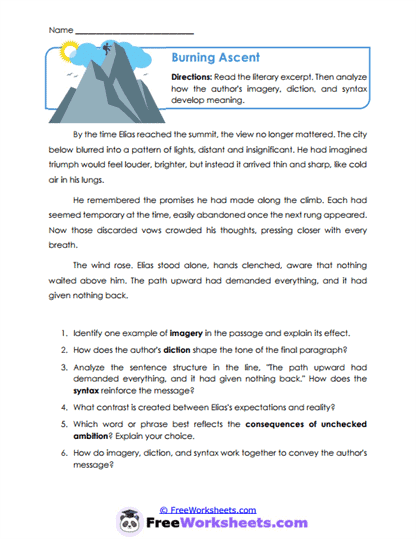
Burning Ascent
- What Kids Do:
Students analyze descriptive language in a literary passage. They explain how imagery and word choice affect tone and meaning. This builds deeper reading skills. - Target Skill:
Students strengthen their ability to analyze literary techniques. They learn how language shapes meaning. This supports literary comprehension.
Uneven Outcomes
- What Kids Do:
Students identify cause-and-effect relationships in a passage about inequality. They explain how ideas connect and build over time. This helps them understand structure. - Target Skill:
Students develop skills in analyzing informational text structure. They learn how cause-and-effect relationships shape meaning. This supports comprehension.