
About This Worksheet
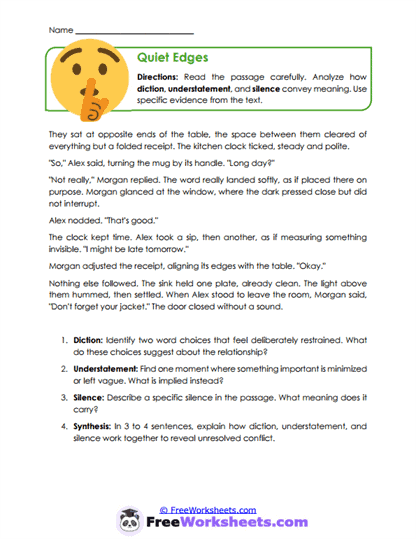
This worksheet helps students understand how small, quiet details in a story can carry powerful meaning. It focuses on diction, understatement, and silence, which are often used to show tension or unresolved conflict. Your child will learn that what is not said can sometimes be just as important as what is said. For example, a simple word choice like “okay” might seem calm, but in the right moment, it can actually show discomfort or distance. This helps students look beyond the surface and notice deeper emotional clues.
Curriculum and Grade Alignment
This worksheet is designed for 12th grade students who are developing advanced literary analysis skills. The main goal is to help them understand how word choice and subtle details shape meaning. Before this, students should be able to identify tone and mood, and now they are learning how those are built through small choices. The next step is applying this thinking in essays and deeper analysis. It aligns with CCSS.ELA-LITERACY.RL.11-12.4, focusing on word choice and meaning. It also supports TEKS standards for analyzing literary techniques.
Student Tasks
On this worksheet, students will read a passage about a quiet, tense conversation between two characters. They will identify specific word choices that show restraint or hidden meaning. Students will also find an example of understatement and explain what is being left unsaid. Some questions ask them to analyze silence and what it reveals about the relationship. The final task asks them to bring all these ideas together to explain the deeper conflict.
Common Challenges and Misconceptions
Students may overlook small details because they seem unimportant at first. Some might think silence means nothing is happening, when it often shows the most tension. Others may struggle to explain understatement clearly. It is also common for students to give answers that are too simple without exploring deeper meaning. A helpful approach is to ask, “What is the character not saying, and why might that matter?”
Implementation Guidance
Teachers can use this worksheet during lessons on tone, conflict, or character relationships. It works well for close reading activities where students take their time with the text. At home, parents can help by asking their child to explain what they think each character is really feeling. This turns the reading into a conversation. Taking time to pause and reflect on each line can make a big difference.
Details and Features
This worksheet includes a short passage and several focused analysis questions. It encourages thoughtful, detailed responses. The layout is clean and easy to follow. It supports both independent work and discussion. The content is relatable and helps students practice deeper thinking.