
About This Worksheet
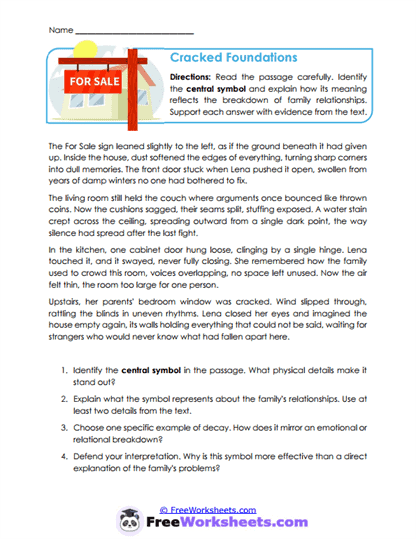
This worksheet helps students understand how a single object or image in a story can represent something much bigger. It focuses on symbolism, especially how physical details can reflect emotional or relationship struggles. Your child will learn to connect what they see in the story to what it means beneath the surface. For example, a broken or leaning house can represent a family that is falling apart. This kind of thinking helps students understand deeper messages in literature.
Curriculum and Grade Alignment
This worksheet is designed for 12th grade students who are developing strong interpretation skills. The main goal is to identify a central symbol and explain how it connects to the story’s meaning. Before this, students should understand basic story elements, and now they are learning to interpret deeper meaning. The next step is comparing symbols across different texts. It aligns with CCSS.ELA-LITERACY.RL.11-12.2 and RL.11-12.4, focusing on theme and symbolism. It also supports TEKS standards for literary analysis.
Student Tasks
On this worksheet, students will read a passage about a home that is slowly falling apart. They will identify the central symbol and describe what it represents. Students must use details from the text to support their ideas. They will also look closely at specific examples of decay and explain how those details reflect emotional struggles. Finally, they defend their interpretation, which helps build strong reasoning skills.
Common Challenges and Misconceptions
Students may focus too much on the physical object and not think about what it represents. Some may believe there is only one correct answer instead of understanding that interpretations can vary if supported with evidence. Others might struggle to connect details across the passage. It is also common to give vague answers without strong support. A helpful strategy is to ask, “What is this object showing us about the people in the story?”
Implementation Guidance
Teachers can use this worksheet during a unit on symbolism or theme. It works well for discussion because students may have different interpretations to share. At home, parents can help by asking their child to explain their thinking step by step. This builds confidence and deeper understanding. Even drawing connections between the story and real-life experiences can make the lesson more meaningful.
Details and Features
This worksheet includes a descriptive passage and several open-ended questions. It encourages students to support their answers with clear evidence. The format is simple and easy to print. It supports both independent work and group discussion. The focus on one strong symbol helps students go deeper instead of rushing.