
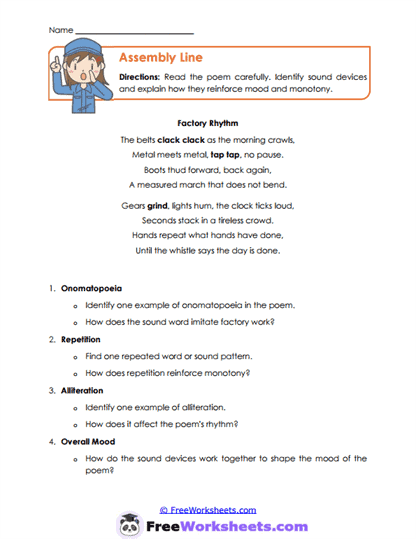
About This Worksheet
This worksheet is a literary analysis activity centered on figurative language. It teaches students how authors use comparisons and imagery to express emotions. Designed for Grade 10, it builds deeper understanding of how meaning is created in text. For example, comparing fear to a fragile object shows vulnerability.
Curriculum and Grade Alignment
The worksheet targets Grade 10 reading standards related to literary devices. The goal is to connect language techniques with their intended emotional effects. Students should already recognize basic literary terms before completing this task. It aligns with CCSS RL.9-10.4 and TEKS §110.32(b)(5).
Student Tasks
On this worksheet, students will analyze a short narrative passage. They will match literary devices to specific effects listed on the page. Students must also underline supporting evidence from the text. The activity requires both comprehension and analytical thinking.
Common Challenges and Misconceptions
Students may rely on guessing instead of using evidence. Some may not fully understand how a device affects meaning. Others might overlook key phrases in the passage. Teachers should guide students to slow down and reread carefully.
Implementation Guidance
Teachers can use this as a practice or review worksheet. It works well in pairs where students explain their thinking. Parents can support by asking guiding questions about the text. This activity also helps build test-taking skills.
Details and Features
The worksheet includes clear directions and structured questions. It offers a list of literary devices for easy reference. There is space for annotation and written responses. The design is print-friendly and classroom-ready.