
10th Grade Reading Passages Worksheets
These worksheets give students engaging texts that build real-world reading and analysis skills. These free, ready-to-print PDF worksheets are designed for immediate classroom use or easy at-home learning. Students strengthen skills like identifying main ideas, analyzing arguments, making inferences, and evaluating information.
About This Collection of Worksheets
This collection brings together high-interest passages that connect directly to students’ lives, from social media and technology to identity, work, and current issues. Each worksheet is designed to help students slow down and really think about what they are reading. Instead of rushing through a text, students practice rereading, annotating, and using evidence to support their ideas.
Students are guided step-by-step through important comprehension strategies. They learn how to summarize clearly, track how ideas develop, and evaluate arguments from multiple perspectives. Many activities also connect reading to writing, helping students explain their thinking in organized and thoughtful ways. These are essential skills for both school success and everyday life.
The worksheets are designed to build skills gradually, starting with understanding central ideas and moving toward deeper analysis like evaluating bias, making inferences, and analyzing rhetorical strategies. They align with Grade 10 standards and prepare students for more advanced reading and writing tasks. Whether used in class or at home, these resources support confident, independent readers.
Paul’s Teacher Tip
When working with reading passages, remind students that it’s okay to read more than once. The first read is for understanding the basics, and the second read is for deeper thinking. Encourage them to underline key ideas and write quick notes in the margins. Ask questions like, “What is the author really trying to say?” or “What evidence supports this idea?” These habits help students move from simple reading to strong comprehension and analysis.
Worksheet Collection Skill Spotlights
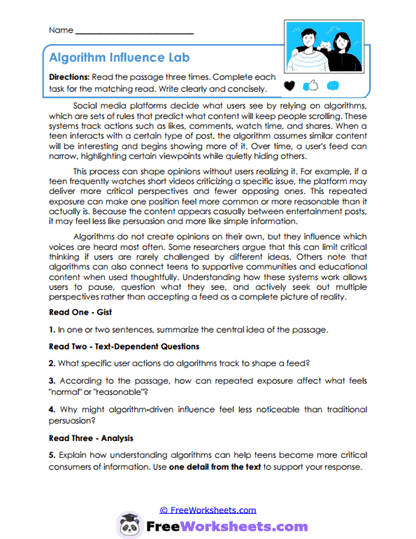
Algorithm Influence Lab
- What Kids Do:
Students read about how social media algorithms shape what people see and think. They summarize the main idea and explain how algorithms influence beliefs. This helps them connect reading to real-world experiences. - Target Skill:
Students build skills in identifying central ideas and analyzing how information is presented. They learn to think critically about media. This supports real-world literacy.
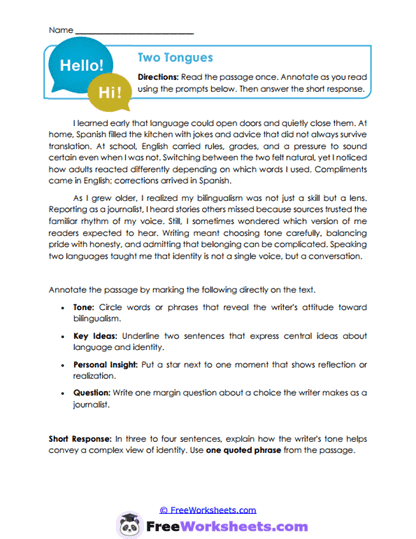
Two Tongues
- What Kids Do:
Students read a personal narrative about language and identity. They annotate the text by marking tone, key ideas, and important moments. This helps them engage deeply with the story. - Target Skill:
Students strengthen their ability to analyze tone and personal reflection in texts. They learn how language shapes identity. This supports literary comprehension.
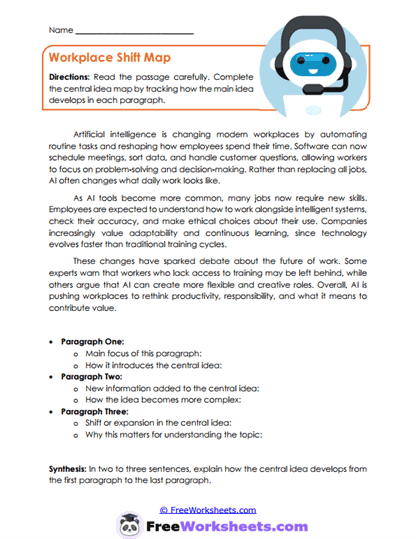
Workplace Shift Map
- What Kids Do:
Students track how ideas about AI and jobs develop across paragraphs. They explain how each part of the text adds new information. This helps them follow complex ideas. - Target Skill:
Students develop skills in analyzing how central ideas develop over time. They learn to connect ideas across a text. This supports deeper comprehension.
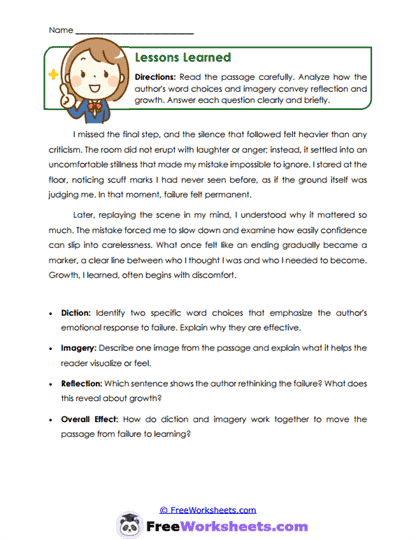
Lessons Learned
- What Kids Do:
Students read about a mistake and analyze how the writer shows growth. They examine word choice and imagery to understand emotions. This connects reading to real-life learning. - Target Skill:
Students build skills in analyzing word choice and how it shows theme and growth. They learn to connect details to meaning. This supports interpretation.
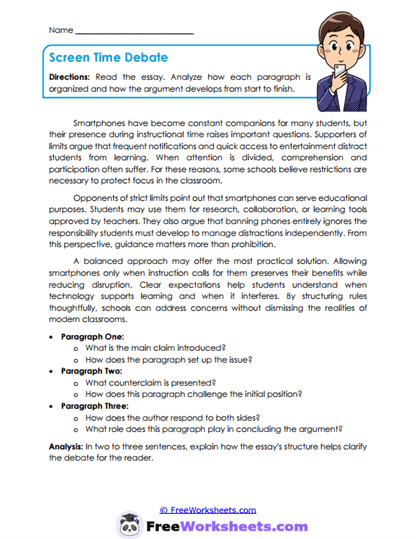
Screen Time Debate
- What Kids Do:
Students read a passage presenting different viewpoints about smartphone use. They analyze how the argument is structured across paragraphs. This helps them understand both sides of an issue. - Target Skill:
Students strengthen their ability to analyze arguments and text structure. They learn how ideas are organized. This supports critical reading.
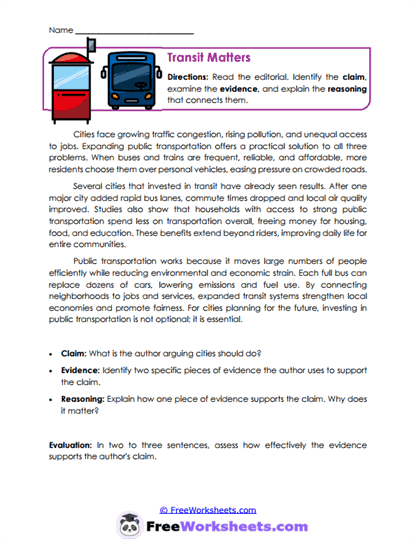
Transit Matters
- What Kids Do:
Students identify a claim and supporting evidence in a passage about public transportation. They explain how the evidence supports the argument. This builds reasoning skills. - Target Skill:
Students develop skills in analyzing arguments and evaluating evidence. They learn how claims are supported. This supports analytical thinking.
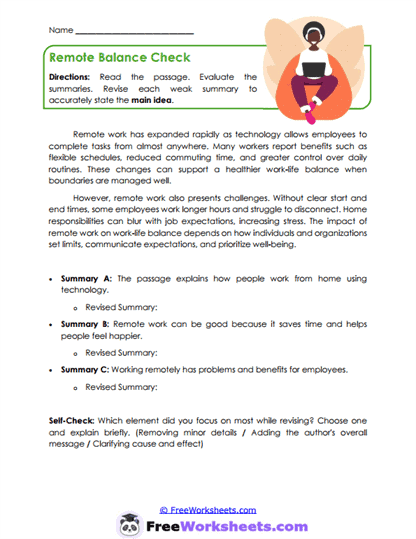
Remote Balance Check
- What Kids Do:
Students revise weak summaries to make them clearer and more accurate. They focus on identifying the main idea. This helps them improve writing and comprehension. - Target Skill:
Students build summarizing skills by identifying central ideas and improving clarity. They learn to express ideas in their own words. This supports comprehension.
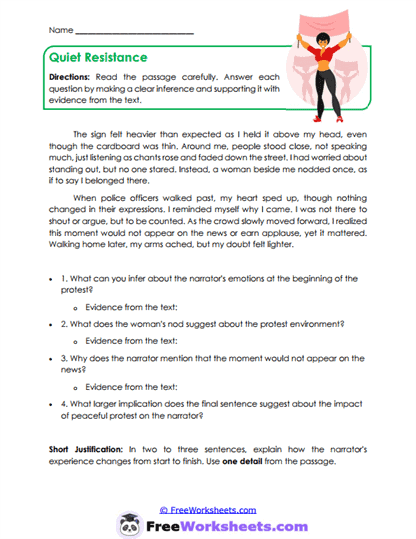
Quiet Resistance
- What Kids Do:
Students read a narrative and make inferences about what is not directly stated. They support their answers with evidence. This builds deeper understanding. - Target Skill:
Students strengthen inference skills by using evidence to support ideas. They learn to read between the lines. This supports critical thinking.
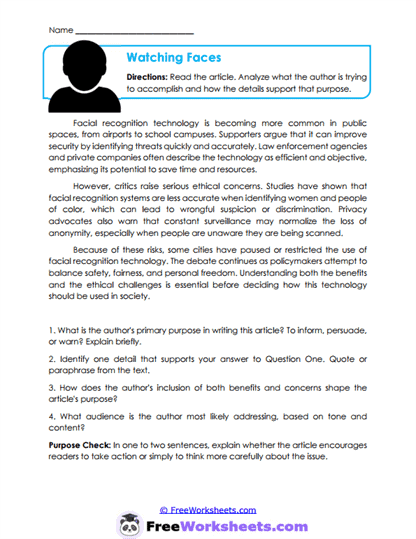
Watching Faces
- What Kids Do:
Students analyze a passage about facial recognition and determine the author’s purpose. They examine how both sides of the issue are presented. This builds thoughtful reading. - Target Skill:
Students develop skills in analyzing author’s purpose and evaluating how information is presented. They learn to question texts. This supports media literacy.
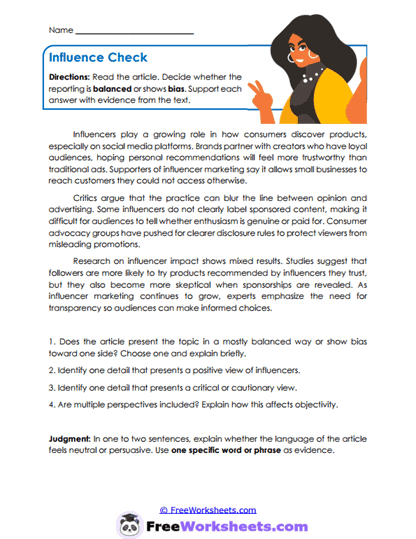
Influence Check
- What Kids Do:
Students evaluate whether a passage about influencers is balanced or biased. They identify evidence for both sides. This helps them become more careful readers. - Target Skill:
Students strengthen their ability to identify bias and evaluate arguments. They learn to support their thinking with evidence. This supports critical analysis.
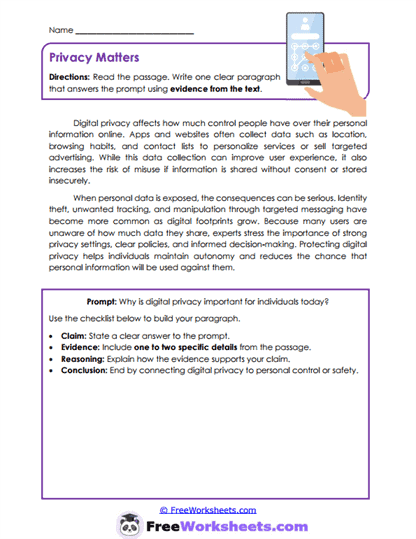
Privacy Matters
- What Kids Do:
Students read about digital privacy and write a paragraph using claim, evidence, and reasoning. They organize their ideas clearly. This connects reading and writing. - Target Skill:
Students build skills in writing evidence-based responses. They learn to support ideas with details. This supports communication and analysis.
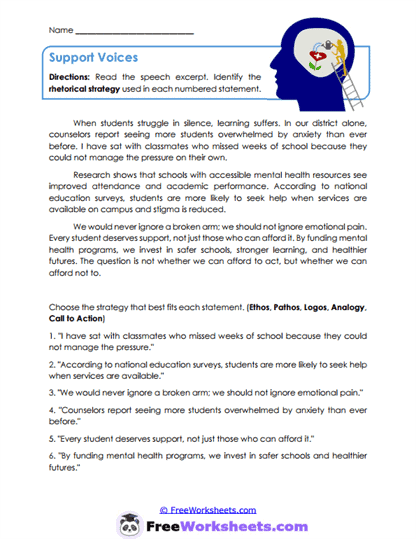
Support Voices
- What Kids Do:
Students read a speech and identify rhetorical strategies like emotion, logic, and credibility. They match examples to each strategy. This builds awareness of persuasion. - Target Skill:
Students develop skills in analyzing rhetorical strategies in texts. They learn how speakers influence audiences. This supports critical thinking and comprehension.