
Spelling Worksheets
10th Grade spelling worksheets help students develop stronger spelling habits, expand academic vocabulary, and improve proofreading accuracy. Free, ready-to-print worksheets are available in PDF format for immediate classroom use and independent practice. Students strengthen skills such as recognizing spelling patterns, correcting commonly confused words, applying word-formation rules, and editing writing for greater precision and professionalism.

About This Collection of Worksheets
Accurate spelling is an essential part of effective communication. Whether students are writing essays, research papers, emails, reports, or professional documents, correct spelling helps ensure that ideas are communicated clearly and credibly. This collection helps learners move beyond memorizing word lists by exploring the patterns, structures, and rules that shape English spelling. Through meaningful editing and word-analysis activities, students develop the tools needed to spell unfamiliar words with greater confidence.
The worksheets cover a wide range of spelling concepts, including word origins, homophones, suffix patterns, spelling conventions, proofreading techniques, academic vocabulary, professional communication, and content-area spelling. Students learn how morphology, etymology, and spelling rules influence word formation while practicing real-world editing skills. These activities encourage learners to think critically about why words are spelled the way they are rather than relying solely on memorization.
Teachers, parents, and homeschool educators can use these resources to support vocabulary instruction, grammar lessons, proofreading practice, writing workshops, intervention programs, and independent review. Each worksheet focuses on a specific aspect of spelling development while helping students strengthen both language knowledge and communication skills. Together, these activities help students become more accurate writers, more careful editors, and more confident users of academic language.

Paul’s Teacher Tip
Many students treat spelling as a separate skill, but strong spelling habits are closely connected to reading, vocabulary, and writing development. Encourage students to look for patterns rather than trying to memorize every word individually. Understanding roots, prefixes, suffixes, and common spelling conventions makes unfamiliar words much easier to decode and spell correctly. During proofreading, remind students to slow down and examine words carefully instead of relying entirely on spell-check tools. The strongest writers develop the habit of questioning whether a word “looks right” and verifying uncertain spellings before submitting their work.
Worksheet Collection Skill Spotlights
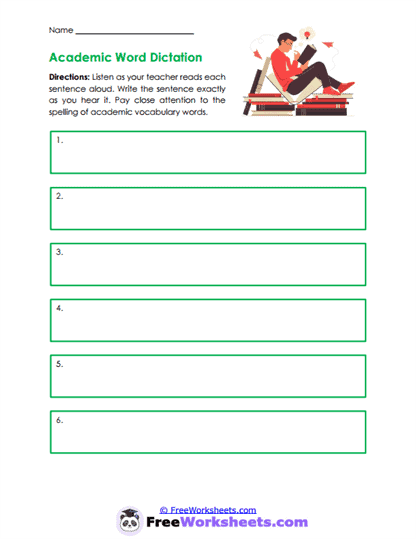
Academic Dictation
- What Kids Do:
Students listen to dictated sentences containing advanced academic vocabulary and write them accurately. They focus on spelling, punctuation, capitalization, and careful listening while reviewing their work for mistakes. - Target Skill:
Students strengthen spelling accuracy and language-conventions skills by recording complete sentences that contain challenging academic vocabulary.
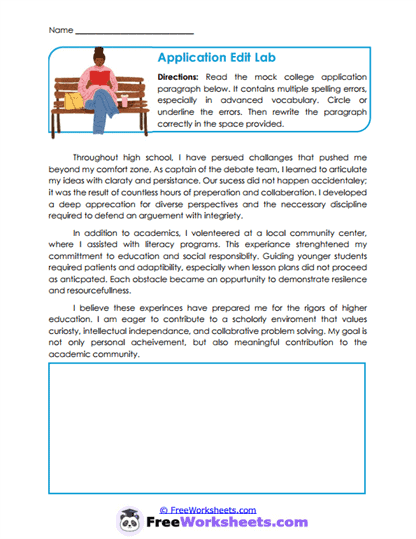
Email Proofing
- What Kids Do:
Students proofread a professional internship inquiry email containing spelling errors and revise it to meet workplace communication standards. They also reflect on the importance of accuracy in professional writing. - Target Skill:
Students build proofreading and editing skills while learning how spelling influences professionalism and credibility.
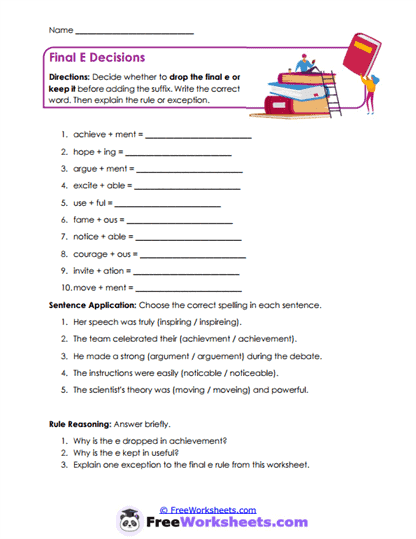
Final Choices
- What Kids Do:
Students determine whether a final e should be kept or dropped when adding suffixes to base words. They apply the rule through word-building and sentence-completion activities. - Target Skill:
Students strengthen spelling-convention skills by applying final e rules accurately in academic vocabulary.
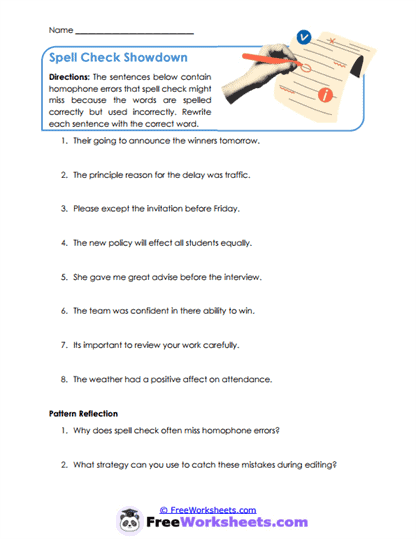
Homophone Hunt
- What Kids Do:
Students identify homophone errors in context and replace incorrect word choices with the proper spelling. They analyze meaning carefully rather than relying on pronunciation alone. - Target Skill:
Students improve proofreading accuracy by distinguishing between commonly confused homophones and selecting the correct word based on context.
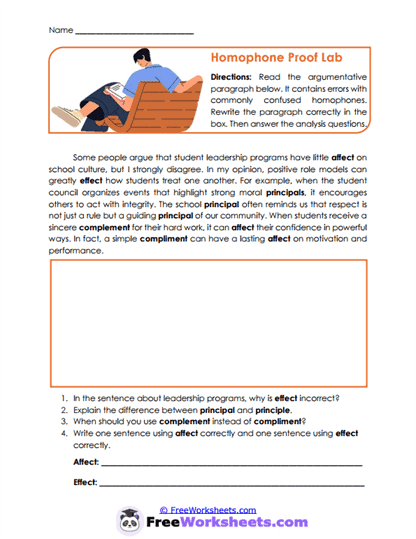
Homophone Proof
- What Kids Do:
Students revise an argumentative paragraph that contains homophone errors and explain why each correction is necessary. They also create original examples using corrected word pairs. - Target Skill:
Students strengthen spelling, vocabulary, and editing skills by connecting word choice to meaning and communication.
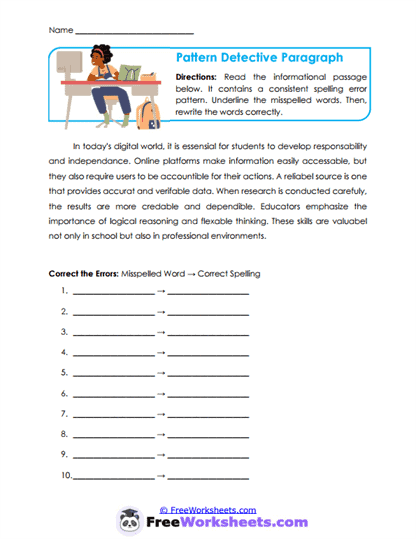
Pattern Patrol
- What Kids Do:
Students read an informational paragraph containing multiple spelling mistakes that follow a shared pattern. They identify the errors, make corrections, and determine the spelling rule involved. - Target Skill:
Students develop pattern-recognition and proofreading skills by analyzing recurring spelling conventions.
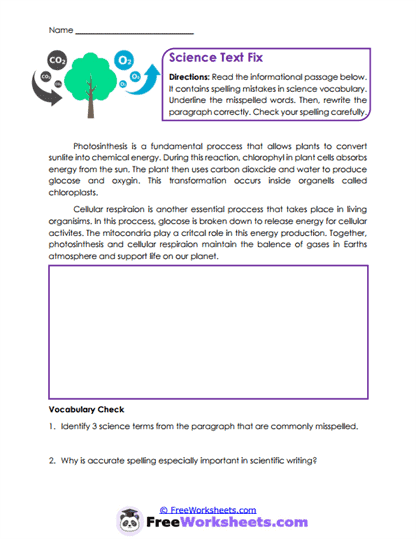
Science Spelling
- What Kids Do:
Students edit a science passage about photosynthesis and cellular respiration by correcting misspelled technical vocabulary. They reflect on the importance of precision in scientific communication. - Target Skill:
Students strengthen content-area spelling and proofreading skills through the correction of academic science terminology.
Spelling Patterns
- What Kids Do:
Students analyze academic vocabulary, identify recurring spelling structures, and apply spelling rules across a variety of word-study tasks. - Target Skill:
Students build long-term spelling knowledge by recognizing and applying common patterns rather than memorizing isolated words.
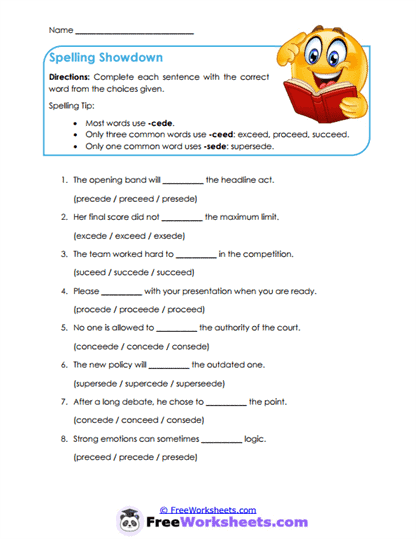
Spelling Precision
- What Kids Do:
Students use context clues to select correctly spelled academic vocabulary words from multiple options. They compare similar spellings and determine which follows standard conventions. - Target Skill:
Students strengthen spelling accuracy and vocabulary development through contextual word analysis.
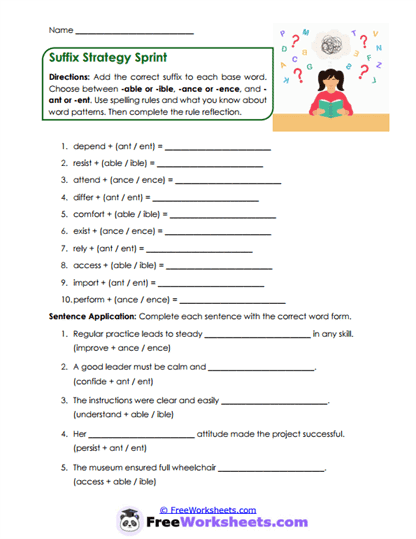
Suffix Builder
- What Kids Do:
Students add suffixes such as -able, -ible, -ance, -ence, -ant, and -ent to base words while applying spelling rules and using completed words in sentences. - Target Skill:
Students develop word-formation and spelling-pattern skills through the study of suffixes and morphology.
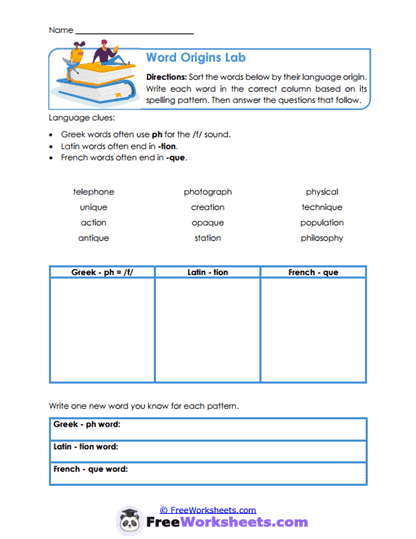
Word Roots
- What Kids Do:
Students sort words according to Greek, Latin, and French origins while identifying spelling patterns connected to each language source. They generate additional examples that follow similar conventions. - Target Skill:
Students strengthen vocabulary and spelling skills by understanding how word origins influence English spelling patterns.
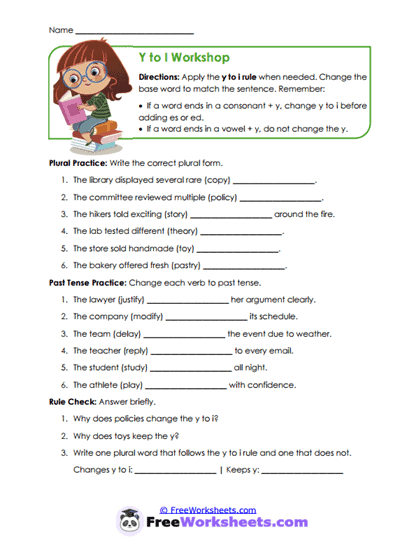
Y Transform
- What Kids Do:
Students apply the y-to-i spelling rule when forming plurals and changing verb tenses. They compare examples, identify exceptions, and explain their reasoning. - Target Skill:
Students build spelling-convention knowledge by applying the y-to-i rule accurately across multiple word forms.