
Analyzing Informational Texts Worksheets
These worksheets help students break down complex texts and evaluate ideas with confidence. These free, ready-to-print PDF worksheets are designed for immediate classroom use or easy at-home learning. Students build skills like analyzing arguments, evaluating evidence, and understanding author's purpose.
About This Collection of Worksheets
This collection focuses on helping students think more deeply about informational texts they encounter in school and everyday life. Each worksheet gives students practice analyzing how authors present ideas, support claims, and influence readers. From topics like climate change and public safety to technology and social issues, the texts feel relevant and meaningful.
Students are guided to go beyond basic comprehension and begin evaluating the strength of arguments and evidence. Many activities ask them to identify claims, distinguish fact from opinion, and assess credibility. This helps students become more thoughtful readers who can question and analyze information instead of simply accepting it.
The worksheets are designed to build skills step-by-step, from identifying structure and vocabulary to comparing perspectives and synthesizing ideas. They align with Grade 10 standards and prepare students for advanced reading, writing, and research tasks. Whether used in class discussions or independent practice, these resources support strong analytical thinking.
Paul’s Teacher Tip
When working with informational texts, encourage students to ask questions as they read instead of waiting until the end. Questions like “What is the author trying to prove?” or “Is this evidence strong?” help students stay engaged. It also helps to pause and check understanding of key vocabulary before moving on. Remind students that strong readers don’t just understand texts-they evaluate them. Over time, this mindset builds confidence and independence.
Worksheet Collection Skill Spotlights
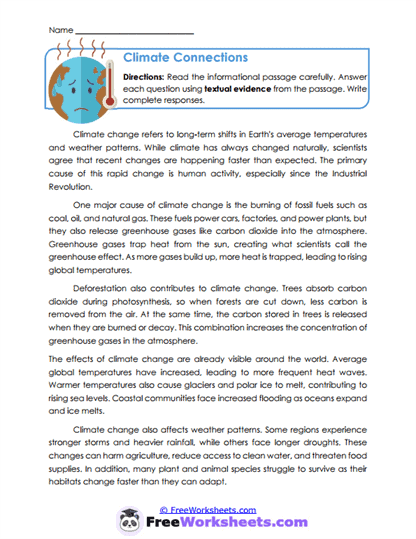
Climate Connections
- What Kids Do:
Students read about climate change and identify causes and effects. They connect actions to outcomes and explain how ideas are related. This helps them understand how information is organized. - Target Skill:
Students build skills in analyzing cause-and-effect relationships in informational texts. They learn how ideas connect and develop. This supports deeper comprehension and reasoning.
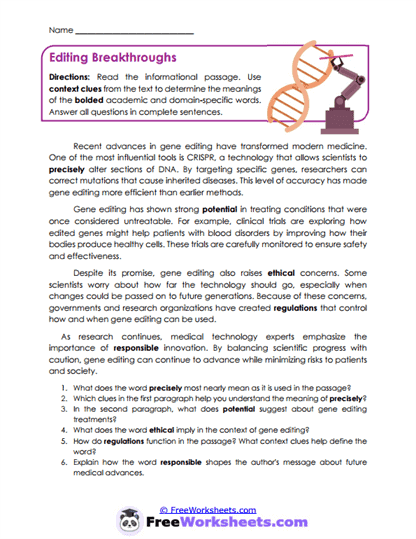
Editing Breakthroughs
- What Kids Do:
Students read a science passage and use context clues to understand key vocabulary. They explain how word meaning shapes the message. This helps them handle complex language. - Target Skill:
Students strengthen academic vocabulary skills using context clues. They learn how word choice affects understanding. This supports comprehension of technical texts.
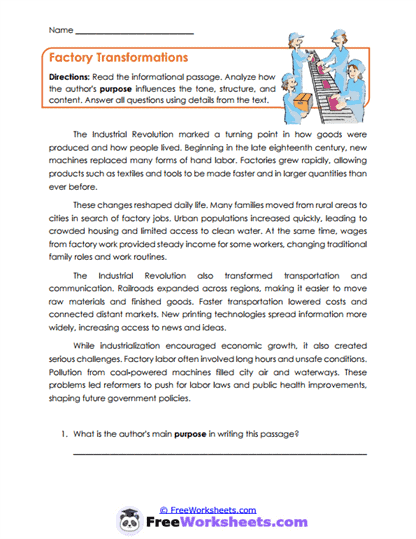
Factory Transformations
- What Kids Do:
Students read a historical passage and analyze the author’s purpose. They examine how tone and structure support the message. This encourages thoughtful reading. - Target Skill:
Students develop skills in analyzing author’s purpose and how it shapes a text. They learn to connect structure and meaning. This supports deeper analysis.
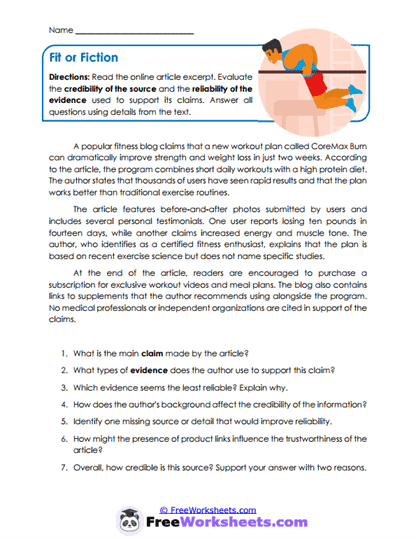
Fit or Fiction
- What Kids Do:
Students evaluate a fitness article and determine whether the evidence is reliable. They compare types of support like studies and personal stories. This builds real-world reading skills. - Target Skill:
Students strengthen their ability to evaluate credibility and reliability of sources. They learn to question information. This supports critical thinking.
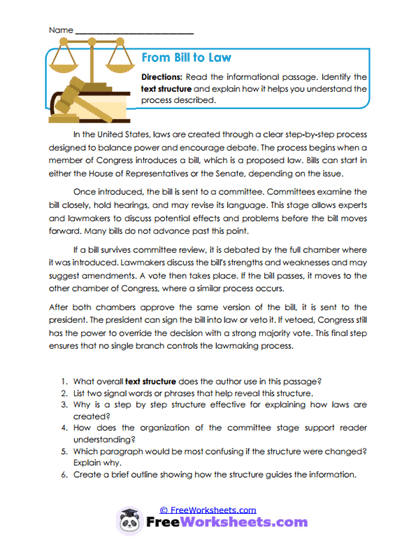
From Bill to Law
- What Kids Do:
Students read about how a bill becomes a law and identify the structure of the text. They look for signal words that show sequence. This helps them follow complex explanations. - Target Skill:
Students build skills in analyzing informational text structure. They learn how organization supports understanding. This improves comprehension.
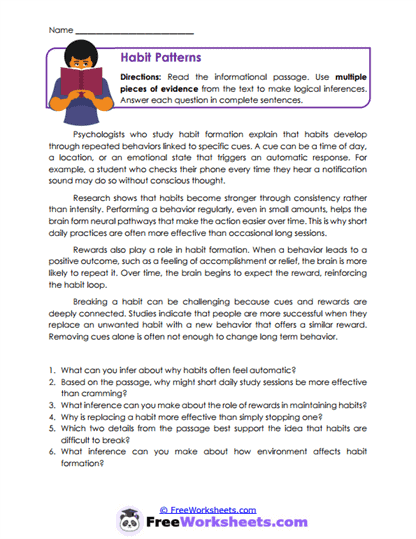
Habit Patterns
- What Kids Do:
Students read about how habits form and make inferences using evidence. They explain their thinking clearly. This encourages deeper reasoning. - Target Skill:
Students develop inference skills by using evidence to support conclusions. They learn to think beyond the text. This supports analytical reading.
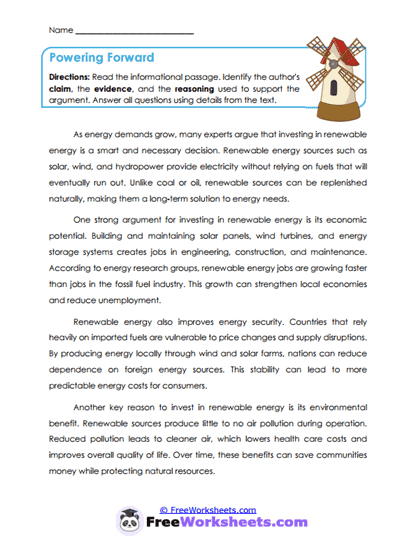
Powering Forward
- What Kids Do:
Students read about renewable energy and identify the claim, evidence, and reasoning. They explain how the argument is built. This strengthens understanding of arguments. - Target Skill:
Students improve their ability to analyze arguments and evaluate reasoning. They learn how evidence supports claims. This supports writing and analysis.
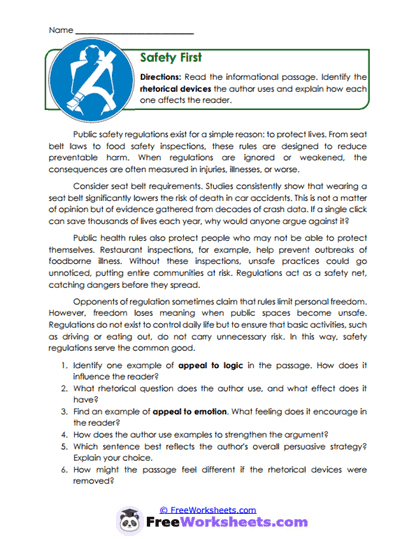
Safety First
- What Kids Do:
Students read about public safety and identify rhetorical devices like emotional and logical appeals. They explain how these influence readers. This builds awareness of persuasion. - Target Skill:
Students strengthen their understanding of rhetorical strategies in informational texts. They learn how authors influence readers. This supports critical analysis.
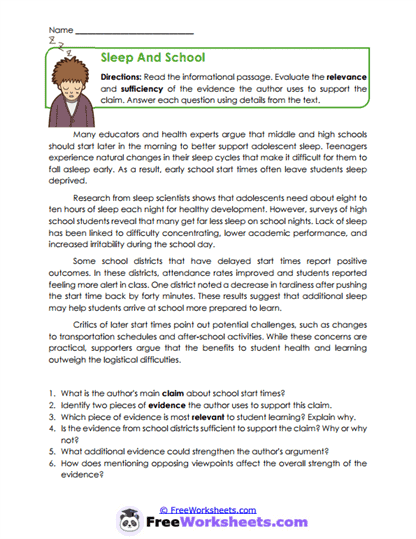
Sleep And School
- What Kids Do:
Students analyze a passage about school schedules and evaluate the strength of evidence. They decide which support is most effective. This builds judgment skills. - Target Skill:
Students develop skills in evaluating evidence and supporting claims. They learn to judge relevance and strength. This supports argument analysis.
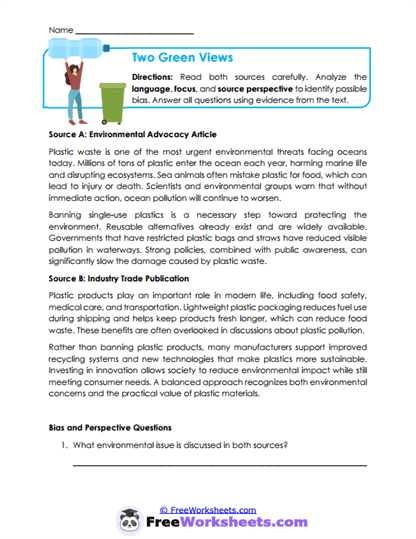
Two Green Views
- What Kids Do:
Students read two texts about environmental issues and compare perspectives. They identify bias and differences in tone. This builds comparison skills. - Target Skill:
Students strengthen their ability to analyze perspective and bias across texts. They learn to compare viewpoints. This supports deeper understanding.
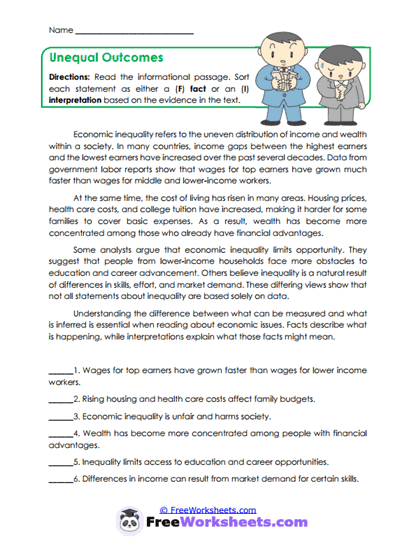
Unequal Outcomes
- What Kids Do:
Students read about income inequality and label statements as fact or interpretation. They use evidence to support their answers. This encourages careful thinking. - Target Skill:
Students build skills in distinguishing fact from opinion or interpretation. They learn to evaluate information critically. This supports research skills.
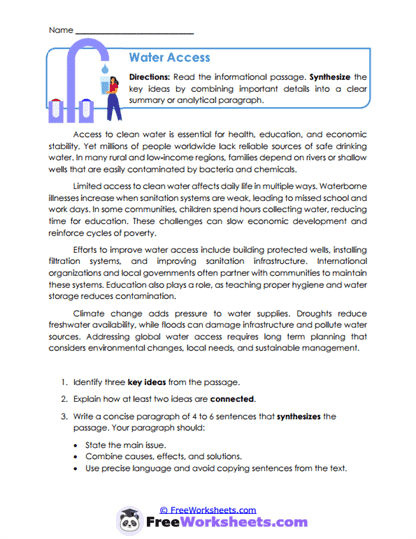
Water Access
- What Kids Do:
Students read about global water issues and combine ideas into a clear summary paragraph. They connect causes, effects, and solutions. This builds writing skills. - Target Skill:
Students develop synthesis skills by combining multiple ideas into one clear response. They learn to organize information effectively. This supports advanced comprehension and writing.