
Two-Column Geometric Proofs Worksheets
These worksheets help students organize statements and reasons to explain geometric relationships clearly and logically. These free, ready-to-print worksheets come in PDF format for immediate classroom use, homework assignments, intervention support, or independent review. Students strengthen deductive reasoning, congruence understanding, angle relationships, and formal geometry communication through structured proof-writing activities.
About This Collection of Worksheets
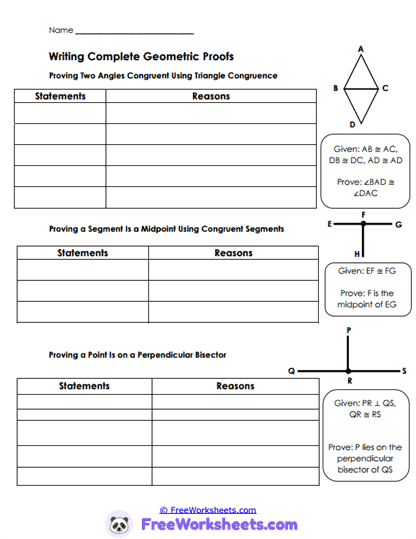
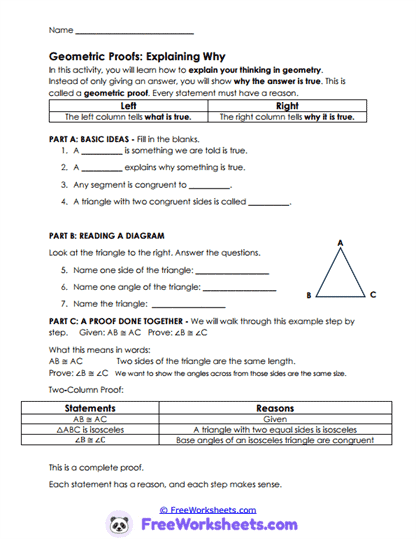
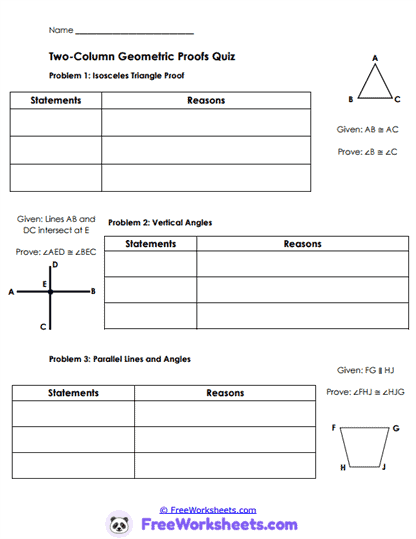
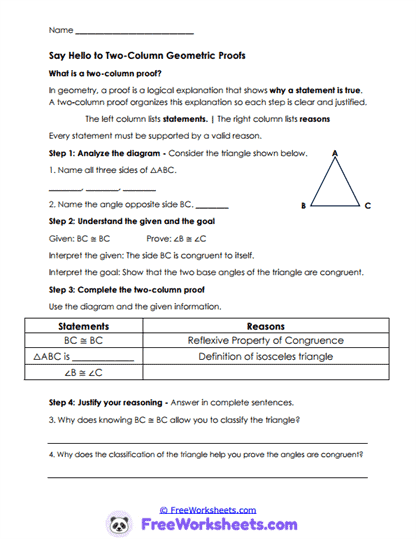
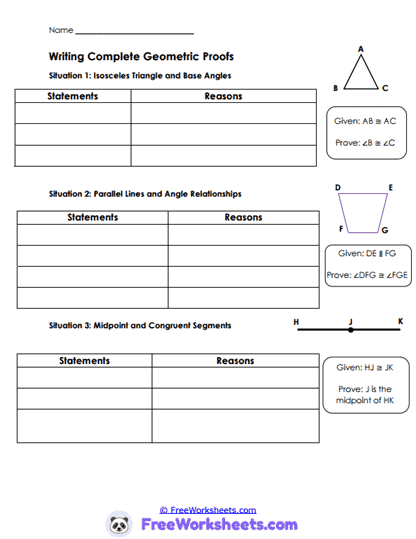
This collection of two-column geometric proof worksheets gives students structured practice building logical geometry arguments using statements and reasons. Students work through proofs involving congruent triangles, vertical angles, parallel lines, midpoint relationships, angle bisectors, and isosceles triangle properties. The activities help learners understand how definitions, theorems, and geometric relationships connect step by step within a formal proof structure.
The worksheets include proof tables, labeled diagrams, flowchart proofs, guided reasoning exercises, and missing-statement or missing-reason activities. Students practice interpreting givens, organizing proof steps, identifying theorem relationships, and translating visual information into formal geometric logic. The variety of proof styles supports both foundational understanding and more advanced deductive reasoning skills.
Teachers can use these printable PDF worksheets for guided instruction, small-group lessons, independent practice, enrichment, homework, or assessment preparation. The layouts provide organized proof columns and clear writing spaces that support step-by-step reasoning. Visual diagrams and scaffolded proof formats also help students build confidence while developing stronger logical thinking and mathematical communication skills.
Paul’s Teacher Tip
Many students struggle with geometric proofs because they try to memorize patterns instead of understanding the logic behind each step. Encourage learners to read proofs one line at a time and explain why each statement connects to the previous step before moving forward. Labeling diagrams carefully and listing all givens before writing can also help students organize their thinking more clearly. It is often helpful to remind students that every statement in a proof must have a valid reason, even if the relationship seems obvious from the picture. Flowcharts and guided proof tables can reduce frustration by helping students visualize the sequence of ideas before writing full proofs independently. Asking students to explain proofs aloud in simple language often improves both confidence and reasoning accuracy.
Worksheet Collection Skill Spotlights
Congruence Proofs
- What Kids Do:
Students write complete two-column proofs involving congruent triangles, midpoint relationships, perpendicular bisectors, and segment reasoning while organizing proof statements and geometric justifications carefully. - Target Skill:
Students strengthen formal proof-writing skills by connecting congruence relationships, geometric definitions, and logical sequencing while building accurate deductive reasoning and organized mathematical explanations.
Diagram Proofs
- What Kids Do:
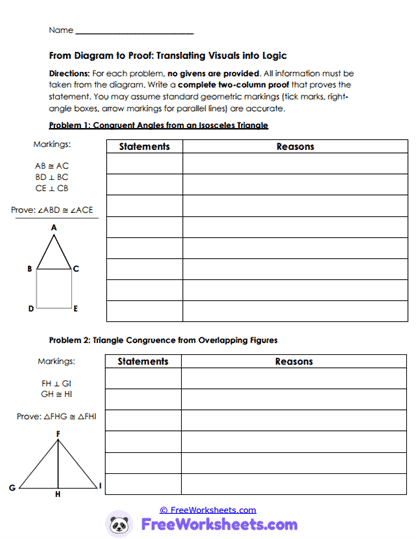
Students study geometry markings, congruent segments, angle relationships, and diagram clues to build formal two-column proofs from visual information instead of written givens. - Target Skill:
Students improve geometric observation and reasoning skills by translating diagram markings into proof statements, identifying valid relationships, and organizing logical arguments step by step.
Logic Flow
- What Kids Do:
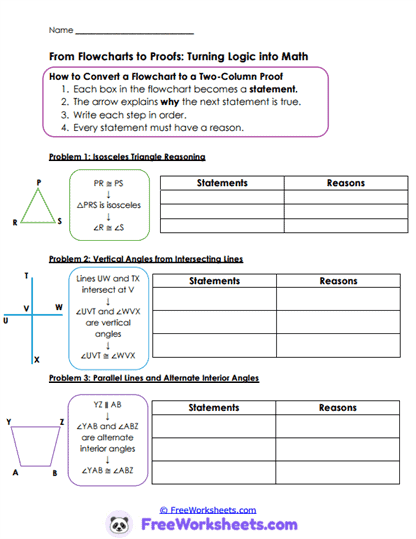
Students convert flowchart proofs into organized two-column proofs while analyzing triangles, vertical angles, and parallel line relationships through connected geometric reasoning steps. - Target Skill:
Students strengthen proof organization and sequencing skills by connecting visual proof structures to formal statement-and-reason formats using geometric logic and theorem relationships accurately.
Parallel Logic
- What Kids Do:
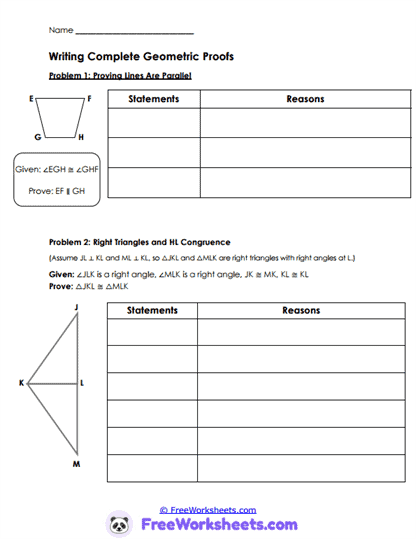
Students solve geometry proofs involving parallel lines, alternate interior angles, right triangles, and congruent relationships while organizing multi-step statements and reasons in proof tables. - Target Skill:
Students develop deductive reasoning skills by applying parallel line theorems, congruence relationships, and geometric definitions to construct accurate formal proof arguments.
Proof Basics
- What Kids Do:
Students learn the structure of two-column proofs by identifying statements, reasons, congruent relationships, and triangle vocabulary while studying guided proof examples and geometry diagrams. - Target Skill:
Students build foundational proof-writing understanding by connecting geometric facts to logical reasoning and learning how statements and reasons work together in formal geometry proofs.
Proof Review
- What Kids Do:
Students complete mixed proof-review problems involving triangles, vertical angles, isosceles triangles, and parallel lines while organizing statements and matching valid geometric reasons. - Target Skill:
Students reinforce overall proof-writing fluency by applying multiple theorem relationships, organizing logical proof sequences, and strengthening deductive reasoning across varied geometry situations.
Proof Steps
- What Kids Do:
Students interpret geometry diagrams, analyze givens, and complete guided proof tables while identifying triangle relationships, congruent angles, and logical proof connections step by step. - Target Skill:
Students strengthen structured reasoning skills by connecting geometric relationships carefully, organizing proof flow accurately, and matching valid reasons to proof statements.
Proof Writing
- What Kids Do:
Students write complete two-column proofs involving triangles, midpoint relationships, parallel lines, and angle congruence while organizing detailed statements and geometric justifications independently. - Target Skill:
Students improve formal geometry communication by constructing complete logical arguments, applying definitions and theorems accurately, and organizing multi-step proof sequences clearly.
Reason Builder
- What Kids Do:
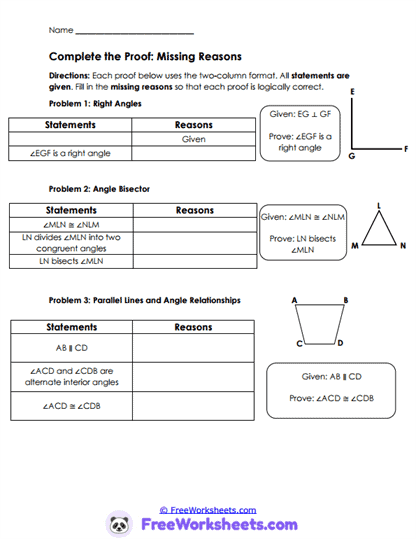
Students complete missing reasons within geometry proofs involving right angles, parallel lines, bisectors, and angle relationships while studying diagrams and theorem connections carefully. - Target Skill:
Students strengthen geometry vocabulary and theorem recognition skills by selecting valid justifications for proof statements and connecting logical relationships accurately within proofs.
Reason Match
- What Kids Do:
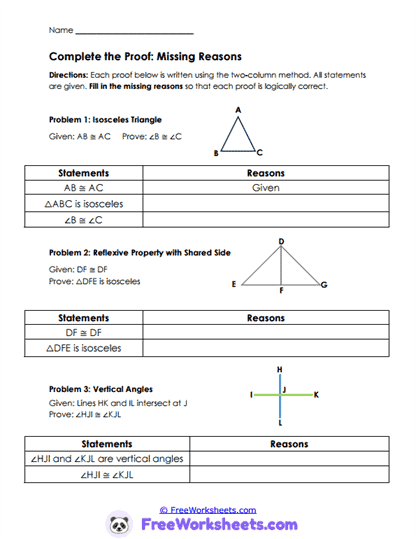
Students match proof statements with geometry reasons involving reflexive properties, isosceles triangles, vertical angles, and congruent relationships through guided proof practice activities. - Target Skill:
Students build deductive reasoning confidence by identifying which geometry definitions, theorems, and properties correctly justify specific proof statements and logical conclusions.
Statement Search
- What Kids Do:
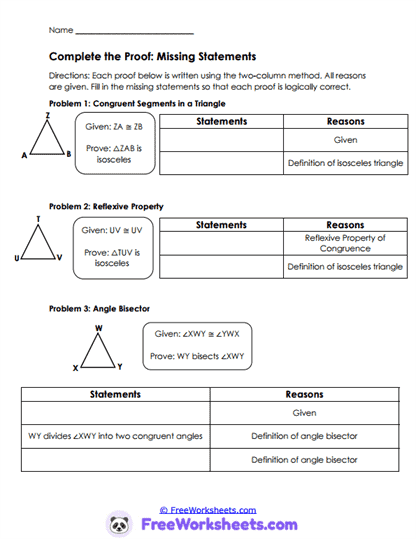
Students complete missing proof statements involving angle bisectors, congruent segments, and triangle relationships while following geometric logic and analyzing structured proof tables carefully. - Target Skill:
Students improve proof construction skills by determining logical next steps within geometry arguments and connecting theorem relationships to formal proof-writing structure accurately.
Table Proofs
- What Kids Do:
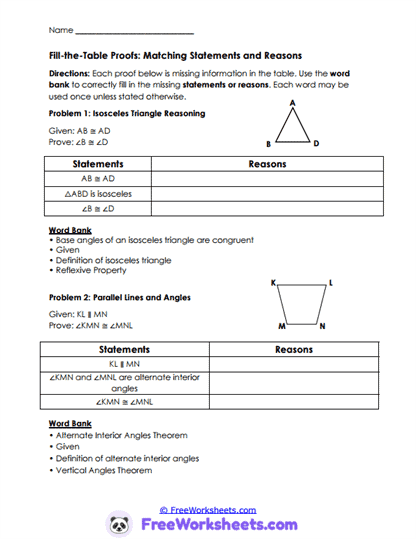
Students complete structured proof tables using word banks, geometry diagrams, and theorem relationships involving isosceles triangles, alternate interior angles, and congruent segments. - Target Skill:
Students strengthen geometry reasoning and theorem application skills by matching proof statements with accurate justifications while organizing formal logical arguments clearly and consistently.