
Phrases and Clauses Worksheets
10th Grade grammar and mechanics phrases and clauses worksheets help students understand how sentence parts work together to create clear, effective, and sophisticated writing. Free, ready-to-print worksheets are available in PDF format for immediate classroom use and independent practice. Students strengthen skills such as identifying clauses and phrases, analyzing sentence structure, revising sentences, and using grammatical structures to improve writing clarity and style.
About This Collection of Worksheets
Understanding phrases and clauses is essential for developing strong writing skills. As students progress through high school, they encounter increasingly complex texts and are expected to write with greater precision, variety, and sophistication. This collection helps learners move beyond basic grammar rules by exploring how sentence structures shape meaning, improve clarity, and strengthen communication.
The worksheets provide practice with a wide range of advanced grammar concepts, including independent and dependent clauses, sentence types, phrase identification, sentence combining, modifier placement, conjunction usage, quotation mechanics, sentence revision, and clause transformation. Students learn how writers use phrases and clauses to create relationships between ideas, improve sentence fluency, and communicate complex information effectively.
Teachers, parents, and homeschool educators can use these resources to support grammar instruction, writing workshops, editing practice, test preparation, and language review. Each worksheet focuses on a specific sentence-structure skill while encouraging students to apply grammar concepts in meaningful contexts. Together, these activities help learners become more confident readers, writers, and communicators.
Paul’s Teacher Tip
Many students think grammar is simply about finding mistakes, but the real goal is understanding how language works. Encourage students to view phrases and clauses as tools that help writers organize ideas and create stronger sentences. When analyzing a sentence, ask students not only whether it is correct, but why the writer chose that structure. Comparing multiple ways to express the same idea can help students see how grammar affects tone, emphasis, and clarity. The more students connect grammar instruction to authentic reading and writing, the more valuable and memorable these skills become.
Worksheet Collection Skill Spotlights
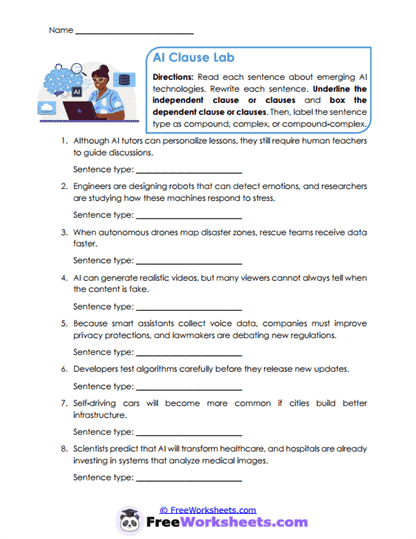
Clause Detective
- What Kids Do:
Students analyze technology-themed sentences and determine whether they are simple, compound, complex, or compound-complex. They then rewrite sentences using alternative structures while preserving the original meaning. - Target Skill:
Students strengthen sentence-structure analysis skills by identifying clause relationships and experimenting with different sentence forms.
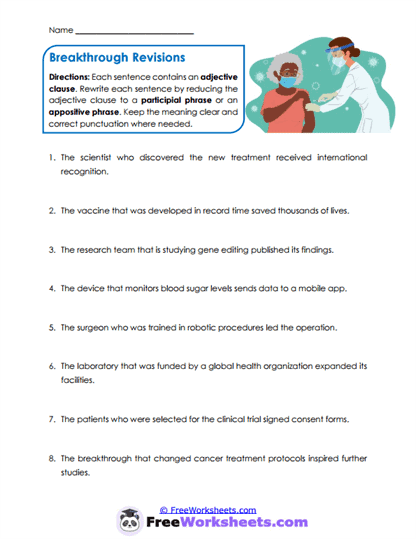
Clause Revisions
- What Kids Do:
Students revise sentences by replacing adjective clauses with participial phrases or appositives. They compare sentence versions and evaluate how revisions improve fluency and style. - Target Skill:
Students develop advanced revision skills by transforming clauses into alternative grammatical structures while maintaining meaning.
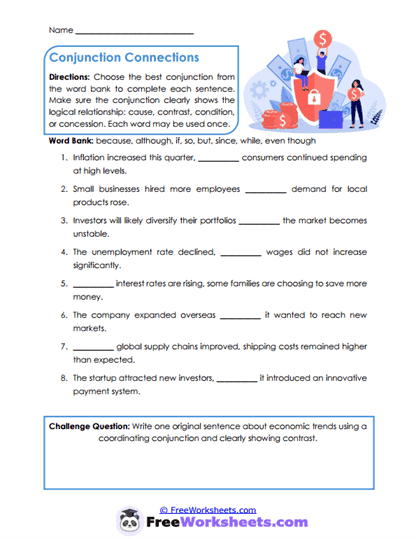
Connector Choices
- What Kids Do:
Students select conjunctions that accurately connect business and economics concepts. They analyze logical relationships such as cause and effect, contrast, and condition before choosing a connector. - Target Skill:
Students strengthen their understanding of conjunctions and clause relationships while improving sentence precision.
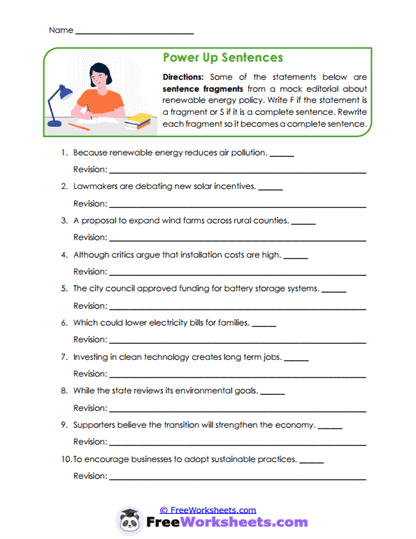
Fragment Fixes
- What Kids Do:
Students identify sentence fragments related to renewable energy and public policy topics. They revise incomplete thoughts into complete, grammatically correct sentences. - Target Skill:
Students build sentence-completion and editing skills by recognizing and correcting fragments.
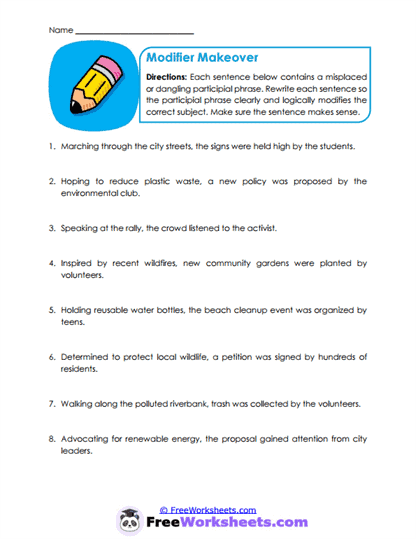
Modifier Repair
- What Kids Do:
Students identify misplaced and dangling modifiers in sentences about community projects and environmental efforts. They revise sentences to improve clarity and accuracy. - Target Skill:
Students strengthen editing and revision skills by correcting modifier errors that affect meaning.
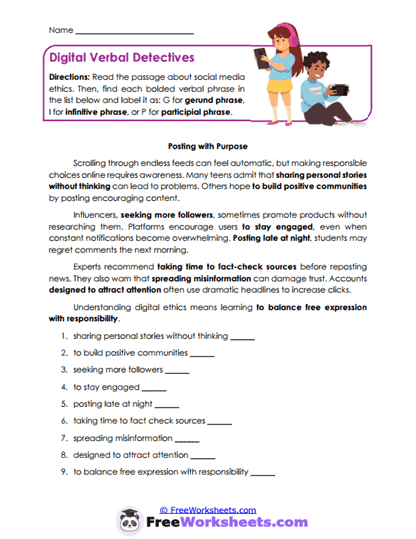
Phrase Hunt
- What Kids Do:
Students locate gerund, infinitive, and participial phrases within a passage about social media and digital citizenship. They classify each phrase and analyze its function. - Target Skill:
Students develop phrase-identification skills and learn how different phrase types contribute to sentence structure.
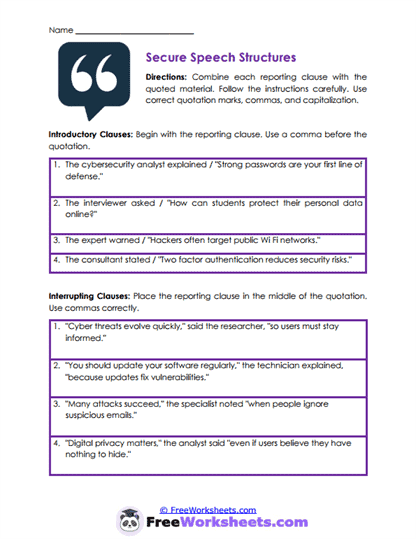
Quote Mechanics
- What Kids Do:
Students combine reporting clauses and quotations while applying correct punctuation, capitalization, and formatting conventions. They work with realistic cybersecurity-related statements. - Target Skill:
Students strengthen quotation integration and sentence-construction skills for academic writing.
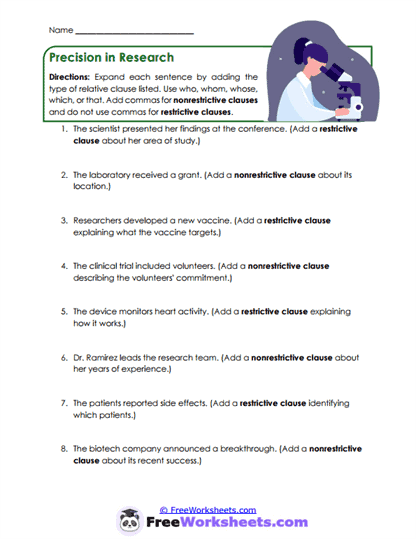
Research Clauses
- What Kids Do:
Students expand research-themed sentences by adding restrictive and nonrestrictive clauses. They apply proper punctuation and determine whether information is essential or supplementary. - Target Skill:
Students develop clause-construction and sentence-expansion skills while improving writing sophistication.
Sentence Fusion
- What Kids Do:
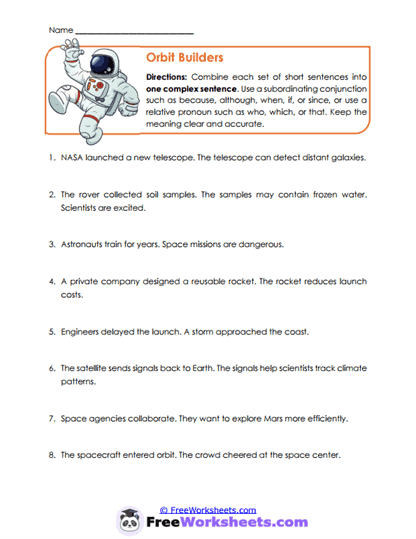
Students combine pairs of space-exploration sentences using conjunctions, relative pronouns, and subordinate clauses. They create stronger, more connected sentences. - Target Skill:
Students build sentence-combining skills that improve fluency, clarity, and writing variety.
Structure Sort
- What Kids Do:
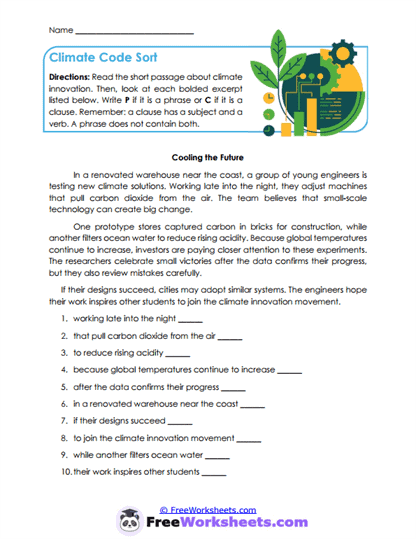
Students analyze excerpts from a climate technology passage and classify them as phrases or clauses. They use grammatical evidence to support their decisions. - Target Skill:
Students strengthen their ability to distinguish between phrases and clauses within authentic writing.
Syntax Investigation
- What Kids Do:
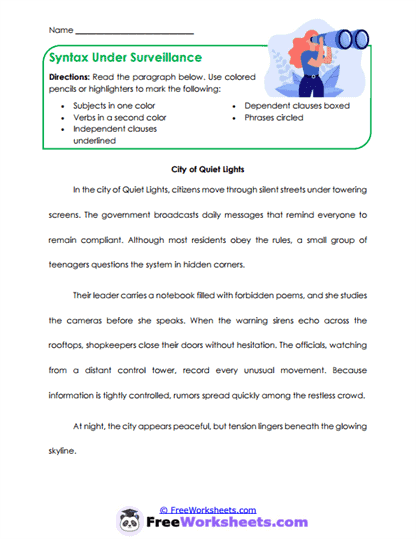
Students dissect a narrative passage by identifying subjects, verbs, phrases, independent clauses, and dependent clauses. They examine how sentence parts work together. - Target Skill:
Students develop deeper syntax awareness and strengthen their understanding of sentence construction.
Trade Connections
- What Kids Do:
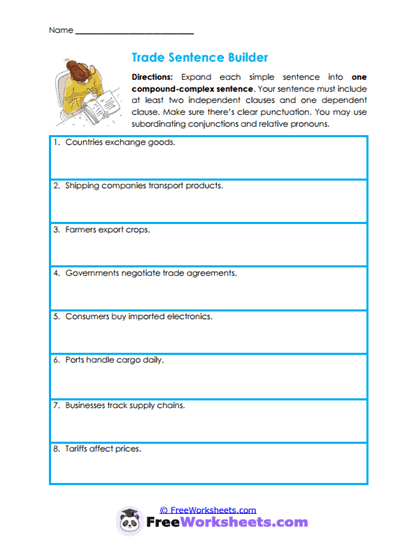
Students transform simple international trade statements into compound-complex sentences using multiple clauses and conjunctions. They focus on clarity and logical relationships. - Target Skill:
Students strengthen advanced sentence-building skills and learn how to create more sophisticated academic writing.