
Novel Study Worksheets
These worksheets help students explore characters, themes, and plot development in meaningful ways. These free, ready-to-print PDF worksheets are designed for immediate classroom use or easy at-home learning. Students build skills like analyzing character growth, understanding conflict, tracking themes, and explaining how stories create meaning.
About This Collection of Worksheets
This collection focuses on helping students think more deeply about novels and how they are structured. Each worksheet guides students through key elements like character development, conflict, tone, and theme. Students move beyond simply retelling events and begin explaining why those events matter and how they shape the story.
Students are encouraged to support their thinking with clear evidence from the text. Many activities ask them to analyze character decisions, track changes over time, and explain how themes develop across a story. They also practice writing structured responses using claim, evidence, and reasoning. This builds strong habits for both discussion and essay writing.
The worksheets are designed to build skills step-by-step, from understanding basic story elements to analyzing complex ideas like point of view, tone shifts, and theme development across texts. Students also compare characters and reflect on how stories end and what they mean. These resources align with Grade 10 standards and support deeper comprehension and literary analysis.
Paul’s Teacher Tip
When working through a novel, remind students that the story is always changing-characters grow, conflicts build, and ideas develop over time. Encourage them to pause and ask, “What has changed here?” as they read. It also helps to track key moments in writing so they can look back and see patterns. If students get stuck, have them explain their thinking out loud before writing. Over time, they will become more confident in analyzing complex texts.
Worksheet Collection Skill Spotlights
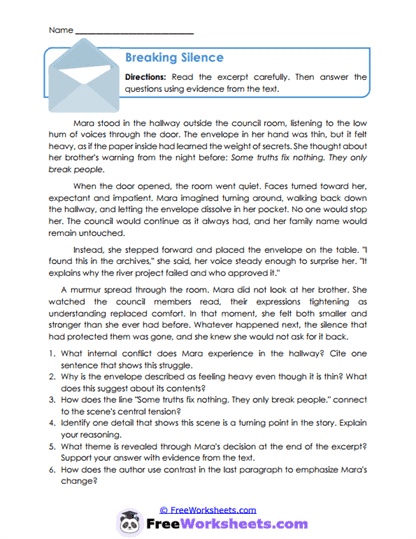
Breaking Silence
- What Kids Do:
Students analyze a key moment where a character changes, such as moving from silence to speaking up. They examine actions, thoughts, and turning points. This helps them understand how stories evolve. - Target Skill:
Students build skills in analyzing character development and identifying turning points. They learn how actions show growth. This supports deeper literary understanding.
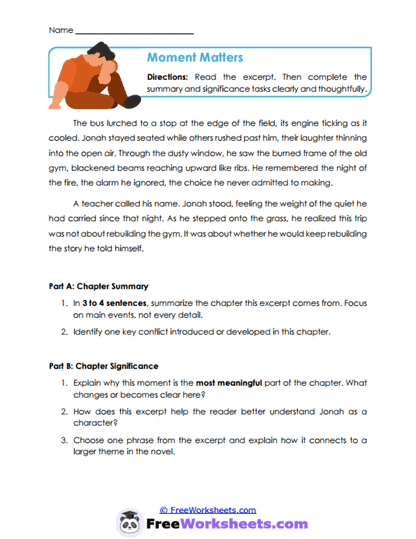
Moment Matters
- What Kids Do:
Students summarize a chapter and explain why it is important. They focus on key events and connect them to larger ideas. This helps them organize their thinking. - Target Skill:
Students strengthen summarizing skills and analyze the significance of events. They learn to connect details to theme. This supports comprehension and reflection.
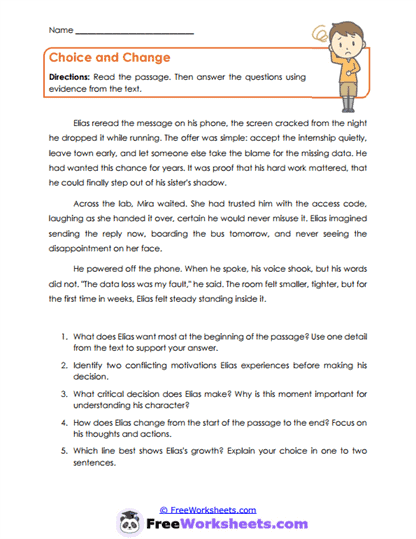
Choice and Change
- What Kids Do:
Students examine a character’s decisions and explain how those choices lead to growth. They connect actions to motivations and outcomes. This builds deeper analysis. - Target Skill:
Students develop skills in analyzing character decisions and development. They learn how choices shape a story. This supports critical thinking.
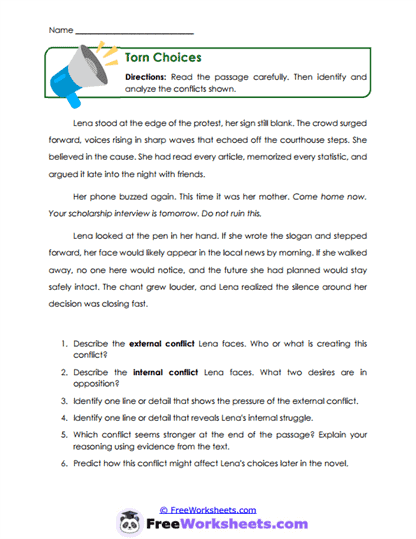
Torn Choices
- What Kids Do:
Students identify both internal and external conflicts in a story. They explain how these conflicts influence the character’s actions. This helps them see how tension builds. - Target Skill:
Students strengthen their ability to analyze conflict and its impact on plot. They learn how struggles shape outcomes. This supports comprehension.
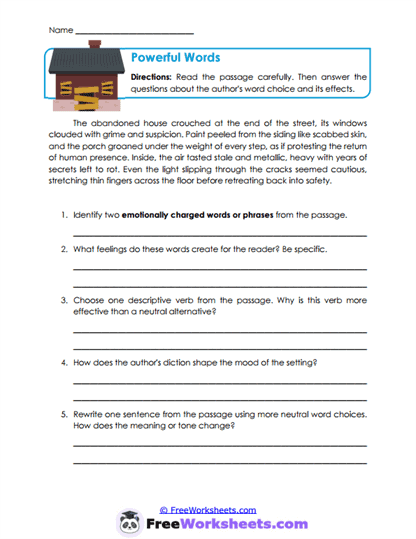
Powerful Words
- What Kids Do:
Students analyze word choice in a passage and explain how it creates mood. They compare strong and neutral language. This builds awareness of tone. - Target Skill:
Students develop skills in analyzing diction and mood. They learn how word choice affects reader experience. This supports literary analysis.
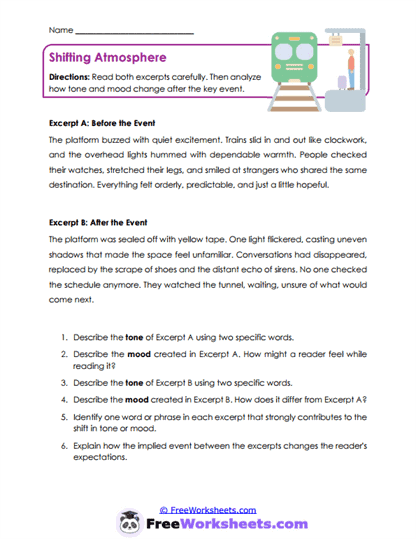
Shifting Atmosphere
- What Kids Do:
Students compare two excerpts and explain how tone and mood change. They identify key words that create the shift. This encourages deeper thinking. - Target Skill:
Students build skills in analyzing tone and mood across texts. They learn how authors create emotional change. This supports comprehension.
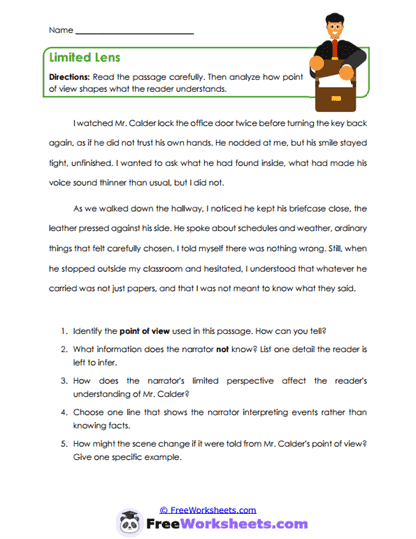
Limited Lens
- What Kids Do:
Students analyze a passage told from a limited point of view. They explain what the reader knows and what is hidden. This builds understanding of perspective. - Target Skill:
Students strengthen their ability to analyze point of view. They learn how perspective shapes meaning. This supports critical reading.
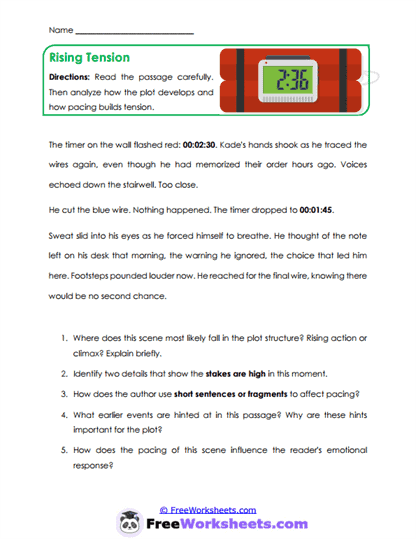
Rising Tension
- What Kids Do:
Students identify where a passage fits in the plot and explain how tension builds. They focus on pacing and key details. This helps them understand story structure. - Target Skill:
Students develop skills in analyzing plot structure and tension. They learn how pacing affects engagement. This supports literary comprehension.
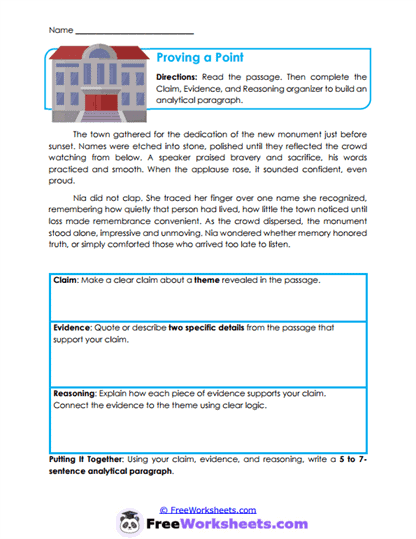
Proving a Point
- What Kids Do:
Students write a paragraph using claim, evidence, and reasoning to explain a theme. They organize their ideas clearly. This connects reading and writing. - Target Skill:
Students build skills in writing evidence-based responses. They learn how to support ideas with details. This supports academic writing.
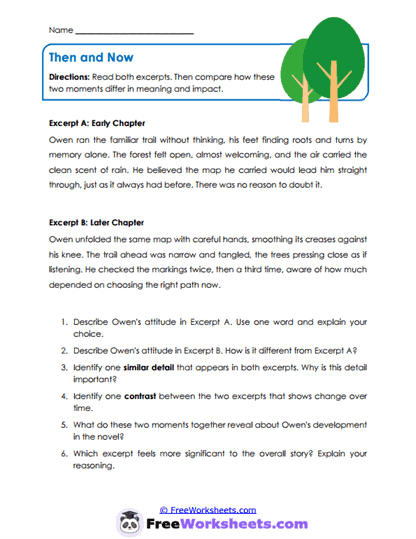
Then and Now
- What Kids Do:
Students compare a character at two different points in a story. They explain how the character has changed. This builds comparison skills. - Target Skill:
Students strengthen their ability to analyze character development over time. They learn how growth shapes meaning. This supports deeper analysis.
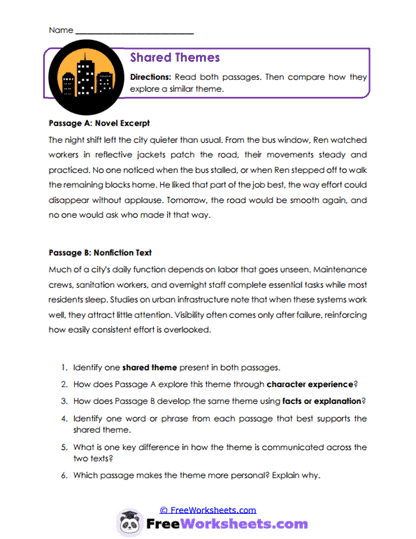
Shared Themes
- What Kids Do:
Students compare themes across two texts and explain similarities and differences. They use evidence from both passages. This builds advanced thinking. - Target Skill:
Students develop skills in comparing themes across texts. They learn how ideas are presented differently. This supports critical reading.
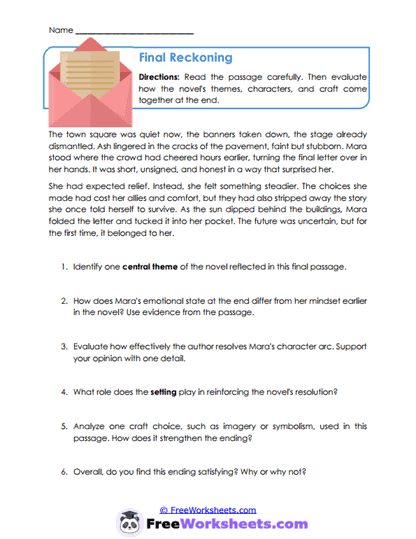
Final Reckoning
- What Kids Do:
Students analyze the ending of a story and explain how it connects to theme and character growth. They reflect on what the story means. This builds deeper understanding. - Target Skill:
Students improve their ability to analyze theme and resolution. They learn how endings shape meaning. This supports literary comprehension.