
Nonfiction Book Study Worksheets
These worksheets help students explore real-world texts while strengthening comprehension and writing skills. These free, ready-to-print PDF worksheets are designed for immediate classroom use or easy at-home learning. Students develop skills like analyzing arguments, evaluating evidence, identifying author's purpose, and connecting ideas to real-world issues.
About This Collection of Worksheets
This collection focuses on helping students read nonfiction texts more thoughtfully and critically. Each worksheet gives students practice analyzing how authors present ideas, support claims, and influence readers. Topics like data, technology, health, and society make the reading relevant and engaging for high school students.
Students are guided to move beyond simple understanding and begin evaluating information. Many activities ask them to identify bias, analyze rhetorical strategies, and judge the strength of evidence. They also practice writing responses that clearly explain their thinking using details from the text. This builds strong habits for both reading and writing.
The worksheets are designed to build skills step-by-step, from identifying main ideas and vocabulary to analyzing arguments, tone, and structure. Students also practice writing analytical paragraphs and reflecting on their thinking while reading. These resources align with Grade 10 standards and prepare students for advanced reading, writing, and real-world communication tasks.
Paul’s Teacher Tip
When working with nonfiction texts, remind students that strong readers don’t just understand what they read-they question it. Encourage them to ask, “Do I agree with this?” or “Is this evidence strong?” as they go. It also helps to pause and talk through ideas before writing responses. If students struggle, guide them to focus on one small part of the text at a time. Over time, this builds confidence and deeper understanding.
Worksheet Collection Skill Spotlights
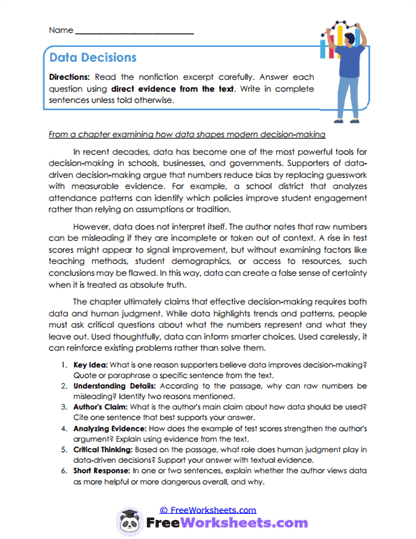
Data Decisions
- What Kids Do:
Students read a passage about how data shapes decisions and identify claims and supporting evidence. They evaluate how strong the evidence is and explain their thinking. This helps them move from guessing to using proof. - Target Skill:
Students build skills in analyzing arguments and evaluating evidence. They learn how data supports claims and how it can be interpreted. This supports critical thinking.
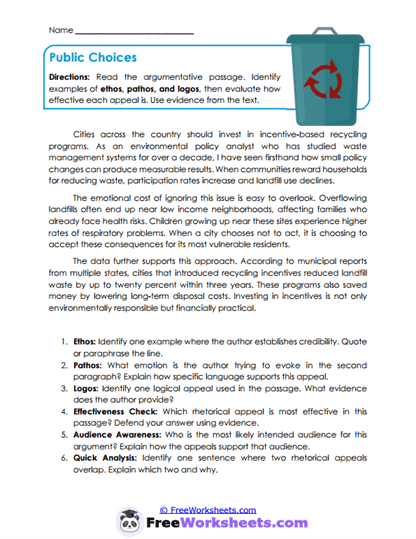
Public Choices
- What Kids Do:
Students read an argument about recycling and identify examples of ethos, pathos, and logos. They explain how each type of appeal affects the reader. This builds awareness of persuasion. - Target Skill:
Students strengthen their ability to analyze rhetorical strategies. They learn how different appeals influence an audience. This supports argument analysis.
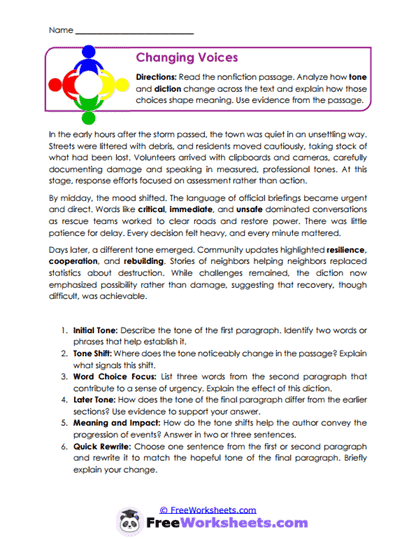
Changing Voices
- What Kids Do:
Students identify tone shifts in a passage and explain how word choice creates those changes. They also rewrite sentences to match a new tone. This builds deeper understanding of language. - Target Skill:
Students develop skills in analyzing tone and diction. They learn how word choice shapes meaning and mood. This supports comprehension.
Watching Schools
- What Kids Do:
Students analyze a passage to identify the author’s point of view and detect bias. They evaluate whether the argument is balanced. This builds critical reading skills. - Target Skill:
Students strengthen their ability to analyze perspective and bias. They learn how opinions are presented and supported. This supports media literacy.
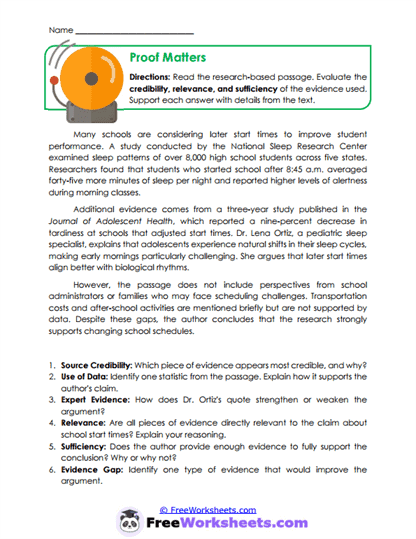
Proof Matters
- What Kids Do:
Students evaluate different types of evidence in a research-based text. They decide which evidence is most credible and explain why. This builds careful thinking. - Target Skill:
Students develop skills in evaluating credibility and relevance of evidence. They learn how to judge the strength of support. This supports analytical reading.
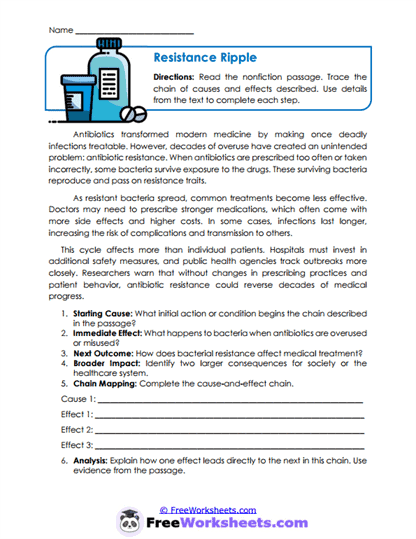
Resistance Ripple
- What Kids Do:
Students map cause-and-effect relationships in a passage about antibiotic resistance. They track how one idea leads to another. This helps them see connections. - Target Skill:
Students build skills in analyzing cause-and-effect relationships. They learn how ideas develop across a text. This supports comprehension.
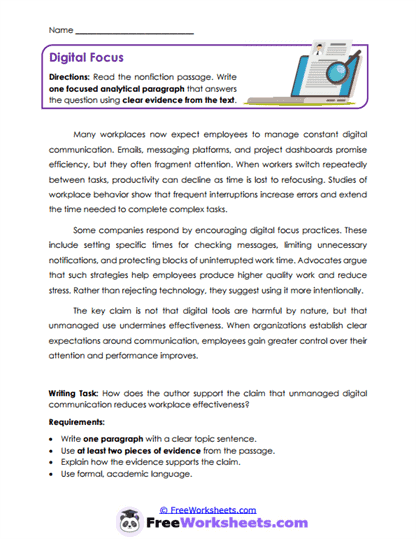
Digital Focus
- What Kids Do:
Students write an analytical paragraph using evidence from a passage about digital communication. They organize ideas into a clear structure. This connects reading and writing. - Target Skill:
Students strengthen their ability to write evidence-based responses. They learn how to organize ideas clearly. This supports academic writing.
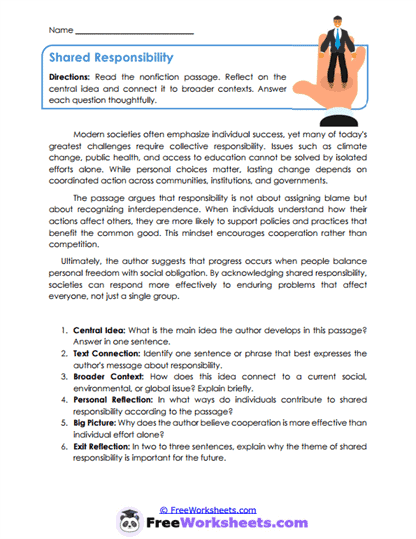
Shared Responsibility
- What Kids Do:
Students identify the central idea of a passage and connect it to real-world issues. They explain their thinking using evidence. This builds deeper understanding. - Target Skill:
Students develop skills in identifying central ideas and making meaningful connections. They learn to explain why ideas matter. This supports comprehension.
Urban Systems
- What Kids Do:
Students use context clues to determine the meaning of unfamiliar words in a passage. They explain how they found each meaning. This builds independence. - Target Skill:
Students improve vocabulary skills using context clues. They learn to determine meaning without outside help. This supports comprehension.
Sleep Balance
- What Kids Do:
Students identify the structure of a text and explain how ideas are organized. They use evidence to support their answers. This builds awareness of structure. - Target Skill:
Students develop skills in analyzing informational text structure. They learn how organization supports meaning. This supports deeper reading.
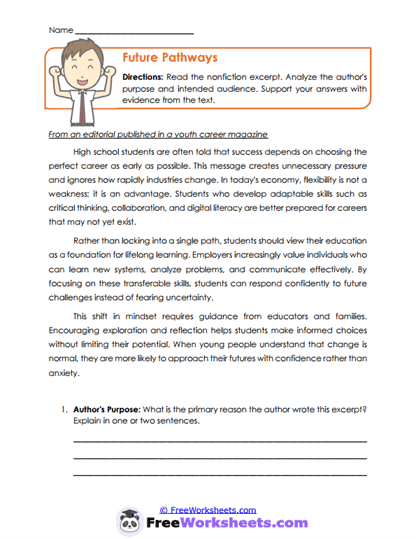
Future Pathways
- What Kids Do:
Students identify the author’s purpose and intended audience in a passage. They support their answers with evidence. This builds understanding of communication. - Target Skill:
Students strengthen their ability to analyze purpose and audience. They learn how writing is shaped by intent. This supports comprehension.
Thinking Tracks
- What Kids Do:
Students track their thinking while reading by writing questions and revisiting them. They reflect on how their understanding changes. This builds active reading habits. - Target Skill:
Students develop metacognitive skills by monitoring their thinking. They learn to ask and answer meaningful questions. This supports independent reading.