
Business Documents Worksheets
These worksheets help students read workplace texts with accuracy, professionalism, and evidence-based thinking. These free, ready-to-print PDF activities are designed for immediate classroom use in career readiness and business communication units. Students practice extracting key details, analyzing tone and bias, using context clues, citing evidence, summarizing, and writing professional responses.
About This Collection of Worksheets
Business and workplace texts demand precision, inference, and professionalism-skills that become increasingly important in 10th Grade as students prepare for career and technical pathways and more complex informational reading. Students are expected to locate key details, determine central information, interpret domain-specific vocabulary, and evaluate tone and credibility in real-world documents. This collection supports curriculum expectations for grades 9-10, emphasizing textual evidence, central idea, word meaning, author purpose, structure, and coherent writing in authentic contexts.
These worksheets are flexible for bell ringers, independent practice, small-group instruction, literacy centers, sub plans, and quick assessment checks. They also fit naturally into career readiness, business education, and media literacy units where students analyze memos, emails, policies, advertisements, and announcements. Many tasks invite discussion, revision practice, and real-world decision-making grounded in text evidence.
Each printable PDF is ink-friendly and classroom-ready, with clear prompts and structured writing space that reduces prep time. The layouts support annotation, scanning for key details, and short constructed responses without overwhelming students. Teachers can use these pages to build functional literacy while reinforcing academic standards-aligned analysis.
Paul’s Teacher Tip
When teaching workplace texts, emphasize that reading is tied to action. After each activity, ask: “What would you do with this information in real life?” This helps students see purpose-whether it’s replying to an email, following a policy, or making a decision. The more authentic the task feels, the more seriously students engage and transfer these skills beyond the classroom.
Worksheet Collection Skill Spotlights
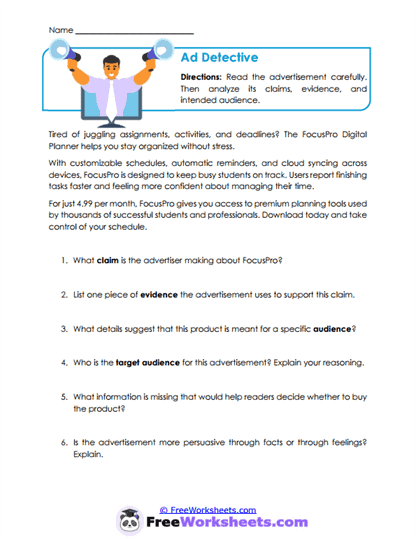
Ad Detective
• What Kids Do – Students analyze an advertisement to identify the claim, supporting details, and persuasive techniques.
• Target Skill – Builds evaluation of claims, evidence, and persuasion in media.
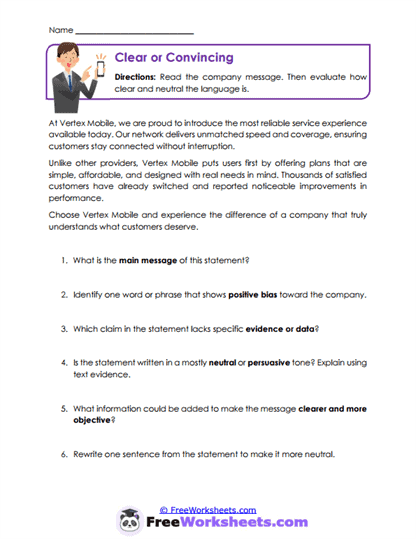
Clear or Convincing
• What Kids Do – Students identify biased language and revise it to be more objective.
• Target Skill – Develops ability to distinguish between factual and persuasive language.
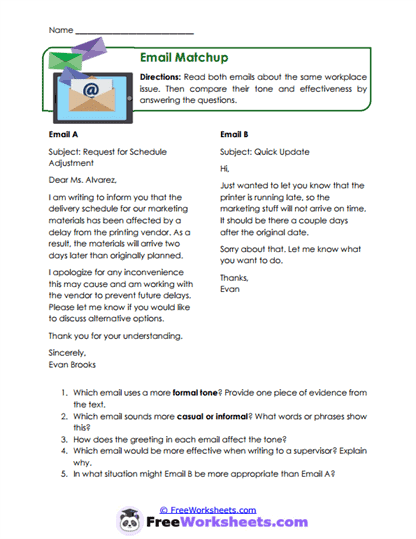
Email Matchup
• What Kids Do – Students compare two emails and determine which is more appropriate for a professional audience.
• Target Skill – Builds analysis of tone and communication style.
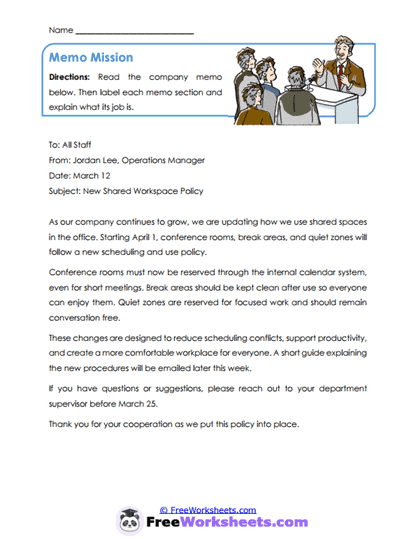
Memo Mission
• What Kids Do – Students identify parts of a memo and explain how structure supports the message.
• Target Skill – Develops understanding of workplace document structure.
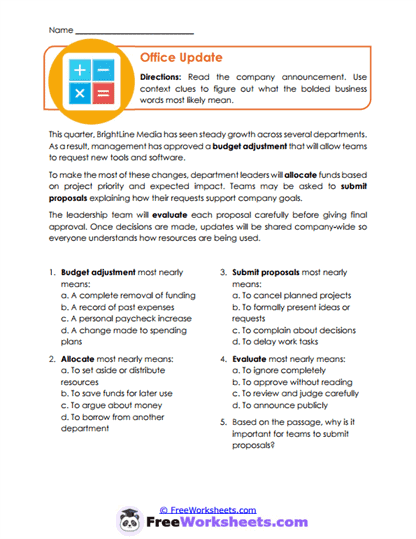
Office Update
• What Kids Do – Students use context clues to define workplace vocabulary.
• Target Skill – Builds interpretation of domain-specific language.
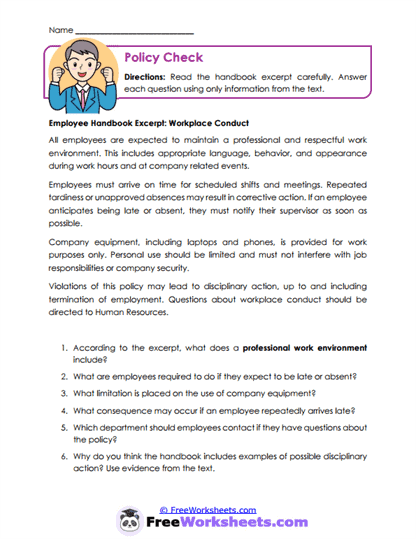
Policy Check
• What Kids Do – Students read a policy and identify rules, expectations, and consequences.
• Target Skill – Develops ability to extract key information from formal texts.
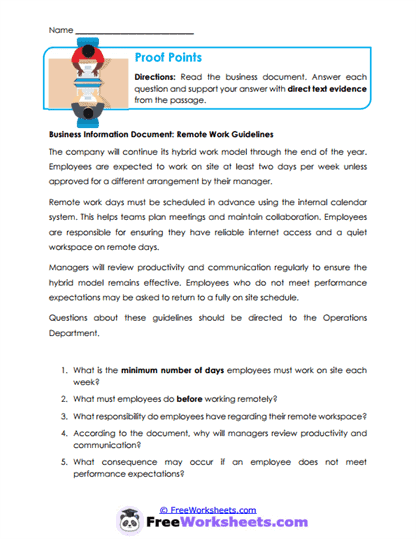
Proof Points
• What Kids Do – Students answer questions using precise evidence from a workplace document.
• Target Skill – Builds accurate evidence citation and close reading.
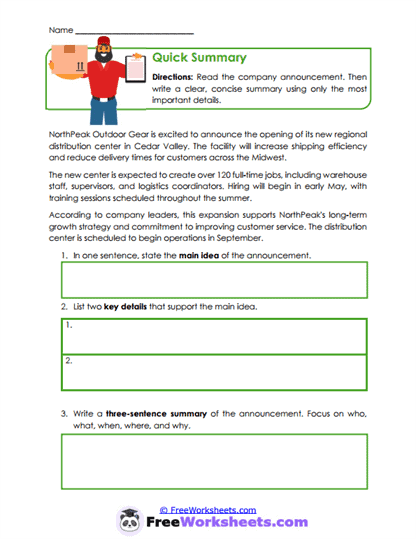
Quick Summary
• What Kids Do – Students write a short, objective summary of a business announcement.
• Target Skill – Develops concise summarizing skills.
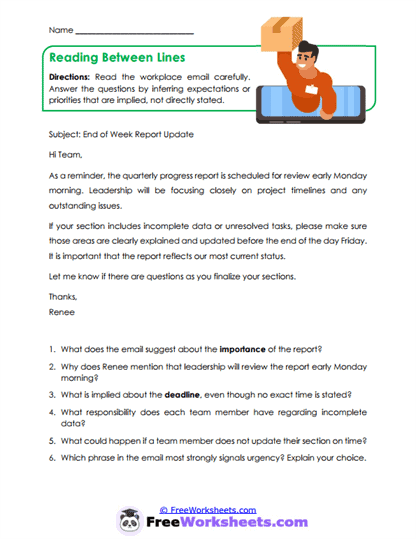
Reading Between Lines
• What Kids Do – Students infer tone, urgency, and expectations from a professional email.
• Target Skill – Builds inference and tone analysis in real-world texts.
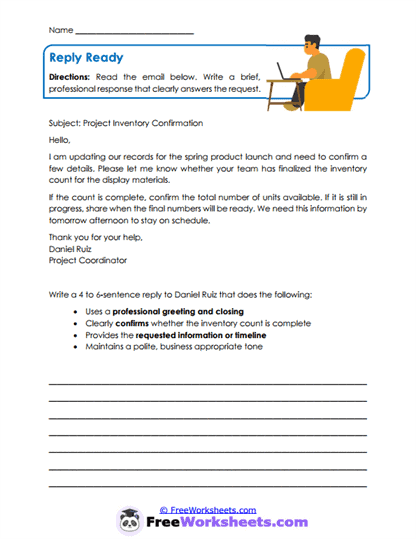
Reply Ready
• What Kids Do – Students write a professional email response with appropriate tone and structure.
• Target Skill – Develops workplace writing and communication skills.
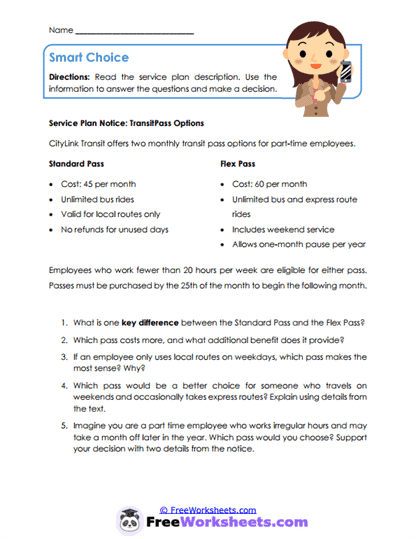
Smart Choice
• What Kids Do – Students compare options and choose the best one using text evidence.
• Target Skill – Builds decision-making and evidence-based reasoning.
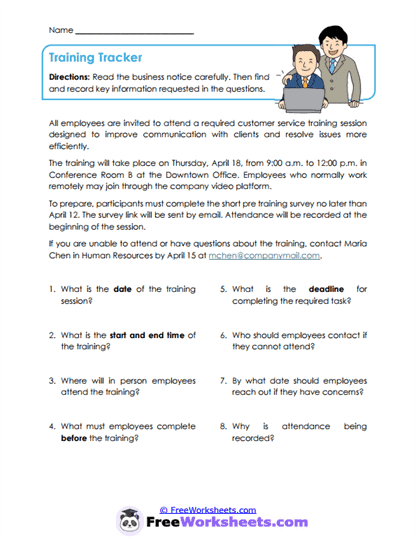
Training Tracker
• What Kids Do – Students locate and record key details from a training notice.
• Target Skill – Develops scanning and information extraction skills.