
Main Idea Worksheets
These worksheets help students identify central ideas, connect supporting details, and explain how ideas develop across a text. These free, ready-to-print PDF worksheets are designed for immediate classroom use or easy at-home learning. Students build skills like summarizing, analyzing structure, and evaluating how information supports a main point.
About This Collection of Worksheets
This collection focuses on helping students clearly understand the “big idea” in a text and how everything connects back to it. Each worksheet gives students practice separating central ideas from supporting details and irrelevant information. Students work with real-world topics like climate, technology, health, and media, making reading more meaningful and engaging.
Students are also guided to explain their thinking, not just choose answers. Many activities ask them to write summaries, combine ideas across paragraphs, or evaluate which statements best represent the main idea. This helps build strong habits for both reading comprehension and writing. Over time, students become more confident in identifying what matters most in a text.
The worksheets are designed to build skills step-by-step, from identifying simple central ideas to analyzing how ideas develop across sections and comparing ideas across texts. Students also practice writing clear, concise statements of the main idea using both everyday and academic language. These resources align with Grade 10 standards and support deeper comprehension and reasoning skills.

Paul’s Teacher Tip
When working on main idea, remind students that the goal is to say what the text is mostly about in the simplest way possible. Encourage them to ask, “What is the author really trying to teach me?” before writing anything. It also helps to group details together and look for patterns before deciding on the main idea. If students struggle, have them say the idea out loud first, then turn it into a sentence. Over time, this process becomes much easier and more natural.
Worksheet Collection Skill Spotlights
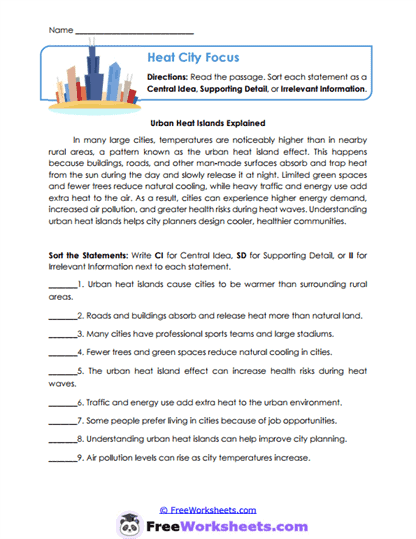
Heat City Focus
- What Kids Do:
Students read about urban heat and sort statements into central idea, supporting details, or irrelevant information. They think carefully about what matters most in the text. This helps them organize ideas clearly. - Target Skill:
Students build skills in distinguishing central ideas from details and unrelated information. They learn how to identify what a text is mostly about. This supports strong comprehension.
Charge Forward
- What Kids Do:
Students identify the main idea of each paragraph in a text about electric vehicles. They then combine those ideas into one overall central idea. This helps them connect ideas across a text. - Target Skill:
Students develop skills in synthesizing information across paragraphs. They learn how ideas connect to form a larger message. This supports deeper reading.
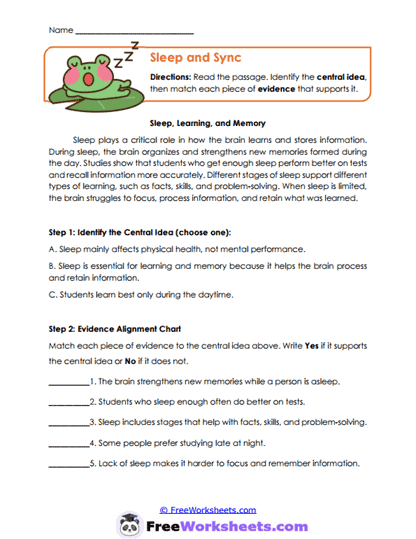
Sleep and Sync
- What Kids Do:
Students choose the best central idea and match it with supporting evidence. They explain how details support the main point. This builds strong reasoning skills. - Target Skill:
Students strengthen their ability to connect evidence to central ideas. They learn how details support meaning. This supports analytical reading.
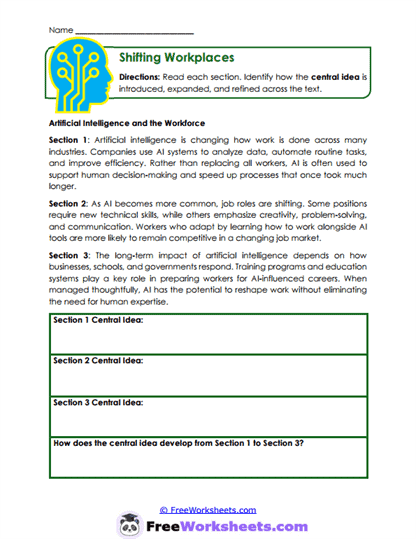
Shifting Workplaces
- What Kids Do:
Students track how the main idea develops across multiple sections about AI and jobs. They explain how the idea grows and changes. This helps them follow complex texts. - Target Skill:
Students build skills in analyzing how central ideas develop over time. They learn to connect sections into a larger meaning. This supports advanced comprehension.
Climate Perspectives
- What Kids Do:
Students compare two texts about climate change and identify each main idea. They explain how the ideas are similar and different. This builds comparison skills. - Target Skill:
Students strengthen their ability to compare central ideas across texts. They learn how different perspectives shape meaning. This supports critical thinking.
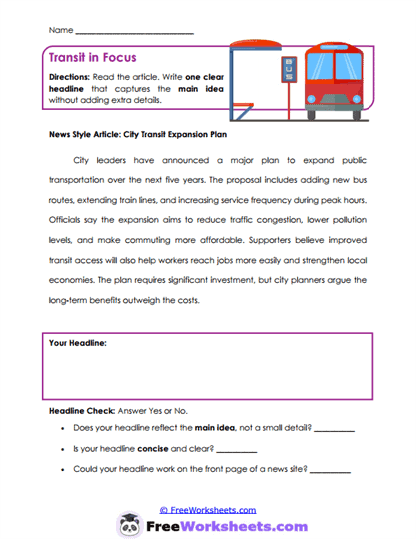
Transit in Focus
- What Kids Do:
Students read a news-style article and write a headline that captures the main idea. They focus on keeping it short and clear. This helps them summarize effectively. - Target Skill:
Students develop skills in summarizing and expressing central ideas concisely. They learn to focus on what matters most. This supports writing and comprehension.
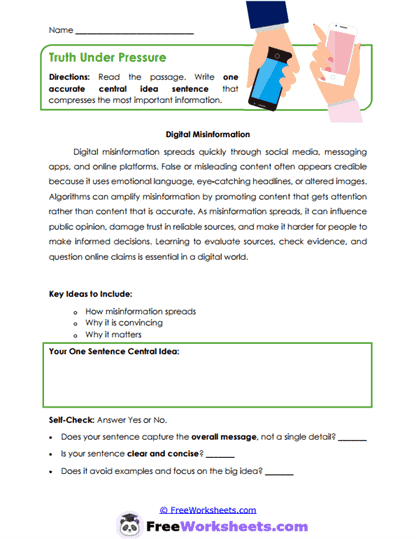
Truth Under Pressure
- What Kids Do:
Students read about misinformation and write a one-sentence central idea. They must include key points without adding extra detail. This builds clarity. - Target Skill:
Students improve their ability to write clear, focused central idea statements. They learn to avoid unnecessary details. This supports strong communication.
Editing the Code
- What Kids Do:
Students restate a central idea using formal, academic language. They revise wording to sound more precise. This builds writing skills. - Target Skill:
Students strengthen their ability to express ideas in academic language. They learn to write clearly and formally. This supports advanced writing.
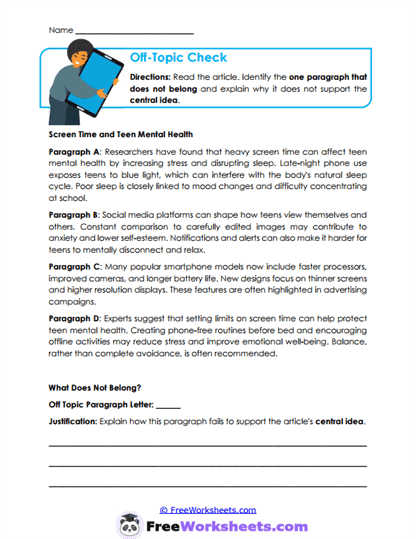
Off-Topic Check
- What Kids Do:
Students identify a paragraph that does not support the main idea. They explain why it does not belong. This builds analysis skills. - Target Skill:
Students develop skills in evaluating whether information supports a central idea. They learn to spot irrelevant details. This supports comprehension.
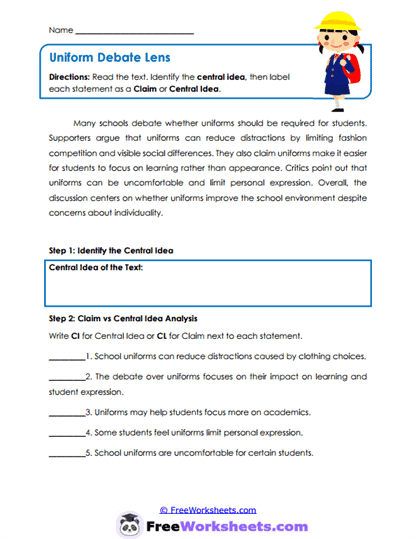
Uniform Debate Lens
- What Kids Do:
Students identify the central idea in an argument about school uniforms. They distinguish between main ideas and supporting claims. This builds reasoning. - Target Skill:
Students strengthen their ability to analyze arguments and central ideas. They learn how claims relate to the main point. This supports critical reading.
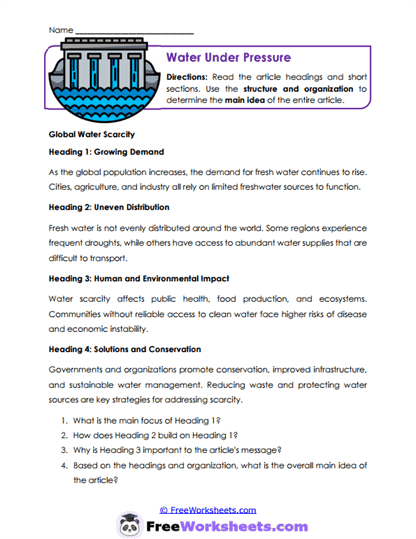
Water Under Pressure
- What Kids Do:
Students use headings and structure to determine the main idea of a text about water scarcity. They connect sections to one overall message. This builds strategy. - Target Skill:
Students develop skills in using text features to identify central ideas. They learn how structure supports meaning. This supports comprehension.
Civic Voice Check
- What Kids Do:
Students choose the strongest main idea statement from several options and explain their reasoning. They compare answers carefully. This builds evaluation skills. - Target Skill:
Students improve their ability to evaluate and justify central idea statements. They learn to explain their thinking clearly. This supports analytical reasoning.