
Audience, Purpose, And Tone Worksheets
These worksheets help students understand how and why texts are written. These free, ready-to-print PDF worksheets are designed for immediate classroom use or easy at-home learning. Students develop skills like analyzing tone, identifying author's purpose, and adjusting writing for different audiences.
About This Collection of Worksheets
This collection focuses on helping students understand how writing changes depending on who it is for and what it is trying to do. Each worksheet gives students practice analyzing real-world texts like blog posts, editorials, and reports. Students learn how tone, word choice, and structure work together to shape meaning and influence readers.
Students are also encouraged to apply these ideas through writing. Many activities ask them to rewrite passages for different audiences or adjust tone to match a new purpose. This helps them move beyond recognizing concepts and begin using them in their own writing. Over time, students become more flexible and thoughtful communicators.
The worksheets are designed to build skills step-by-step, from identifying tone and purpose to comparing texts and analyzing bias. They align with Grade 10 standards and prepare students for advanced reading, writing, and real-world communication tasks. These resources support both comprehension and practical writing skills.
Paul’s Teacher Tip
When teaching audience, purpose, and tone, it helps to show students how the same message can sound completely different depending on the reader. Try reading one passage in two different ways-formal and casual-and ask students how it changes the feeling. Encourage them to think about who they are talking to before they start writing. If students get stuck, remind them to focus on small changes like word choice and sentence style. Over time, they will become more confident in adjusting their writing.
Worksheet Collection Skill Spotlights
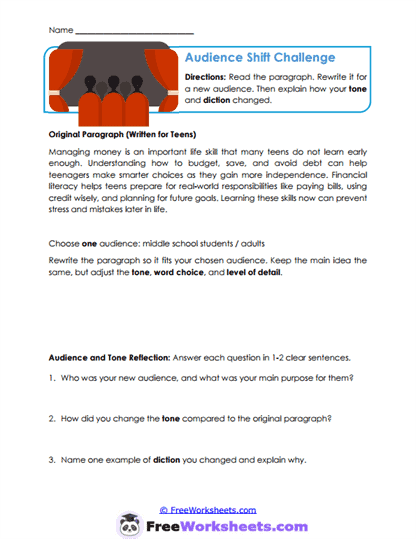
Audience Shift Challenge
- What Kids Do:
Students rewrite a paragraph for a new audience, such as adults or younger students. They keep the same idea but change tone and wording. This helps them understand how writing adapts to different readers. - Target Skill:
Students build skills in adjusting tone and word choice for different audiences. They learn how audience affects communication. This supports real-world writing skills.
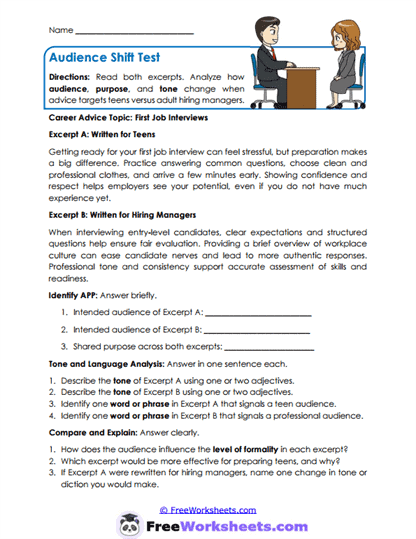
Audience Shift Test
- What Kids Do:
Students compare two passages that give the same advice but are written for different audiences. They analyze how tone and detail change. This helps them notice differences in communication. - Target Skill:
Students strengthen their ability to compare tone and language across texts. They learn how audience shapes writing choices. This supports deeper analysis.
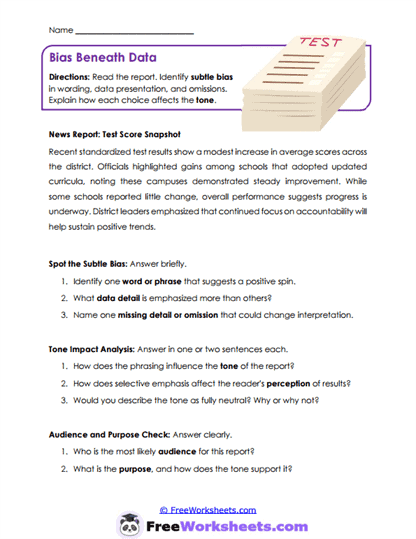
Bias Beneath Data
- What Kids Do:
Students read a report and identify subtle bias in how information is presented. They look for word choices and missing details. This builds awareness of how tone can influence meaning. - Target Skill:
Students develop skills in identifying bias and evaluating informational texts. They learn how tone and detail affect interpretation. This supports critical reading.
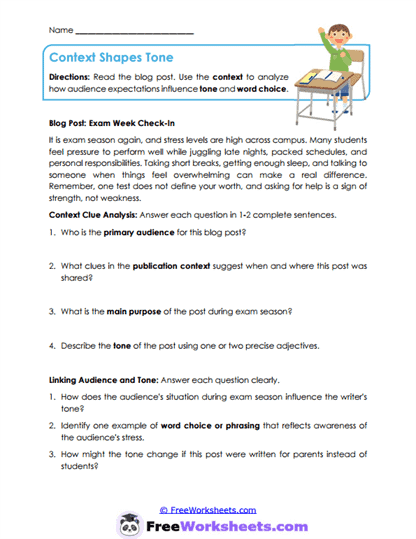
Context Shapes Tone
- What Kids Do:
Students read a blog post and analyze how tone fits the situation and audience. They identify key phrases that show the writer’s approach. This builds deeper understanding of context. - Target Skill:
Students strengthen their ability to analyze how context influences tone and purpose. They learn to connect writing choices to audience needs. This supports comprehension and analysis.
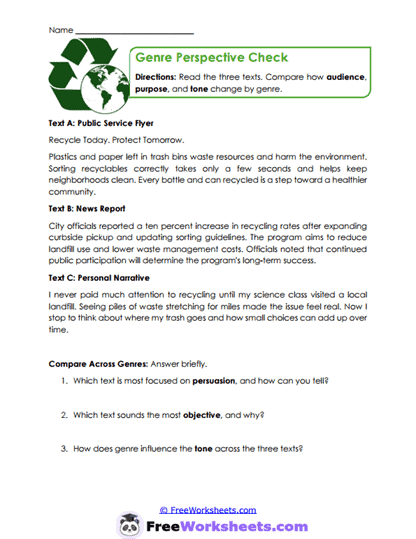
Genre Perspective Check
- What Kids Do:
Students read texts on the same topic written in different genres. They compare how tone and purpose change across each version. This helps them understand how format affects meaning. - Target Skill:
Students build comparison skills by analyzing tone and purpose across genres. They learn how writing style changes based on purpose. This supports advanced comprehension.
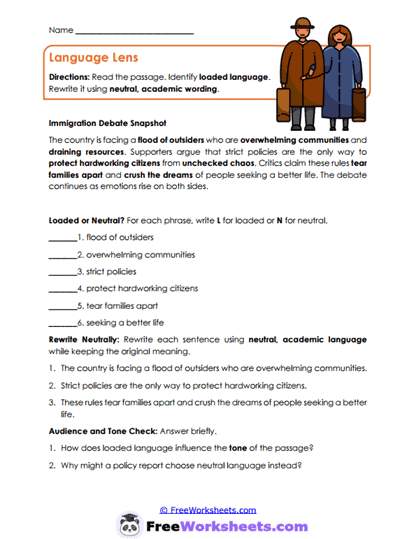
Language Lens
- What Kids Do:
Students identify loaded language in a passage and rewrite it using neutral wording. They reflect on how word choice affects meaning. This builds awareness of bias. - Target Skill:
Students improve their ability to recognize and revise biased language. They learn how tone can influence readers. This supports analytical thinking.
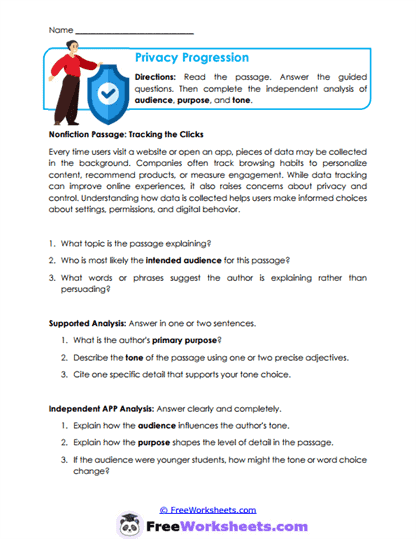
Privacy Progression
- What Kids Do:
Students read a nonfiction passage and identify the audience, purpose, and tone. They explain how these elements work together. This helps them understand informational texts. - Target Skill:
Students develop skills in analyzing audience, purpose, and tone together. They learn how writing choices match the reader. This supports comprehension.
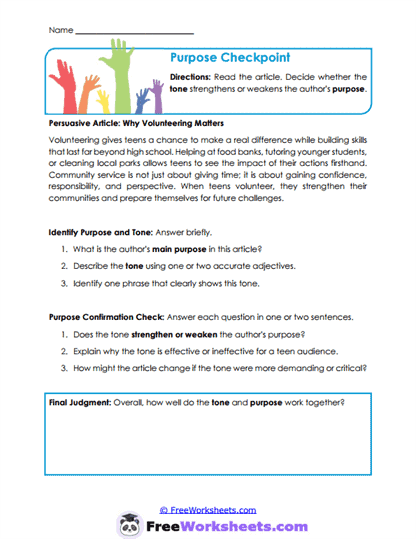
Purpose Checkpoint
- What Kids Do:
Students identify the author’s purpose in a persuasive passage and describe the tone. They evaluate how well the tone supports the message. This builds reasoning skills. - Target Skill:
Students strengthen their ability to analyze purpose and tone in texts. They learn how tone affects effectiveness. This supports critical reading.
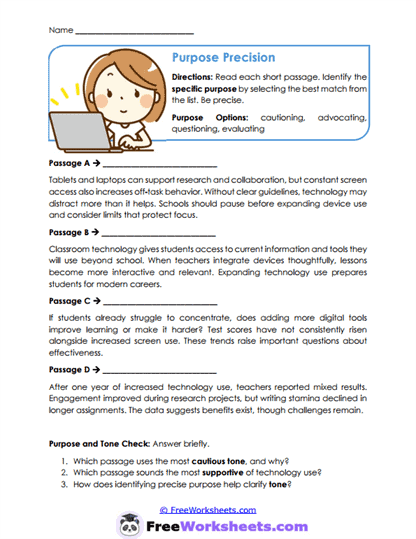
Purpose Precision
- What Kids Do:
Students read multiple short passages and identify different author purposes. They compare how tone changes across each one. This builds flexible thinking. - Target Skill:
Students develop skills in identifying and comparing author’s purpose. They learn how purpose shapes tone. This supports deeper analysis.
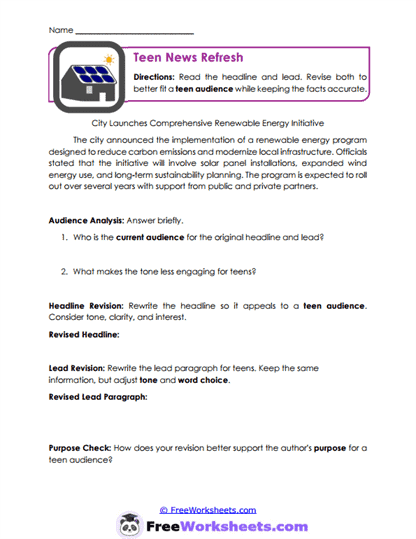
Teen News Refresh
- What Kids Do:
Students rewrite a formal news passage to better connect with teen readers. They adjust tone and wording to make it more engaging. This builds real-world writing skills. - Target Skill:
Students improve their ability to adapt writing for a specific audience. They learn how tone affects engagement. This supports communication skills.
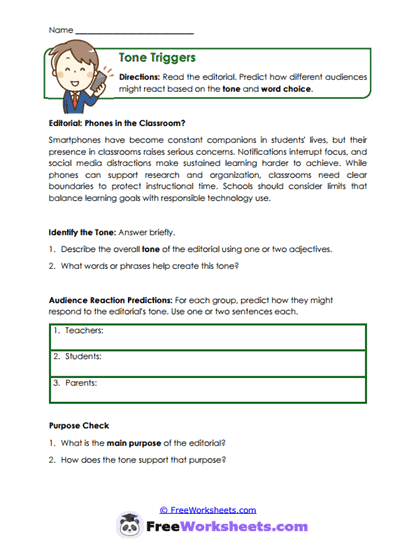
Tone Triggers
- What Kids Do:
Students read an editorial and identify the tone. They predict how different audiences might react to the message. This builds empathy and perspective. - Target Skill:
Students strengthen their ability to analyze tone and audience reaction. They learn how tone influences interpretation. This supports critical thinking.
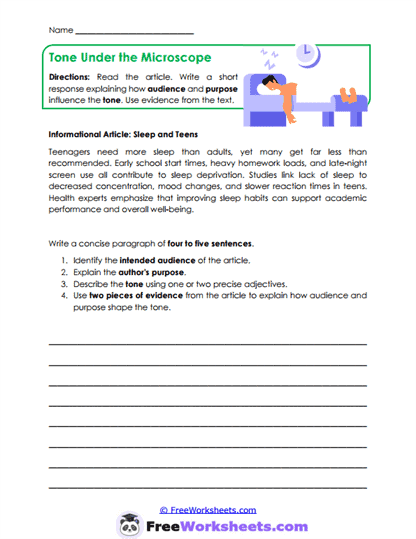
Tone Under the Microscope
- What Kids Do:
Students analyze a passage and explain how audience, purpose, and tone work together. They write a short paragraph using evidence. This connects reading and writing. - Target Skill:
Students develop skills in explaining how multiple elements shape a text. They learn to organize ideas clearly. This supports analytical writing.