
10th Grade Reading Comprehension Worksheets
These worksheets build advanced Reading skills through rigorous analysis, evaluation, and synthesis tasks. These free, ready-to-print PDF worksheets are designed for immediate classroom use and structured written responses. Students strengthen evidence-based analysis, central idea development, argument evaluation, and multi-text synthesis skills.
About This Collection of Worksheets
Reading comprehension at 10th grade demands more than surface understanding; students must evaluate credibility, analyze structure, trace central ideas, and assess arguments in increasingly complex texts. Aligned to Common Core standards such as RI.9-10.1, RI.9-10.5, RL.9-10.2, and RI.9-10.8, this collection supports students as they transition from identifying ideas to critiquing reasoning, refining theme statements, and synthesizing multiple perspectives. Each worksheet targets a specific analytical skill essential for college and career readiness.
These resources are ideal for structured close reading lessons, literacy centers, small-group intervention, argumentative writing preparation, and formative assessment checks. Teachers can use them during media literacy units, literary analysis studies, research and debate preparation, or cross-curricular informational text instruction. The tiered questions move from comprehension to evaluation, helping students build confidence while meeting rigorous academic expectations.
All worksheets are classroom-ready, ink-friendly, and formatted for clear written responses. The printable PDF design supports low-prep implementation, making them easy to integrate into daily instruction or substitute plans. With focused passages and structured prompts, this collection promotes thoughtful analysis without unnecessary distractions.
Paul’s Teacher Tip
Grade 10 is where students should start thinking like critics, not just readers. After every activity, add one extension question: “Do you agree with the author-and why or why not?” This pushes students beyond analysis into evaluation, helping them build the reasoning skills they’ll need for upper grades, essays, and real-world media literacy.
Worksheet Collection Skill Spotlights
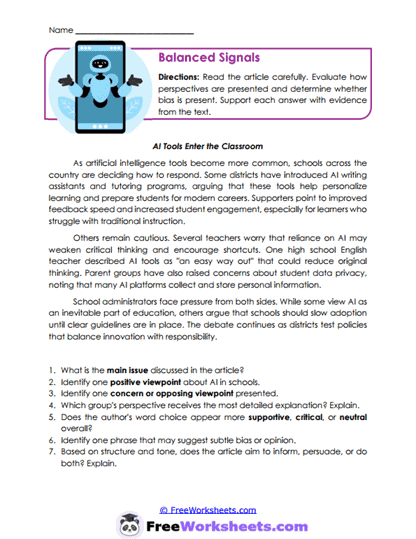
Balanced Signals
• What Kids Do – Students analyze a text to identify multiple viewpoints and determine whether bias is present.
• Target Skill – Builds evaluation of perspective and subtle bias.
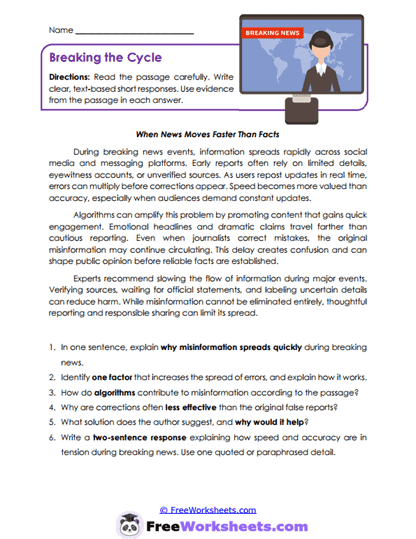
Breaking the Cycle
• What Kids Do – Students trace cause-and-effect relationships and evaluate proposed solutions.
• Target Skill – Develops analysis of cause-and-effect reasoning.
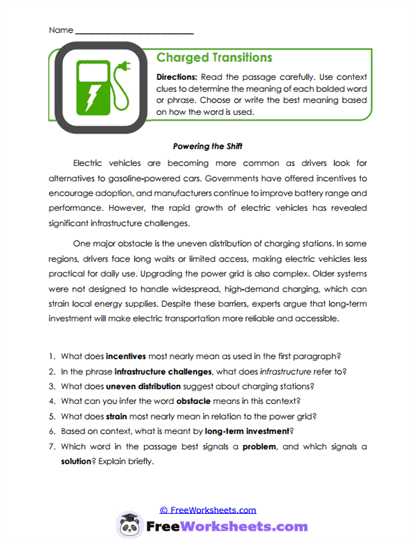
Charged Transitions
• What Kids Do – Students use context clues to define technical vocabulary and identify signal phrases.
• Target Skill – Builds vocabulary analysis and understanding of structure.
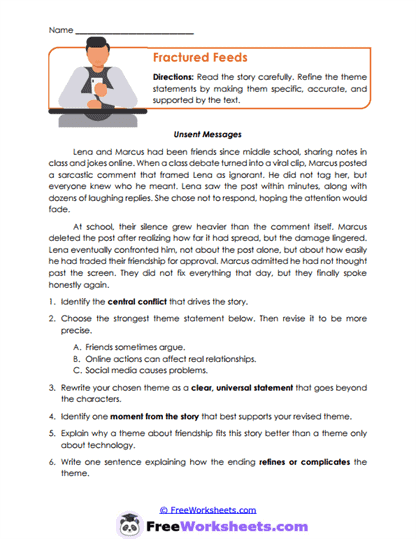
Fractured Feeds
• What Kids Do – Students refine and support a theme statement using story evidence.
• Target Skill – Develops advanced theme analysis.
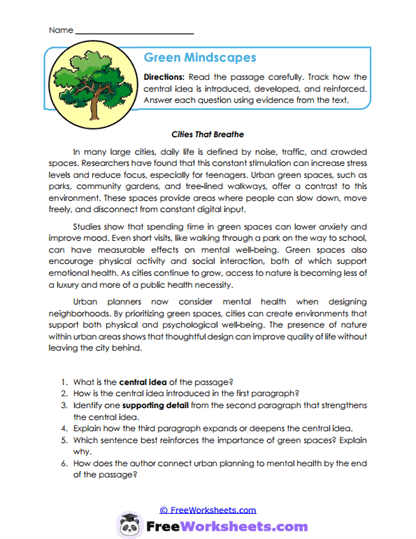
Green Mindscapes
• What Kids Do – Students track how a central idea develops across a text using supporting details.
• Target Skill – Builds analysis of central idea development.
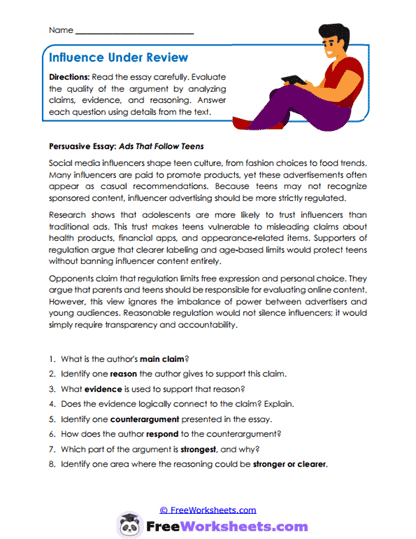
Influence Under Review
• What Kids Do – Students evaluate claims, evidence, and counterarguments in an argumentative text.
• Target Skill – Develops argument analysis and reasoning evaluation.
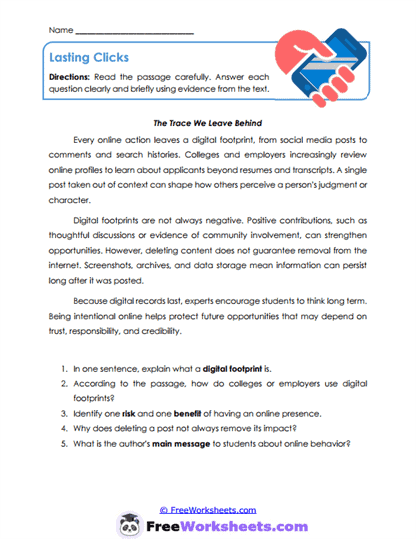
Lasting Clicks
• What Kids Do – Students determine and support a central idea about digital responsibility.
• Target Skill – Builds central idea identification and evidence use.
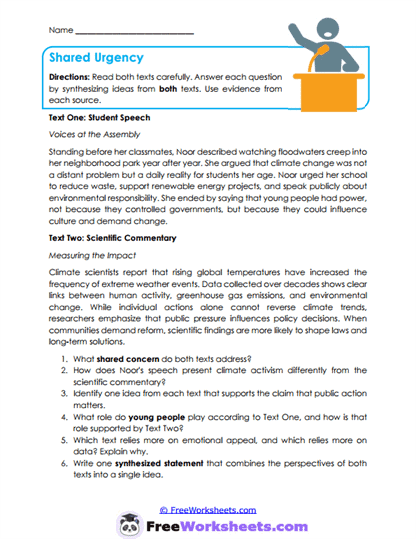
Shared Urgency
• What Kids Do – Students compare two texts and synthesize their ideas into one analysis.
• Target Skill – Develops synthesis of multiple perspectives.
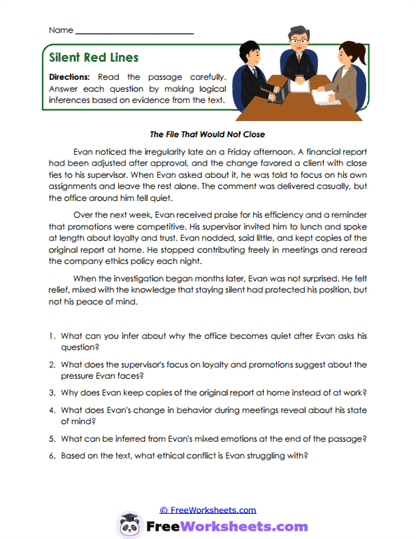
Silent Red Lines
• What Kids Do – Students infer character motivations and ethical conflict using textual clues.
• Target Skill – Builds inference and analysis of internal conflict.
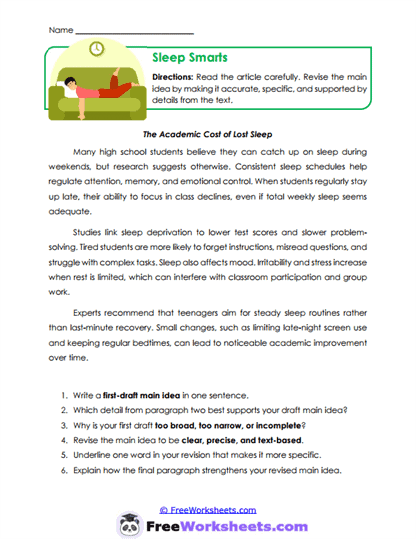
Sleep Smarts
• What Kids Do – Students draft and revise a precise main idea statement using evidence.
• Target Skill – Develops refinement of central ideas.
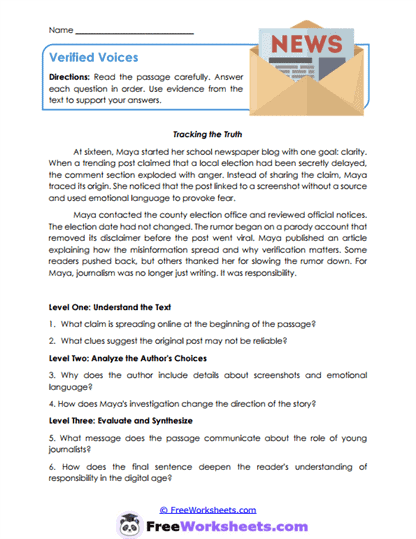
Verified Voices
• What Kids Do – Students evaluate credibility and reliability in a media-focused text.
• Target Skill – Builds analysis of source credibility and author purpose.
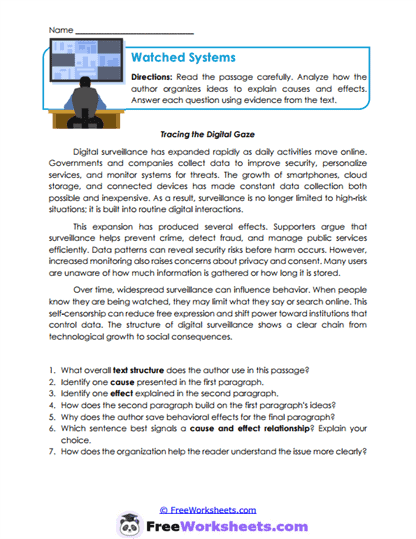
Watched Systems
• What Kids Do – Students analyze how cause-and-effect structure develops ideas across a text.
• Target Skill – Develops understanding of informational text structure.