
Grade 10 Worksheets
These 10th grade printable worksheets strengthen analytical thinking, conceptual understanding, and academic fluency across Language Arts, Mathematics, Science, and History/Social Studies through structured, cross-curricular practice and real-world application. By promoting independent learning, evidence-based reasoning, and higher-order thinking skills, the collection builds the confidence and mastery students need for Grade 11 and beyond.
Grammar and Mechanics
Math
About This Collection of Worksheets
10th Grade is where students begin moving from general high school coursework into more specialized academic thinking. Students are expected to read more challenging texts, write with stronger structure and evidence, solve increasingly complex math problems, and apply reasoning skills across multiple subject areas.
This collection focuses on the skills sophomores use most throughout the school year: rhetorical analysis, argumentative writing, geometry and algebra concepts, informational text evaluation, vocabulary development, research skills, and data interpretation. The worksheets are designed to help students strengthen academic precision while improving independent work habits and long-form critical thinking.
Students practice analyzing author arguments, interpreting charts and technical passages, organizing evidence-based responses, solving applied math problems, and evaluating information from multiple sources. These printable worksheets help students build the consistency, focus, and analytical skills needed for upper-level high school courses.
Why Teachers Use This Collection
- Rhetorical analysis practice activities
- Argumentative writing reinforcement
- Geometry and algebra review
- Informational text evaluation worksheets
- Academic vocabulary skill building
- Real-world document analysis
- Independent classroom assignments
- Bell ringer review activities
- Low-prep printable resources
- College-prep skill reinforcement
Why Homeschoolers & Parents Use This Collection
- 10th Grade academic support
- Structured independent learning practice
- Essay organization skill development
- Algebra and geometry reinforcement
- Critical reading skill building
- Printable daily review pages
- Screen-free educational activities
- Homework and tutoring support
- Real-world reasoning practice
- Upper high school preparation
A Look at the Categories of Worksheets
Grammar and Mechanics
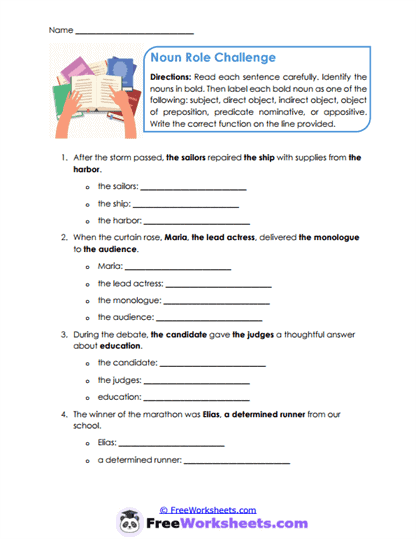
Nouns
Understanding nouns helps students write with greater precision by choosing clear names for people, places, ideas, and things. Encourage your child to notice how specific nouns can make a sentence more informative and easier to picture. These worksheets strengthen grammar, word choice, and sentence-building skills.
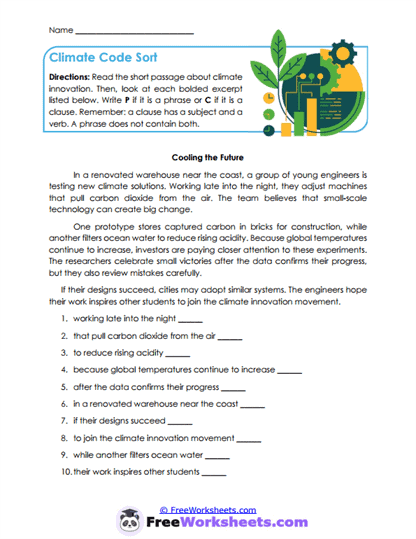
Phrases and Clauses
Learning how phrases and clauses work gives students more control over the way they build and combine ideas in a sentence. Try having your child identify which groups of words can stand alone and which need more information to make complete sense. These activities strengthen sentence structure, grammar, and writing fluency.
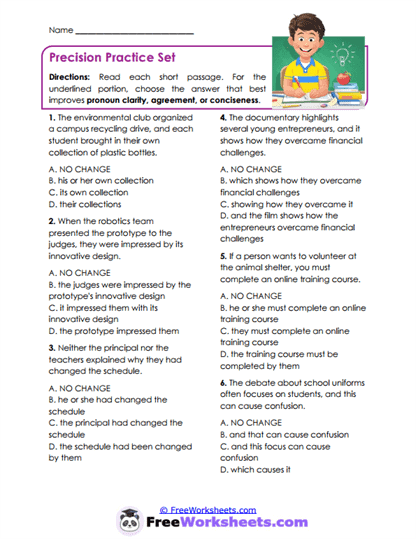
Pronouns
Using pronouns correctly helps students avoid unnecessary repetition and keeps their writing clear and easy to follow. When reviewing a sentence, ask your child to check that every pronoun clearly refers back to the correct person, place, thing, or idea. These worksheets strengthen grammar accuracy, sentence clarity, and editing skills.
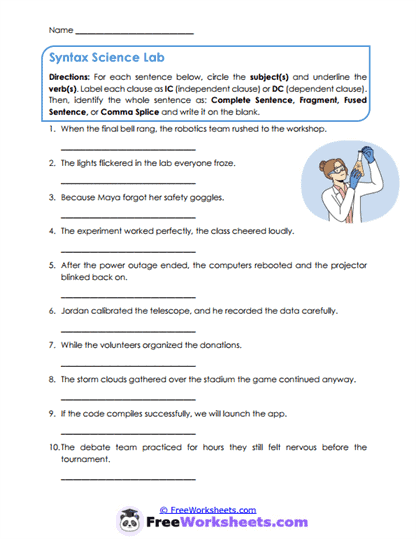
Sentences, Fragments, and Run-ons
Recognizing complete sentences, fragments, and run-ons helps students communicate ideas without leaving thoughts unfinished or joining too many ideas together. Encourage your child to read sentences aloud and listen for places where the thought feels incomplete or seems to continue for too long. These activities strengthen sentence structure, proofreading, and written communication skills.
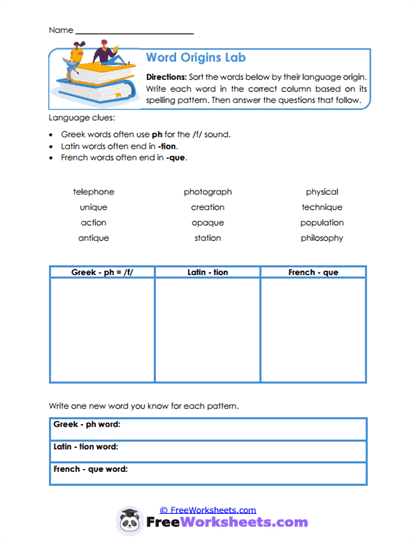
10th Grade Spelling
Strong spelling skills make writing easier to understand and help students present their ideas with greater confidence. A useful approach is to have your child look for familiar word parts, spelling patterns, and roots when working through difficult words. These worksheets strengthen spelling accuracy, vocabulary, and overall writing skills.
Math
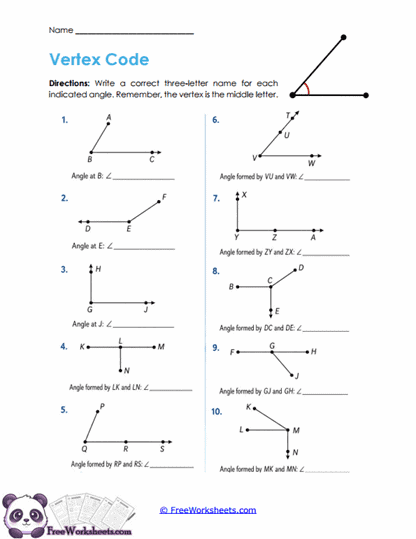
Angles
Understanding angles helps students recognize how lines and shapes are formed and how their measurements relate to one another. A helpful strategy is to have your child identify the type of angle first, such as acute, right, obtuse, or straight, before working with its measurement. These activities strengthen geometric reasoning, measurement skills, and visual problem-solving.
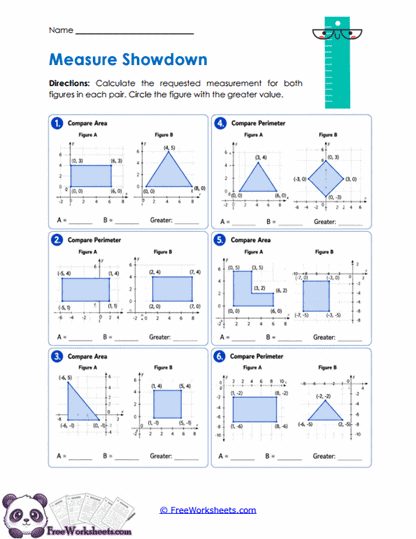
Area And Perimeter On The Coordinate Plane
Finding area and perimeter on the coordinate plane helps students connect geometry with graphing and coordinate skills. Encourage your child to plot and label each point carefully before finding side lengths or measuring the space inside the figure. These worksheets strengthen coordinate reasoning, measurement skills, and geometric problem-solving.
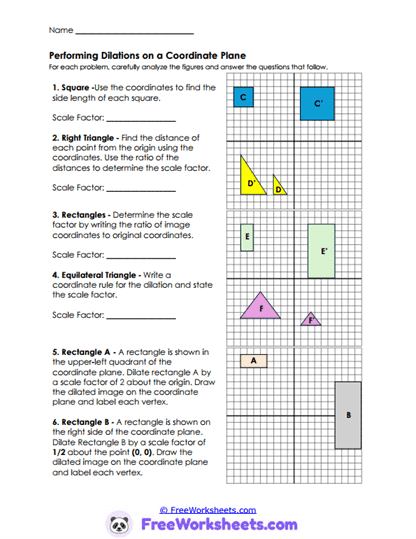
Dilations and Scale Factors
Understanding dilations and scale factors helps students see how figures can change size while keeping the same shape and proportions. A helpful strategy is to compare real-world examples like maps, blueprints, or photo resizing to make scaling easier to visualize. These activities strengthen proportional reasoning, spatial awareness, and geometric thinking skills.
Geometry Word Problems
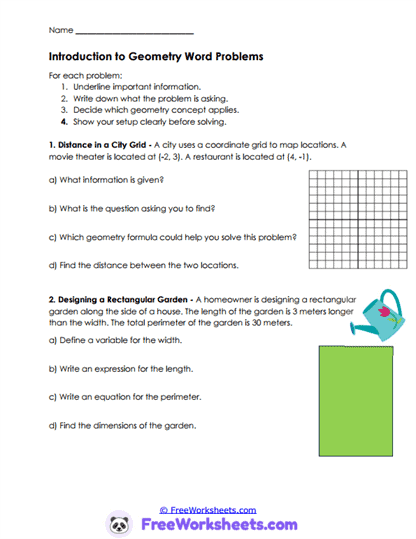
Geometry word problems help students apply math concepts to real-world situations involving shapes, angles, distance, and measurement. Encourage your child to sketch diagrams before solving so they can better organize the information visually. These worksheets strengthen problem-solving, mathematical reasoning, and spatial thinking skills.
Parallel And Perpendicular Lines
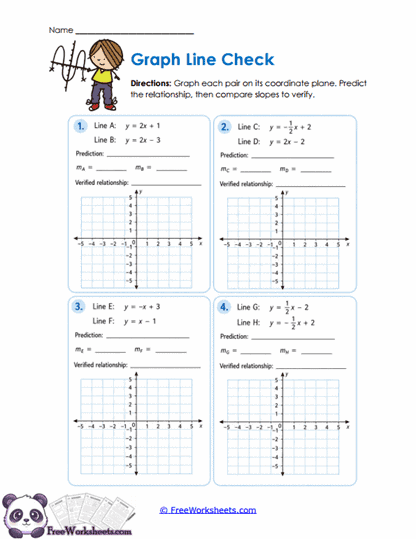
Parallel and perpendicular lines help students understand how lines relate through their slopes, angles, and positions on a graph. A useful strategy is to compare slopes carefully, remembering that parallel lines have matching slopes while perpendicular lines follow a special relationship. These activities strengthen algebraic reasoning, graphing skills, and geometric thinking.
Points, Lines, Line Segments, And Planes
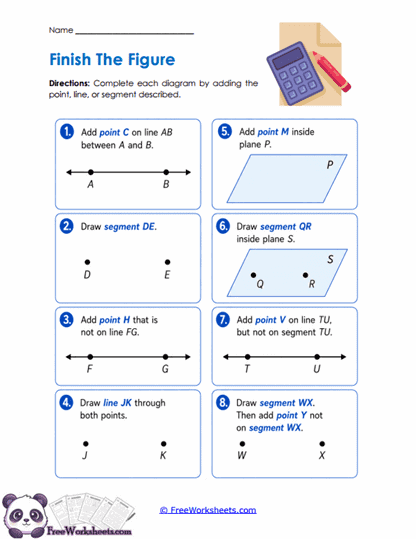
Points, lines, line segments, and planes give students the basic language they need to describe figures and relationships in geometry. Encourage your child to pay close attention to symbols and diagrams so they can tell the difference between objects that may look similar at first. These worksheets strengthen geometry vocabulary, visual reasoning, and spatial understanding.
Pythagorean Theorem
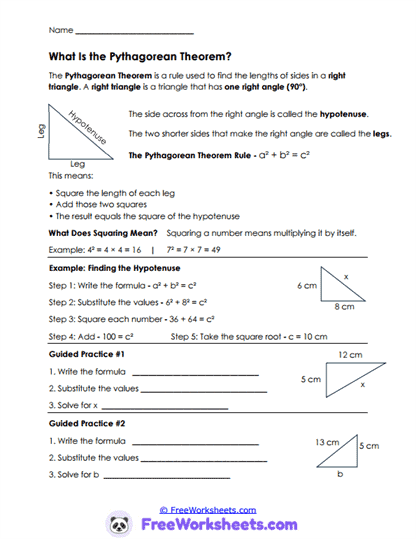
The Pythagorean Theorem helps students find missing side lengths and understand relationships within right triangles. A useful strategy is to label the sides clearly and identify the hypotenuse before solving the equation. These activities strengthen geometric reasoning, algebraic thinking, and problem-solving skills.
SOH-CAH-TOA Right Triangle Trigonometry
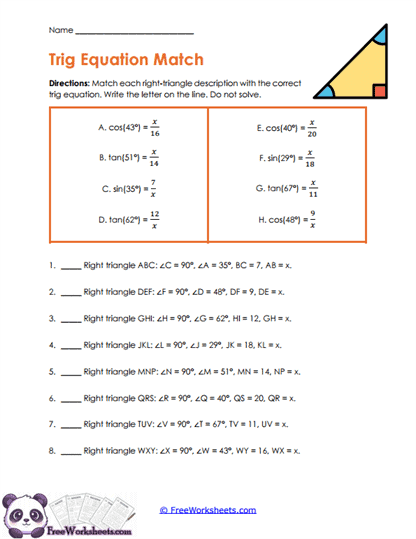
SOH-CAH-TOA helps students use sine, cosine, and tangent to find missing sides and angles in right triangles. A helpful strategy is to identify the opposite, adjacent, and hypotenuse sides from the given angle before choosing which trigonometric ratio to use. These activities strengthen trigonometric reasoning, equation-solving, and geometric problem-solving skills.
Trigonometry Word Problems
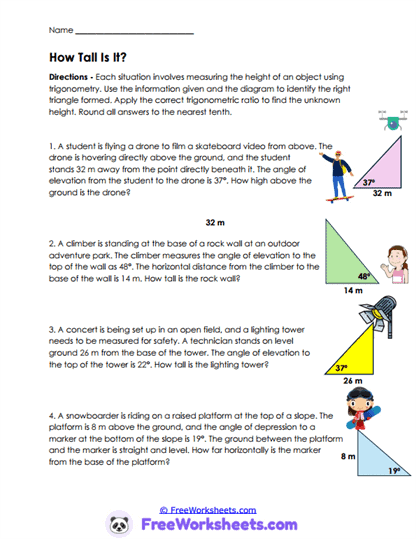
Trigonometry word problems help students use angles and side lengths to solve real-world measurement situations. Encourage your child to draw and label each triangle carefully before choosing a trigonometric ratio to use. These worksheets strengthen analytical thinking, mathematical modeling, and geometric problem-solving skills.
Two-Column Geometric Proofs
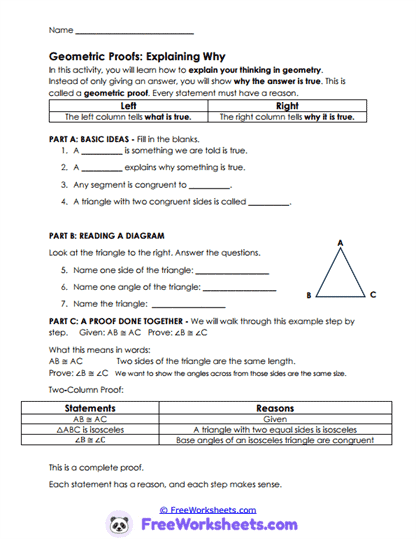
Two-column proofs teach students how to explain mathematical thinking using logic and evidence step by step. A helpful strategy is to focus on one statement-reason pair at a time instead of trying to complete the entire proof at once. These activities strengthen deductive reasoning, logical organization, and advanced geometry skills.
Reading
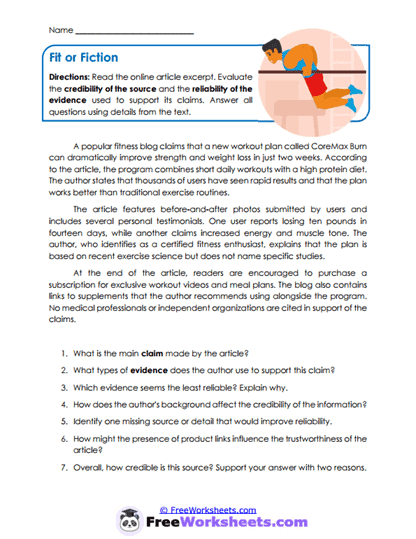
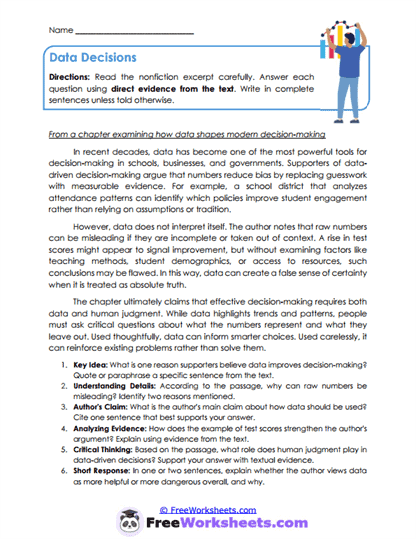
Analyzing Informational Texts
Analyzing informational texts helps students evaluate real-world reading like articles, essays, and reports more thoughtfully. Encourage your child to ask, “What evidence supports the author’s point?” while reading nonfiction texts. These worksheets strengthen critical thinking, nonfiction comprehension, and evidence-based analysis skills.
Analyzing Literature
Analyzing literature helps students look beyond the surface of a story to understand themes, characters, and author choices. A helpful strategy is to ask your child how specific scenes or details contribute to the overall message of the text. These activities strengthen literary analysis, comprehension, and critical thinking skills.
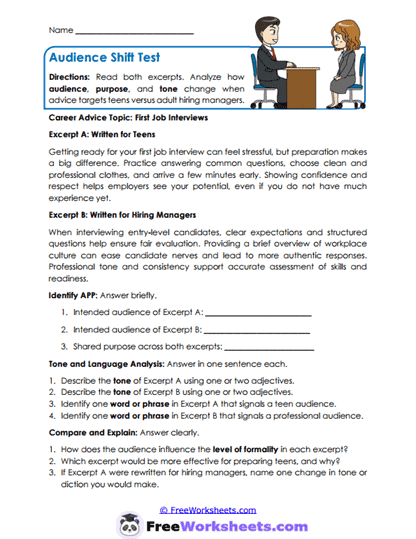
Audience, Purpose, And Tone
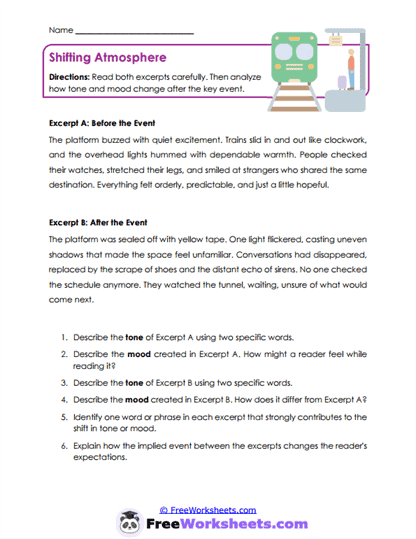
Recognizing audience, purpose, and tone helps students understand how authors shape their writing for different situations and readers. Encourage your child to notice whether the writing sounds formal, persuasive, emotional, or objective while reading. These worksheets strengthen communication awareness, text analysis, and comprehension skills.
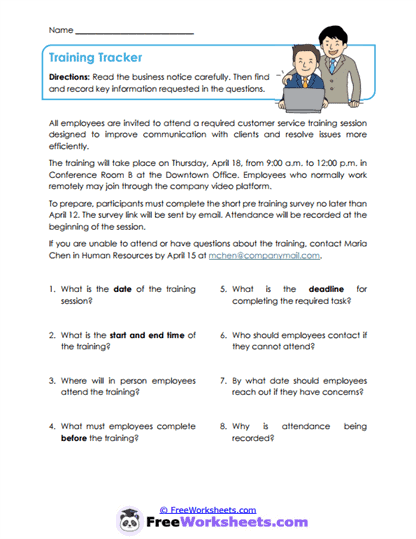
Business Documents
Understanding business documents helps students build practical reading skills they will use in school, work, and everyday life. Reviewing real-world examples like emails, forms, or memos together can help your child feel more confident with formal communication. These activities strengthen informational reading, workplace literacy, and communication skills.
Grade 10 Reading Comprehension
Strong comprehension skills help students analyze complex texts, make inferences, and explain ideas clearly. Encourage your child to support answers with direct evidence from the passage instead of relying on guesses. These worksheets strengthen critical thinking, analytical reasoning, and evidence-based comprehension skills.
Grade 10 Reading Passages
Reading a variety of challenging passages helps students become stronger and more flexible readers. A great strategy is to pause occasionally and summarize the author’s main point before continuing. These activities strengthen vocabulary, comprehension, and reading stamina.
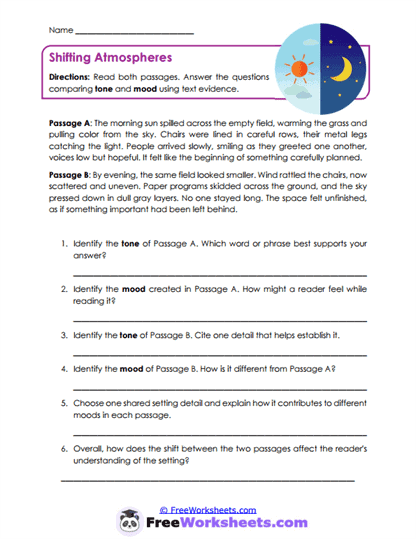
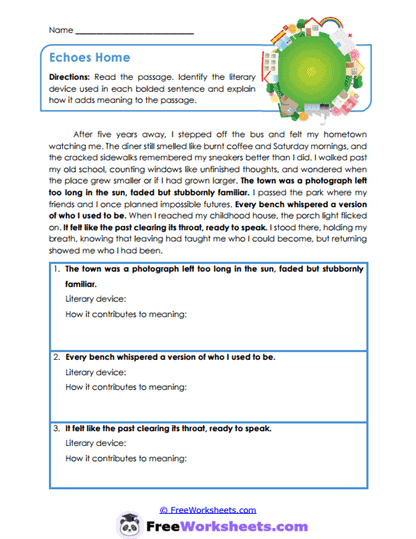
Literary Devices
Understanding literary devices helps students recognize how authors create deeper meaning, emotion, and symbolism in writing. Point out examples of irony, imagery, or metaphor while reading together to help these concepts feel more natural. These worksheets strengthen literary analysis, figurative language, and comprehension skills.
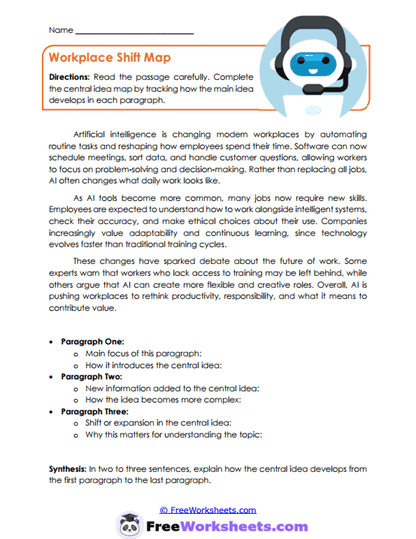
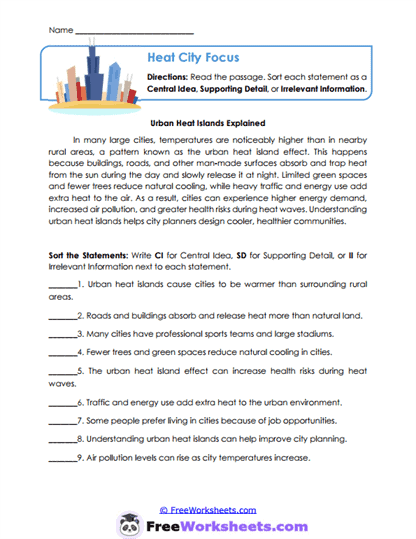
Main Idea
Finding the main idea helps students focus on the most important message in a text instead of getting distracted by details. Ask your child, “What is the author mainly trying to explain or prove here?” after reading each section. These activities strengthen summarizing, comprehension, and organizational thinking skills.
Nonfiction Book Study
Studying nonfiction books helps students organize information, evaluate arguments, and better understand real-world topics. Encourage your child to take notes on key ideas and supporting evidence while reading. These worksheets strengthen nonfiction comprehension, research, and analytical thinking skills.
Novel Study
Novel studies help students think more deeply about themes, character development, and important story events across longer texts. A helpful strategy is to discuss how characters change over time and what lessons the author may want readers to learn. These activities strengthen literary analysis, comprehension, and discussion skills.