
About This Worksheet
This worksheet helps students apply the y-to-i spelling rule when forming plurals and changing verb tenses. The y-to-i rule explains that when a word ends in a consonant followed by y, the y often changes to i before adding certain endings. Students practice the rule in both noun and verb forms while learning when exceptions apply. For example, “policy” becomes “policies” because the final y changes to i before adding -es. This activity strengthens spelling skills by helping students recognize predictable word patterns.
Curriculum and Grade Alignment
This Grade 10 worksheet focuses on spelling conventions and word formation. The primary learning goal is helping students apply the y-to-i rule correctly in different contexts. Students should already understand singular and plural nouns as well as common verb forms. The next step is applying spelling rules automatically while drafting and revising writing. This worksheet aligns with Common Core Standards L.9-10.2 and L.9-10.4 as well as TEKS 110.36(b)(11).
Student Tasks
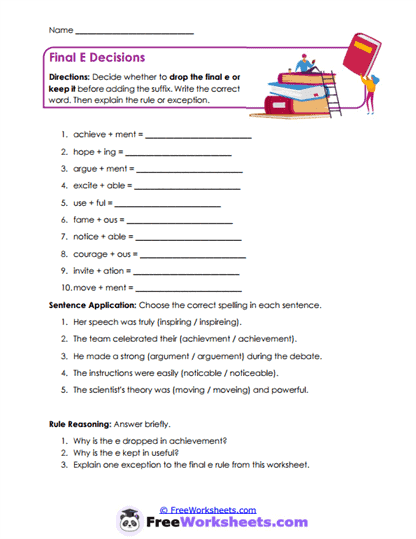
On this worksheet, students will convert singular nouns into their correct plural forms using the y-to-i rule when needed. They will also change verbs into past-tense forms while applying the same spelling convention. Learners answer rule-check questions that require them to explain why certain words change and others do not. The activity encourages students to compare examples and identify patterns. Students strengthen both spelling accuracy and grammatical understanding through repeated application.
Common Challenges and Misconceptions
Many students assume every word ending in y changes to i, even when a vowel comes before the y. Some learners memorize examples without understanding the underlying rule. Others may correctly identify the rule but forget to apply it when writing quickly. Distinguishing between exceptions and regular patterns can also be difficult. Teachers can help by having students examine the letter immediately before the y before making any changes.
Implementation Guidance
Teachers can use this worksheet during lessons on spelling conventions, grammar, or word study. It works well as a review activity because students apply the rule in multiple contexts. Parents and homeschool educators can use the examples to discuss how spelling and grammar often work together. Encouraging students to explain their reasoning can strengthen retention. The activity supports both spelling development and proofreading skills.
Details and Features
This worksheet includes plural noun practice, verb tense application, and rule-reflection questions. Students work with a variety of examples that demonstrate both the rule and its exceptions. The combination of word formation and grammar practice makes the activity especially useful for secondary learners. Clear directions guide students through each section of the page. The printable format is suitable for classroom instruction, tutoring, and homeschool use.