
Showing Kindness And Compassion Worksheets
These Showing Kindness And Compassion worksheets help students in grades 3-12 recognize other people's needs and respond with thoughtful words and actions. Every activity is Free, Ready-to-print, available in PDF format, and designed for Immediate classroom use. Students strengthen CASEL-aligned skills in social awareness, relationship building, empathy, and responsible decision-making.
About This Collection of Worksheets
This collection helps students understand that kindness and compassion are more than pleasant feelings. Learners examine how sharing, including others, offering encouragement, protecting someone’s dignity, and providing practical help can change another person’s experience. The worksheets also show that compassionate action should be respectful, safe, and guided by what the other person actually needs.
The activities include picture analysis, short stories, caring-choice scenarios, personal planning, digital citizenship, perspective-taking, and reflective writing. Students practice responding to worry, embarrassment, loneliness, teasing, mistakes, lost pets, and unkind online comments. They also compare sympathy with compassion and learn how caring words become more meaningful when paired with thoughtful action.
These printable SEL resources work well during morning meetings, classroom community lessons, counseling groups, kindness units, digital citizenship instruction, homeschool learning, and personal reflection. The collection supports the Collaborative for Academic, Social and Emotional Learning areas of self-awareness, social awareness, relationship skills, self-management, and responsible decision-making. Since the pages range from simple visual activities to deeper perspective and compassion planning, adults can select worksheets that match each student’s age and social-emotional readiness.
Paul’s Teacher Tip
Help students make kindness specific by asking what the other person might actually need in that moment. A friendly comment may help, but some situations also call for inclusion, practical assistance, privacy, or trusted adult support. Encourage children to ask before taking over, since compassion should respect another person’s choices and boundaries. When discussing behavior, stay curious about what may be happening beneath the surface without excusing harmful actions. Small, quiet choices often show just as much compassion as dramatic gestures.
Worksheet Collection Skill Spotlights
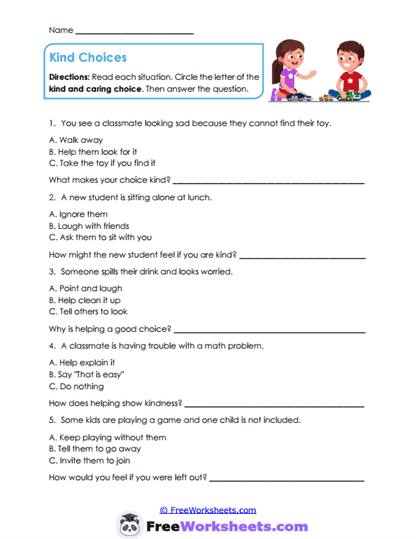
Caring Choices
What Kids Do: Students consider five school situations involving a lost toy, a lonely new student, a spilled drink, difficult math work, and exclusion from a game. They choose the most caring response and explain how it could affect the other person.
Target Skill: This activity develops empathy, perspective-taking, and thoughtful decision-making. Students learn to compare possible responses and choose actions that offer practical help, patience, inclusion, or emotional support.
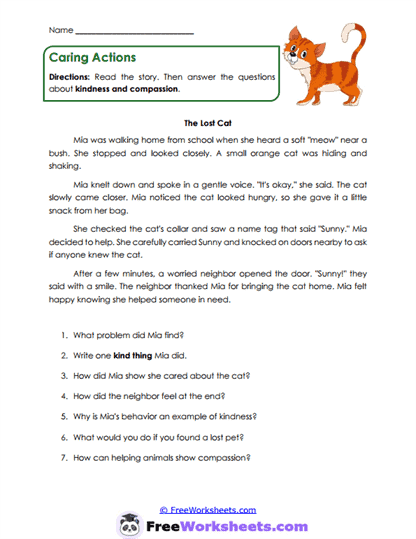
Caring Rescue
What Kids Do: Students read about Mia finding a frightened lost cat and following several gentle, responsible steps to help. They identify the animal’s needs, sequence Mia’s choices, and explain how the rescue affects both the cat and its owner.
Target Skill: Learners connect empathy with safe action. The worksheet reinforces reading comprehension, responsibility, and the idea that compassion involves noticing distress while using good judgment and trusted adult support.
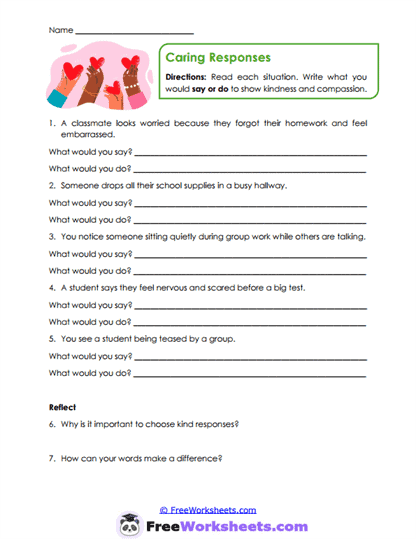
Caring Responses
What Kids Do: Students write caring words and helpful actions for classmates who are worried, embarrassed, nervous, excluded, or being teased. Each situation requires both emotional support and a practical next step.
Target Skill: This page builds perspective-taking and dependable peer support. Students learn that compassion often means listening, staying nearby, helping with a task, including someone, or involving an adult rather than trying to fix everything alone.
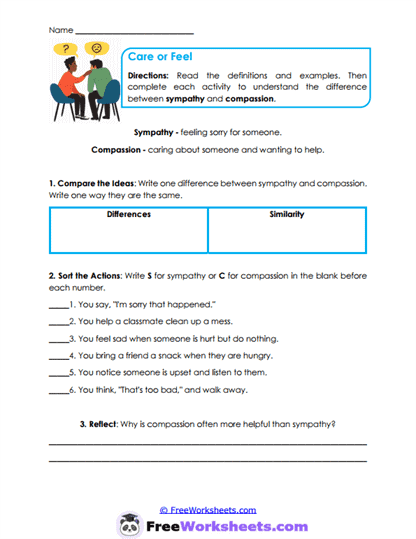
Compassion Difference
What Kids Do: Students compare sympathy with compassion and sort six responses into the correct group. They examine whether each example only expresses concern or also includes respectful listening, help, or supportive action.
Target Skill: Learners distinguish feeling sorry for someone from responding compassionately. The activity strengthens conceptual reasoning and teaches that support should be based on another person’s needs rather than assumptions.
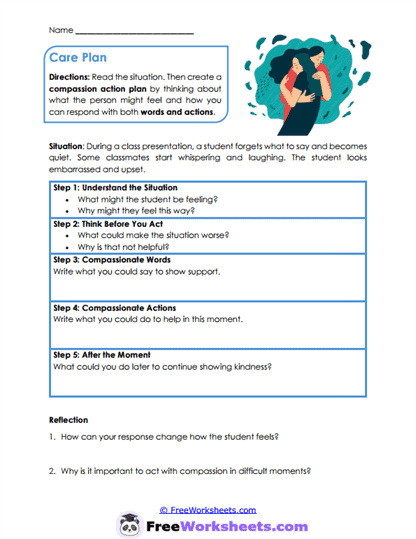
Compassion Steps
What Kids Do: Students create a five-step response plan for supporting a classmate who becomes embarrassed during a presentation. They identify feelings, avoid actions that increase attention, write supportive words, and plan immediate and later help.
Target Skill: This activity develops emotional recognition, careful planning, and dignity-preserving support. Students learn that compassionate responses may need to be quiet, private, and continued after the difficult moment has passed.
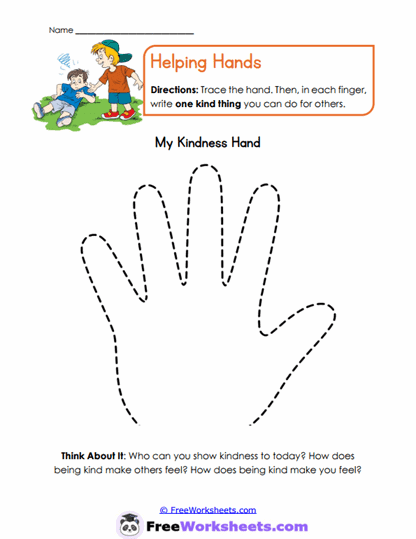
Helping Hands
What Kids Do: Students trace a hand and place one specific kind action inside each finger. They plan five ways to help, include, encourage, or support others and reflect on how showing kindness affects their own feelings.
Target Skill: Learners turn the broad concept of kindness into realistic personal actions. The page develops prosocial planning, empathy, self-reflection, and a sense of responsibility for contributing to a caring community.
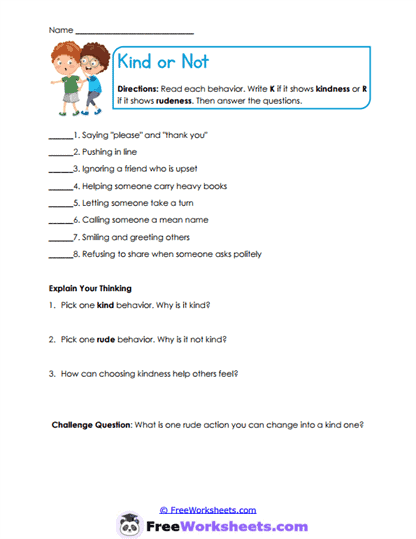
Kindness Check
What Kids Do: Students label eight everyday behaviors as kind or rude, explain one example from each group, and transform one unhelpful behavior into a caring alternative.
Target Skill: This introductory activity builds social awareness and behavior recognition. Students think about how actions affect another person rather than treating kindness as a list of manners to memorize.
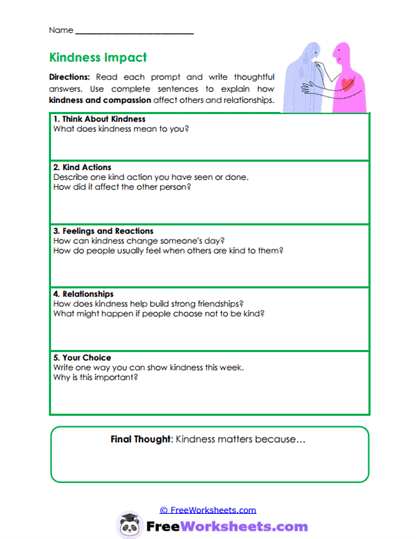
Kindness Effects
What Kids Do: Students reflect on the meaning of kindness, recall a caring action they witnessed or completed, and explain how it influenced another person or relationship. They also create a personal kindness goal for the week.
Target Skill: Learners examine the broader emotional and social effects of compassion. The worksheet develops reflective writing and helps students connect small choices with belonging, trust, confidence, and community.
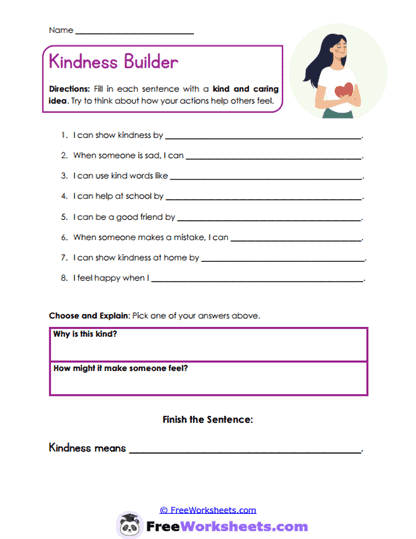
Kindness Ideas
What Kids Do: Students complete eight open-ended statements about showing kindness at school, at home, and with friends. They explain why one response is caring and create a personal definition of kindness.
Target Skill: This page develops empathy, communication, and prosocial planning. Students move from understanding kindness as an abstract value to identifying words and actions they could realistically use.
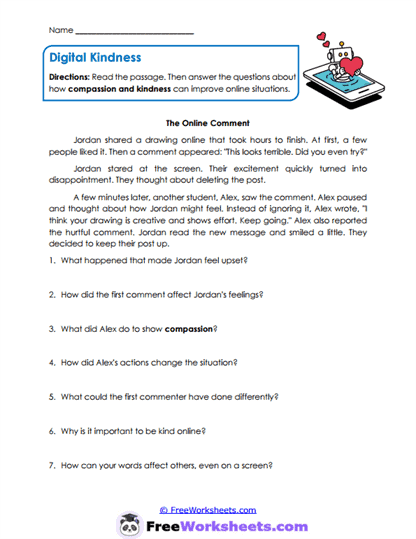
Online Compassion
What Kids Do: Students read about Jordan receiving a hurtful online comment and another student responding with encouragement and a report. They trace the emotional effect of each message and suggest a more respectful choice for the original commenter.
Target Skill: Learners connect empathy with digital citizenship and upstander behavior. The activity teaches that online kindness may include encouragement, refusal to join harmful behavior, and responsible use of reporting tools.
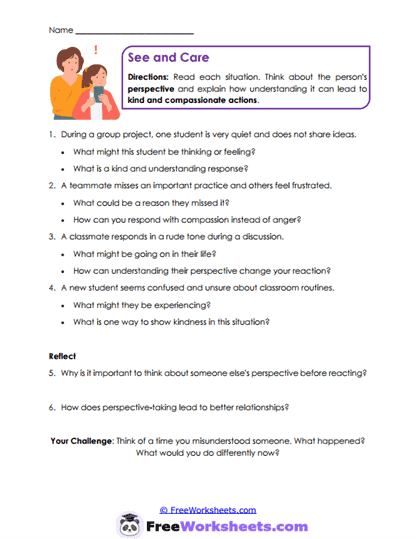
Perspective Care
What Kids Do: Students examine four confusing behaviors, including silence, a missed responsibility, a rude tone, and difficulty following routines. They suggest possible hidden reasons and write a patient, caring response.
Target Skill: This worksheet strengthens perspective-taking and reduces quick judgment. Students learn to replace assumptions with curiosity while understanding that empathy can guide a wiser response without excusing harmful behavior.
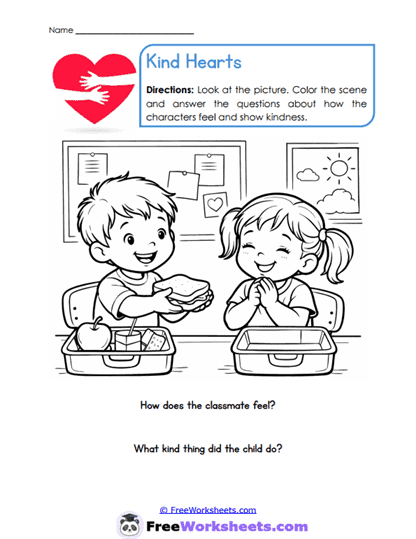
Sharing Kindness
What Kids Do: Students study and color a scene showing one child sharing food with another. They identify the caring action, describe how the classmate may feel, and connect sharing with inclusion and support.
Target Skill: This visual activity builds early empathy, observation, emotion recognition, and cause-and-effect thinking. Students learn that simple acts of generosity can help another person feel noticed, welcomed, and cared for.