
Managing Emotional Reactions Worksheets
These Managing Emotional Reactions worksheets help students in grades 3-12 notice strong feelings, pause before reacting, and choose safer responses. Every activity is Free, Ready-to-print, available in PDF format, and designed for Immediate classroom use. Students build CASEL-aligned skills in self-awareness, self-management, relationship building, and responsible decision-making.
About This Collection of Worksheets
This collection helps students understand what happens between an emotional trigger and the reaction that follows. Learners examine body signals, thoughts, impulses, words, actions, and consequences so they can recognize when anger, frustration, worry, embarrassment, or disappointment is beginning to build. The worksheets reinforce that students may not control every upsetting event, but they can often choose what happens next.
The activities include short stories, coping-strategy sorts, reaction chains, respectful rewrites, personal calming plans, and thought-filtering practice. Students compare impulsive and thoughtful responses, examine how reactions affect other people, and build practical tools such as breathing, positive self-talk, asking for help, walking to a quiet space, or using an assertive statement. They also learn that a strategy should be realistic enough to use during an actual difficult moment.
These printable SEL resources work well during morning meetings, counseling groups, behavior-support lessons, classroom discussions, homeschool instruction, or private reflection. The collection supports the Collaborative for Academic, Social and Emotional Learning areas of self-awareness, self-management, social awareness, relationship skills, and responsible decision-making. Since the worksheets range from simple coping choices to deeper analysis of peer teasing and group frustration, adults can select pages that match each student’s age, needs, and readiness.
Paul’s Teacher Tip
Teach calming strategies while students are already calm rather than waiting for a difficult moment. Children are more likely to use a tool they have practiced, understand, and helped choose. Encourage students to notice early body signals such as tight hands, a racing heart, a hot face, or fast thoughts before the emotion becomes overwhelming. When reviewing a poor reaction, focus on what the student can learn and try next instead of using the worksheet as punishment. A useful plan should be brief, believable, and easy to remember when clear thinking becomes harder.
Worksheet Collection Skill Spotlights
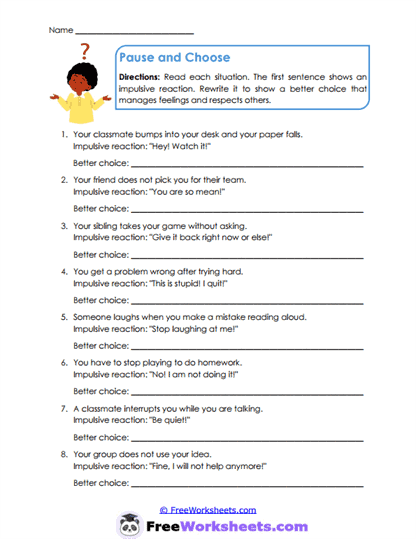
Better Choices
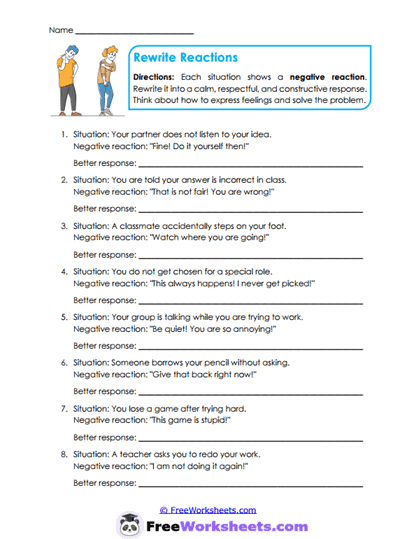
What Kids Do: Students read eight situations involving mistakes, interruptions, teasing, unfairness, homework, shared belongings, and group work. They replace each impulsive statement with a response that communicates the concern calmly without insulting, blaming, or refusing.
Target Skill: This activity strengthens impulse control, flexible thinking, and respectful problem-solving. Students learn that their first reaction does not have to become their final choice and that calmer language can still express a real need or frustration.
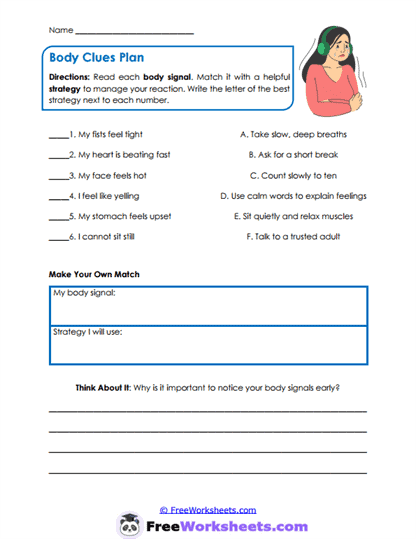
Body Signals
What Kids Do: Students match physical clues such as tight fists, a racing heart, a hot face, restlessness, an upset stomach, or feeling ready to yell with practical calming strategies. They then identify one personal warning sign and choose a response.
Target Skill: Learners build body awareness and early emotional recognition. The worksheet helps them notice that regulation can begin before they have fully named the emotion and before an impulsive action occurs.
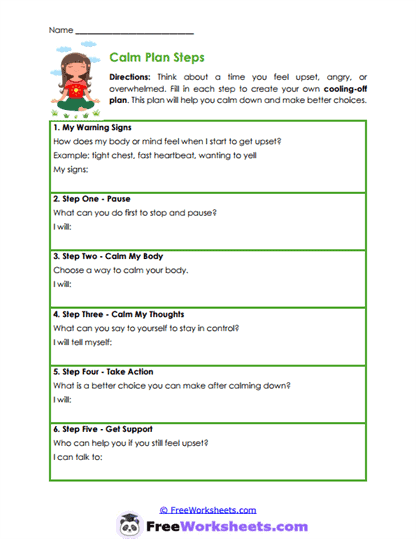
Calming Plan
What Kids Do: Students create a personal sequence for handling strong emotions. They identify warning signs and choose steps for pausing, calming their body, steadying their thoughts, making a better decision, and seeking support from a trusted person.
Target Skill: This page develops self-awareness, coping skills, help-seeking, and advance planning. Students create a realistic process they can rehearse during calm moments and use when frustration, anger, worry, or overwhelm begins to rise.
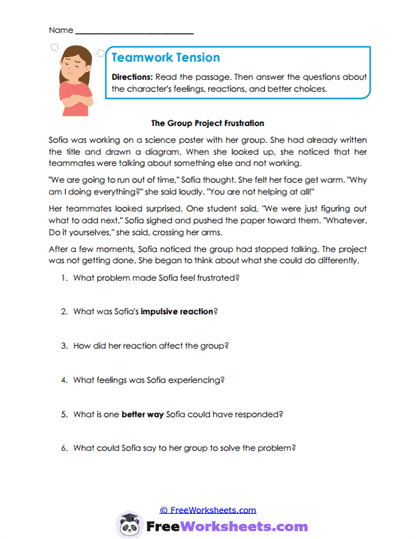
Group Frustration
What Kids Do: Students examine Sofia’s reaction when her science-project teammates are not completing their work. They identify the valid concern beneath her shouting and withdrawal, explain how the reaction affects the group, and write a more productive response.
Target Skill: Learners practice managing frustration while communicating expectations clearly. The activity strengthens teamwork, respectful leadership, perspective-taking, and the ability to address uneven effort without attacking or controlling others.
Homework Panic
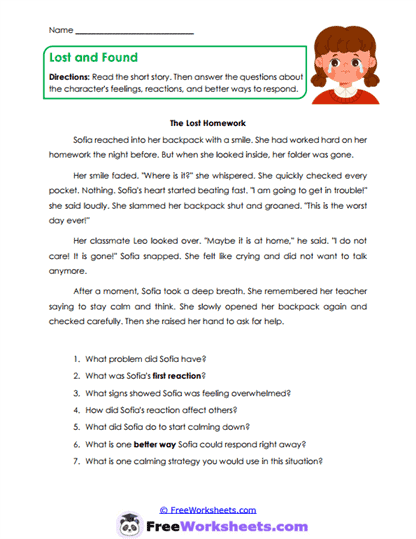
What Kids Do: Students follow Sofia as losing her homework leads to fast thoughts, a raised voice, tears, and an overwhelmed reaction. They identify the warning signs and examine how breathing, searching carefully, and asking for help allow her to think more clearly.
Target Skill: This worksheet builds emotional awareness and practical problem-solving during anxiety or panic. Students learn that asking for support is a responsible strategy when strong emotions are making it difficult to solve the original problem.
Interrupted Play
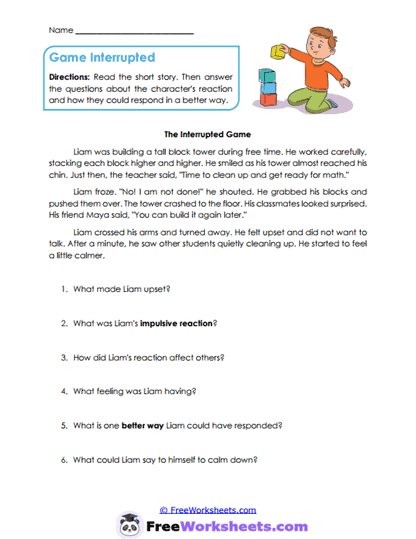
What Kids Do: Students read about Liam reacting after his younger brother accidentally knocks over a block tower. They identify his trigger, feelings, impulsive actions, and their effect on others, then create calming self-talk and a safer response.
Target Skill: Students separate understandable frustration from harmful behavior. The activity develops perspective-taking and helps learners prepare for moments when valued work, play, or personal space is unexpectedly disrupted.
Reaction Chains
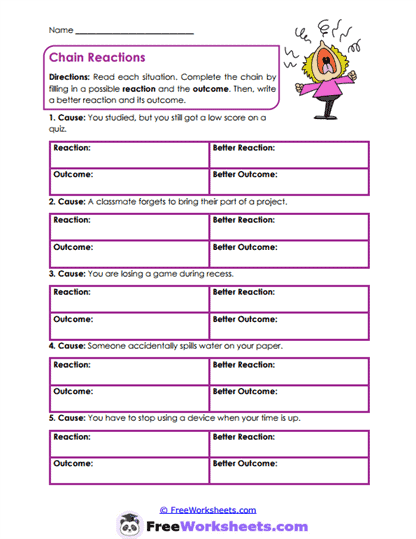
What Kids Do: Students examine situations involving a poor quiz score, unfinished teamwork, a lost game, an accidental spill, and ending device time. For each one, they compare an impulsive reaction and outcome with a calmer response and healthier result.
Target Skill: Learners strengthen cause-and-effect reasoning and responsible decision-making. The worksheet shows that while the original event may remain unchanged, a different reaction can protect relationships, responsibilities, and the next step.
Response Rewrite
What Kids Do: Students replace blaming, threatening, defeated, or insulting reactions with calm responses. The situations involve ignored ideas, mistakes, accidental bumps, borrowed supplies, teacher feedback, talking during work, and losing a game.
Target Skill: This activity develops flexible thinking, assertive communication, and conflict repair. Students practice explaining concerns, requesting change, asking questions, or trying again without denying that they feel disappointed or frustrated.
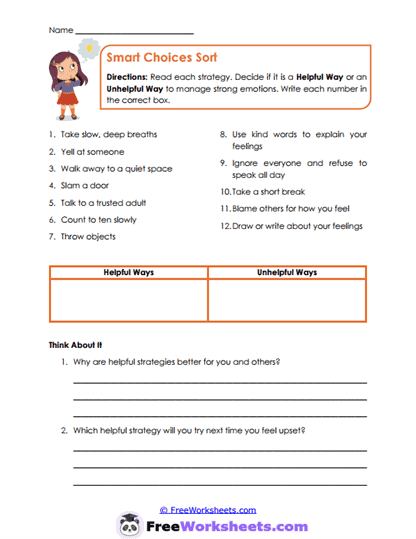
Strategy Sorting
What Kids Do: Students sort twelve emotional responses into helpful and unhelpful groups. They compare coping tools such as deep breathing, drawing, counting, asking for support, and moving to a quiet space with reactions such as blaming or slamming doors.
Target Skill: This introductory page builds a practical coping toolbox. Students learn that helpful strategies calm the body, communicate needs, or create time for a safer choice, while unhelpful reactions often spread or intensify the problem.
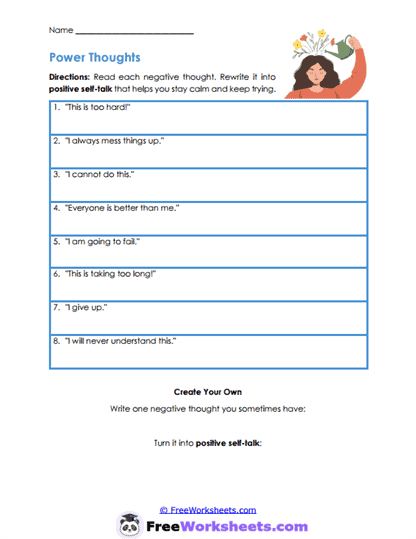
Stronger Thoughts
What Kids Do: Students rewrite discouraging statements such as “I cannot do this,” “I always mess things up,” and “I give up.” They create realistic replacement thoughts focused on effort, learning, taking one step, trying another approach, or asking for help.
Target Skill: Learners practice positive self-talk, perseverance, and growth-minded thinking. The worksheet helps them replace absolute, hopeless language with believable thoughts that support emotional control and continued effort.
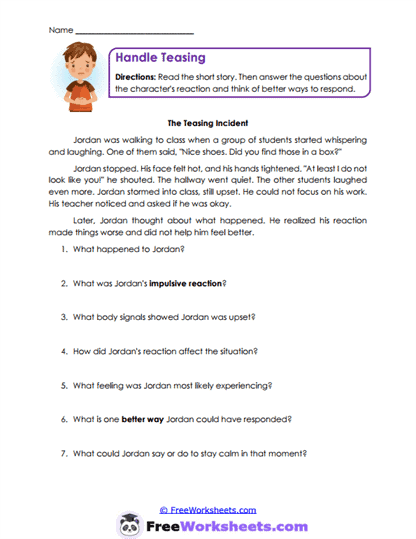
Teasing Response
What Kids Do: Students examine Jordan’s emotional and physical response after a group teases him. They identify his hot face and tight hands as warning signals, consider how insulting the group may escalate the situation, and suggest a safer plan.
Target Skill: This activity supports emotional regulation, assertive communication, and safe help-seeking. Students learn that walking away, using a brief boundary statement, finding supportive peers, or reporting repeated teasing can protect both dignity and safety.
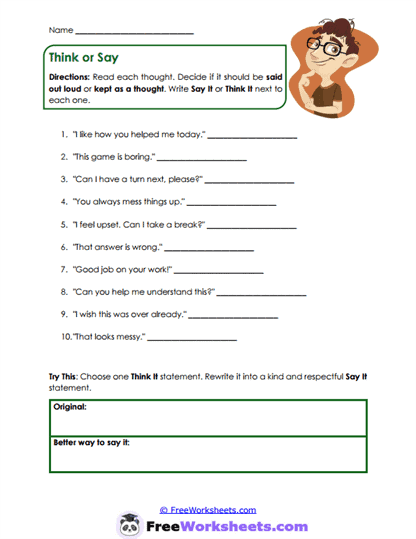
Thought Filter
What Kids Do: Students decide whether ten thoughts should be shared respectfully or kept private. The statements include compliments, requests, rude judgments, frustrated reactions, and self-advocacy, followed by practice turning one unkind thought into kinder language.
Target Skill: Students strengthen impulse control and social awareness by considering the likely effect of their words. The activity teaches that honesty does not require saying every thought and that some concerns can be reshaped into respectful, useful communication.