
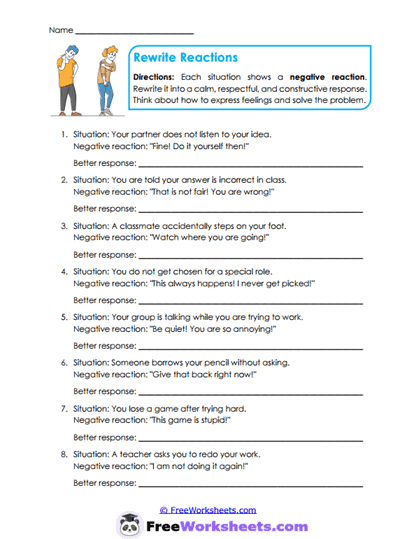
About This Worksheet
This worksheet gives students practice changing negative reactions into calm, respectful, and constructive responses. Children read eight common situations involving ignored ideas, incorrect answers, accidental bumps, disappointment, talking during work, borrowed supplies, losing a game, and redoing an assignment. Each situation includes a reactive statement that blames, insults, threatens, or gives up, and students write a better response underneath it. The activity helps children understand that frustration can be expressed honestly without making another person feel attacked.
Skills Developed
Students strengthen flexible thinking, emotional regulation, assertive communication, and conflict-resolution skills. They practice identifying what is unhelpful about a response and replacing it with words that explain the concern, ask a question, request a change, or show willingness to try again. The worksheet also helps students reduce all-or-nothing thinking after mistakes or disappointment. These skills can improve classroom participation, group work, friendships, sportsmanship, and responses to teacher feedback.
Grade & Stage Appropriateness
This worksheet is best suited for upper elementary and early middle school students, especially grades 3 through 7. Children in this range often recognize an aggressive or negative response but may still need direct practice creating a calmer alternative. Younger students may benefit from sentence starters, while older students can write more detailed responses that include both feelings and solutions. The activity is especially useful for students who react to correction, rejection, mistakes, or frustration with blame, threats, or immediate refusal.
Connections to Collaborative for Academic, Social and Emotional Learning (CASEL)
This activity aligns closely with the CASEL areas of self-management, relationship skills, self-awareness, and responsible decision-making. Students examine an emotional reaction, consider its likely effect, and choose language that keeps communication open. When I use rewriting exercises like this, I tell students that the better response should still sound like something a real child would say. The goal is not to create overly perfect language, but to find words that are calmer, fairer, and more likely to help.
Using This Worksheet
Teachers can model the first example by identifying the likely feeling and then turning the negative reaction into a clear request or respectful statement. The page works well before group projects, academic feedback, games, or situations where students may need to handle correction and disappointment. Parents and homeschool educators can connect the examples to sibling problems, chores, homework, or sports. After students finish writing, invite them to read several responses aloud and decide whether each one sounds calm, respectful, and useful.